Crude Surge Nears $100 on Supply Shock
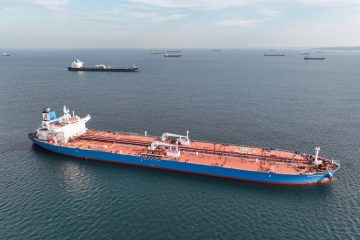
A week into one of the most significant disruptions to global energy markets, oil prices continue to stay well below the levels observed during past crises. However, an increasing number of energy executives and traders are cautioning that each passing day of conflict brings the world nearer to a critical juncture — with many forecasting $100 crude in the imminent future. Ship traffic through the Strait of Hormuz has effectively come to a standstill — transforming what was once deemed a worst-case scenario for the energy markets into a stark reality. The count of vacant oil supertankers in the Gulf is dwindling, accelerating the time when further production cuts will be necessary. Despite the recent surge in oil and gas prices this week, they continue to be significantly lower than the peaks observed immediately following Russia’s invasion of Ukraine. On Friday, indications emerged that the initial tranquility in the oil market was fading, with Brent crude prices surging beyond $90 a barrel, marking an increase of over a quarter this week. Executives at four large trading houses, who requested anonymity, expressed concern that the market remains overly complacent regarding the potential consequences of a prolonged closure of the Strait of Hormuz. They forecasted that prices could reach $100 within days unless there is a de-escalation of hostilities. Signs of stress are already evident in physical energy markets, as cuts at refineries in the Middle East and Asia have led to a surge in the prices of products such as diesel and jet fuel. Bob McNally, president of consultant Rapidan Energy Group and a former White House official, remarked that the market is still adjusting to the potential duration of the Hormuz shutdown. “We see Brent reaching $100 a barrel and above in the coming days to weeks, once the market accepts that the Hormuz closure is a weeks-long event rather than a brief disruption,” he stated.
Rising prices pose a significant challenge for US President Donald Trump, who has prided himself on his capacity to manage fuel costs effectively. Gasoline prices have reached unprecedented levels during his presidency. The White House has undertaken multiple efforts to stabilize oil markets this week — thus far, these efforts have not yielded success. For oil and gas traders, the pivotal inquiry is when the flow of energy from the Gulf region might recommence. With each passing day that oil remains stagnant in Hormuz, storage tanks continue to fill, edging producers nearer to the critical juncture where production cuts become necessary. Iraq commenced a reduction in output this week, while Qatar halted its LNG production. The market’s fate is undoubtedly tied to the conflict’s trajectory, and any resolution to the fighting or indication of unblocking Hormuz would likely cause oil prices to plummet once more. However, at this moment, there is scant immediate optimism that the Hormuz bottleneck can be resolved while the conflict persists. On Tuesday, Trump stated that the US would offer insurance guarantees and naval escorts to ensure the safe passage of oil tankers and other vessels through Hormuz. The announcement came on the last day of the reporting period for positioning data gathered by ICE Futures Europe and the Commodity Futures Trading Commission, revealing that investors reduced their long-only positions on both Brent and WTI as the week began.
The subdued bullish reaction indicated traders’ belief that the conflict would be a limited, precise operation, leading to a significant price surge followed by a quick pullback, coupled with a strong belief that the Trump administration would intervene with a last-minute policy action to control energy prices. “The market was 100 per cent not set up for a prolonged conflict,” stated Rebecca Babin. Three days later, three shipowners, along with individuals connected to several allied nations in the region, reported that they had not yet received any information regarding Washington’s plan. Several owners also stated that insurance, which the industry claims is accessible, remains secondary to the safety of their crews. It remains uncertain whether naval escorts will lead to a complete resurgence in transits. “There are concerns across the industry that going through in a convoy will just put a target on ships’ backs,” said Halvor Ellefsen. “I can’t see a short-term solution, and from where I sit that means higher oil prices, inflation and economic pain.” Goldman Sachs Group Inc. analysts noted late Friday that there are “large upside risks” to the bank’s oil-price forecasts. They pointed to tighter-than-expected constraints on Hormuz shipping, limited Saudi Arabian capacity to shift crude exports to Red Sea ports, and the risks of a prolonged conflict. “We now think that oil prices would likely exceed $100 next week if no signs of solutions emerge by then,” Goldman analysts wrote in a note to clients. “Oil prices may need to reach demand destruction levels even more swiftly than historical trends and basic models that concentrate solely on Persian Gulf exports indicate.” The analysts noted that the “unprecedented” supply shock is 17 times larger than the worst supply cut incurred by Russia in the weeks following its invasion of Ukraine.
As Brent heads towards its second-largest weekly gain on record, its rally is overshadowed by certain fuels that are signaling potential warning signs for the global economy. Diesel has surged over 50 percent in just a week, while jet fuel has surpassed $200 a barrel in certain regions globally this week. European natural gas has surged by nearly two-thirds. In response to the situation, China has instructed its leading refiners to halt exports of gasoline and diesel, a decision echoed by several other Asian nations. Key producers are beginning to raise concerns as well. According to the source, Qatar’s Energy Minister cautioned on Friday that crude oil prices could reach $150 a barrel if the conflict remains unresolved for much longer. “We believe oil prices will continue their ascent for the next weeks if nothing changes in the conflict,” stated Aldo Spanjer. “Onshore stocks filling up could drive production shut-ins through March, amplifying the upside.” Physical oil markets are experiencing a significant surge, reflecting a strong demand for immediate supply. Some barrels from the US are achieving their highest premium since 2020, while the value of a significant Norwegian grade, which typically aligns closely with Brent, has risen by more than $5 against the benchmark this week. Saudi Arabia has raised its oil prices by the largest margin since August 2022. Producers in the region are making efforts to re-route their flows as much as possible. Saudi Arabia is transporting barrels over 1,000 kilometres to its Western ports. The United Arab Emirates operates a Hormuz bypass, facilitating the export of over 1 million barrels daily via Fujairah. The two bypasses, however, represent approximately one-third of the 20 million barrels per day of oil that typically flows through the Strait. Trump is currently exhibiting a sense of calm amid the rising oil prices. “If they rise, they rise, but this is far more important than having gasoline prices go up a little bit,” he stated during an interview on Thursday.
Nonetheless, his administration is implementing measures aimed at alleviating the market pressure. A general license was issued permitting Indian refiners to acquire Russian barrels that had become stranded at sea due to American sanctions. Although this action will alleviate some immediate pressure on the refiners in the Asian country, it remains a short-term solution. The US has various potential avenues to alleviate prices — including waivers of fuel-blending requirements and the release of strategic stocks. Officials have, to this point, minimized the likelihood of utilizing the Strategic Petroleum Reserve. “We’ve got a whole flow chart of tools to use,” National Economic Director Kevin Hassett stated during an interview. “But we’re also very optimistic that we’re going to be able to get this near-term problem resolved relatively quickly.” The International Energy Agency, representing a coalition of major consumer nations, reflected that calmness, stating it did not perceive an immediate necessity for a coordinated release of strategic stocks. “Our problem is a problem of dislocation,” stated Fatih Birol contending that there was “plenty of oil” in the market. Some countries exhibit a greater degree of tension. Japan is contemplating the release of strategic stocks, possibly acting independently rather than in a coordinated effort with other nations, according to a report. As hostilities show no signs of abating and the blockage of Hormuz remains unresolved, energy markets prepare for a weekend filled with concern. “On Sunday night when oil prices start trading again, if the straits are still closed I think the spike will be much more significant,” said Amos Hochstein.