For Golden Dome, Trump seeks SpaceX alternatives
U.S. military communications have grown more dependent on Musk’s SpaceX satellite networks, Starlink and Starshield, but this change signals a strategic move away from that dependence. Golden Dome’s goals are similar to Israel’s Iron Dome, a homeland missile defense shield, but a larger, more sophisticated program requires a larger network of orbiting satellites covering more region.
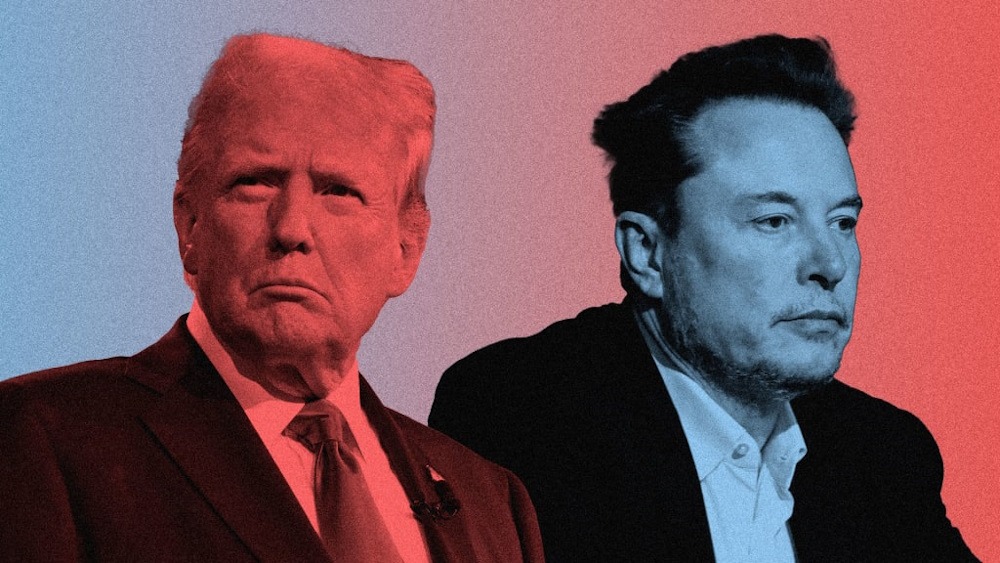
According to sources, the Trump administration is recruiting Amazon.com’s Project Kuiper and huge defense contractors to develop the Golden Dome missile defense system as tensions with Elon Musk threaten SpaceX’s dominance. The move away from Musk’s SpaceX’s Starlink and Starshield satellite networks, which power U.S. military communications, is strategic. Trump and Musk had a public falling-out on June 5 after a deteriorating friendship. Two sources said the Pentagon and White House had began considering alternatives to SpaceX before the split to avoid over-reliance on a single partner for large parts of the ambitious, $175 billion space-based military shield. Musk and SpaceX declined comment. After Reuters claimed that SpaceX was a frontrunner to produce Golden Dome parts, Musk said on X that SpaceX had “not tried to bid for any contract in this regard. Our strong preference would be to stay focused on taking humanity to Mars.” Due to its size, track record of launching more than 9,000 Starlink satellites, and government procurement knowledge, SpaceX is still in contention to help with significant Golden Dome projects, particularly launch contracts, insiders said.
The Pentagon has invited Project Kuiper, which has launched 78 of 3,000 low-earth-orbit satellites, to join the effort, signaling the administration’s openness to integrating commercial tech firms into national defense infrastructure and going beyond traditional defense players. Amazon’s executive chairman, Jeff Bezos, told Reuters in January that Kuiper would be “primarily commercial,” but “there will be defense uses for these [low-earth orbit] constellations, no doubt.” An official from Project Kuiper declined to comment. Pentagon officials rejected comment. The White House declined comment. “Kuiper is a big one,” a U.S. official said, seeking more Golden Dome satellite layer vendors. Two insiders suggested SpaceX’s lead in the program may shrink despite its unrivaled launch capabilities. According to the U.S. official, Stoke Space and Rocket Lab are gaining traction and will be able to bid on individual launches as the program evolves. The official stated that “each individual launch is going to get bid, and we have to actually give bids to other people,” besides SpaceX, throughout Golden Dome development.
Satellite output must increase. Congress awarded Space Force a $13 billion mandate to buy satellite-based communication services last year, up from $900 million, as one of numerous measures to boost private sector satellite development. Reuters reports that Amazon’s $10 billion Project Kuiper, supervised by former Starlink managers fired by Musk for sluggish development, has lagged behind SpaceX in deployment. As the administration prepares to award the first $25 billion of Trump’s tax and spending bill’s funds, its possible defense applications, such as missile tracking communications, have rekindled interest.
Northrop Grumman, Lockheed Martin, and L3Harris are also discussing supporting Golden Dome. In an interview with Reuters, L3Harris CFO Kenneth Bedingfield said the company’s missile warning and tracking technologies, which are considered to be crucial to the system, had gained popularity. Northrop is also working on a space-based interceptor, which would allow missile strikes from orbit, according to space business head Robert Fleming. “Lockheed Martin is ready to support Golden Dome for America as a proven mission partner,” said Lockheed Martin Space president Robert Lightfoot. Golden Dome initially welcomed smaller, newer Silicon Valley corporations to the table this spring as nimbler, more sophisticated, and potentially cheaper alternatives to the big military giants. Other Trump-affiliated companies like Palantir and Anduril were early frontrunners for the $175 billion project. However, the Musk-Trump conflict has changed competition. Musk established the “America Party,” a tech-focused, centrist political outfit to combat Trump’s tax-and-spend Republicans.
Trump started the Golden Dome effort a week into his second term, urging quick deployment. After Senate confirmation on July 17, Space Force General Michael Guetlein will command the program with broad power. Two sources said Guetlein has 30 days from confirmation to build a team, 60 days to deliver an initial system design, and 120 days to present a full implementation plan, including satellite and ground station details, under a previously unreported Defense Secretary Pete Hegseth directive.
Kuiper and other commercial platforms create security problems. Even SpaceX’s Starlink network suffered cyberattacks and electronic warfare, so its satellites would need to be hardened. In May 2024, Elon Musk revealed SpaceX spent “significant resources combating Russian jamming efforts. This is a tough problem.” Golden Dome could change world security despite technical and political issues. A fully deployed space-based missile shield may spur enemies to develop new offensive weapons or militarize space. Established defense players like Lockheed and RTX, previously Raytheon, will undoubtedly lead contract competition. On Tuesday, RTX executives stated the Patriot missile defense system will be crucial to Golden Dome “especially if you want to make a significant impact over the next 2 to 3 years.”