Global oil prices depend on IEA reserves and Opec output
As the Iran war enters its second week and Iran’s grip on the Strait of Hormuz remains tight, global oil markets have once again been compelled to rely on emergency reserves. The International Energy Agency’s decision to coordinate a record release of 400 million barrels from strategic stockpiles on Thursday (March 12) arises amid the ongoing conflict involving the US, Israel, and Iran, which is disrupting shipments through Hormuz, a critical chokepoint that typically manages about one-fifth of the global oil trade. The recent development has highlighted the fact that current oil supplies are influenced not only by producers in West Asia or Russia, but also by the alliances formed among consumer countries that accumulate oil reserves for emergencies. To grasp the functioning of these systems, it is essential to examine the three layers that impact the market: the producers of oil, the entities responsible for its storage, and the ways in which organizations like the IEA and coalitions such as Brics alter the market dynamics.
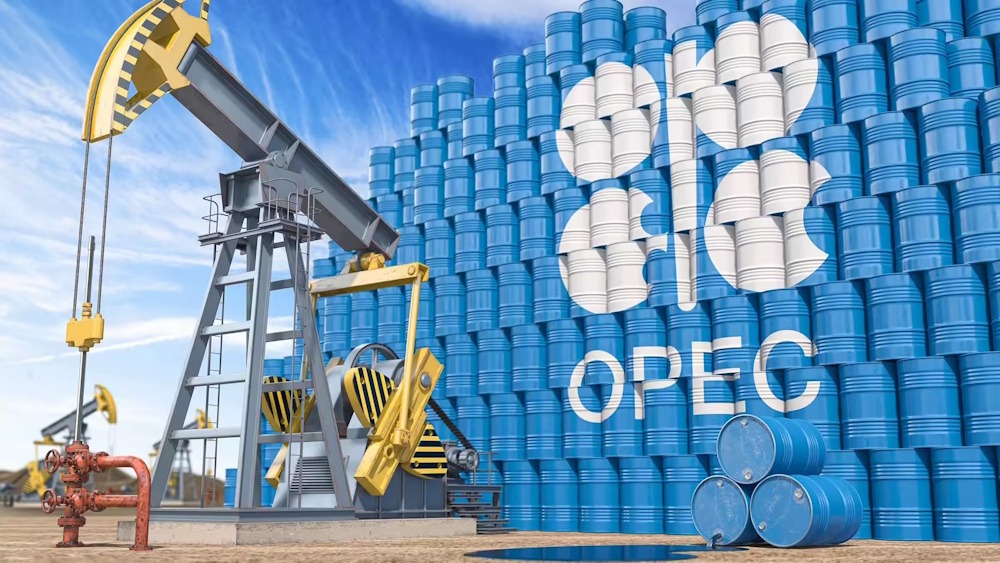
Oil production on a global scale is largely concentrated within a limited number of countries. West Asia remains at the forefront of reserves and production capacity, with Saudi Arabia, Iran, Iraq, Kuwait, and the United Arab Emirates recognized as some of the largest holders of crude reserves. Beyond the Gulf region, significant production comes from Russia, the United States, and Canada. Venezuela is believed to possess the largest proven oil reserves in the world, with Saudi Arabia and Iran following closely behind. Numerous countries function within producer alliances like Opec and Opec+, which synchronize output levels to sway global prices. Opec members collectively possess approximately four-fifths of the world’s proven oil reserves, providing the group with significant influence over supply. Nevertheless, the market is not governed exclusively by producers. In the last fifty years, significant consuming nations have established frameworks to mitigate supply shocks. The International Energy Agency is an autonomous intergovernmental organization established in 1974. It focuses on promoting energy security among its member countries through collective response to physical disruptions in oil supply. The IEA also provides authoritative statistics and analysis on global energy markets, and it works to foster international collaboration on energy technology and policy. Its mission encompasses a wide range of energy-related issues, including sustainability, energy efficiency, and the transition to cleaner energy sources.
The International Energy Agency was established in 1974 by leading oil-consuming nations to synchronize energy security strategies in the aftermath of the oil crisis. Currently, it comprises over 30 member countries, primarily consisting of advanced economies located in Europe, North America, and Asia. One of the agency’s key rules mandates that members maintain oil stocks equivalent to a minimum of 90 days of their net imports, enabling them to respond collectively to supply disruptions. In times of crisis, the IEA has the capability to orchestrate a collective release of reserves, as demonstrated during significant events like the Gulf War, Hurricane Katrina, and the Russia-Ukraine conflict that commenced in 2022. Nonetheless, the latest release associated with the Iran war represents the most extensive coordinated drawdown to date. While it does not impose production quotas in the manner of Opec, the IEA’s coordinated stockpile releases have the potential to affect prices by temporarily boosting supply. Meanwhile, if the IEA embodies the interests of oil-importing countries, Opec and Opec+ embody the producer side. Opec members, with Saudi Arabia at the forefront, frequently modify output targets to stabilize prices or regulate supply. Russia, along with several other producers, is involved in the wider Opec+ framework, thereby enhancing the group’s impact on global production. The equilibrium between producers and consumers shapes the dynamics of global energy politics. If producers cut back on their output, consumer nations might react by tapping into their reserves. Currently, India is not a full member of the IEA.
Since 2017, it has held the status of an associate member, enabling cooperation on energy data, policy discussions, and emergency responses. In October 2023, India submitted a formal application for full membership to the IEA. As a result, India is not required to maintain reserves that equal 90 days of imports, in contrast to full members. The nation possesses 5.33 million tonnes of strategic storage capacity for crude oil, with intentions for expansion. India has, at times, collaborated with the IEA during crises while maintaining its independence regarding the decision to release its reserves. The expanding Brics grouping, which includes major energy producers such as Russia and Iran and large consumers such as China and India, increasingly intersects with critical components of the global oil system. Although Brics does not presently have a unified energy security mechanism akin to the IEA, its member nations together represent a significant portion of global energy demand and production. At present, global energy governance predominantly centers on the IEA representing consumer interests and Opec-led alliances catering to producers.