UN Agenda Set on Trump’s Return, Gaza Crisis, and Ukraine Conflict
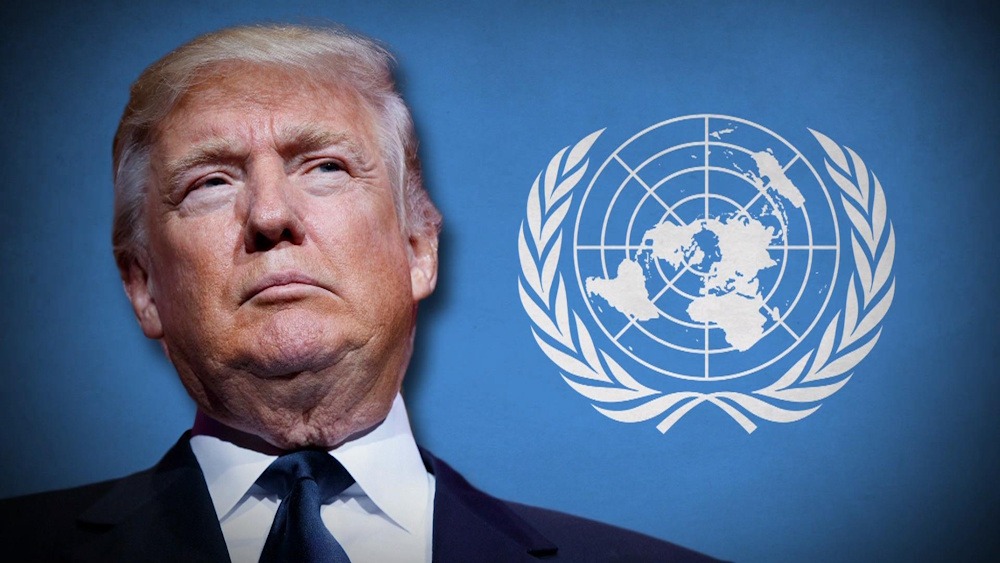
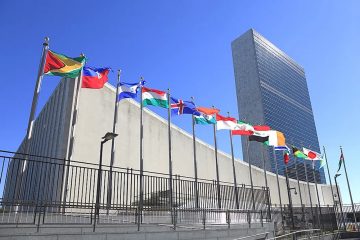
World leaders will convene in New York next week for a U.N. General Assembly that will be significantly influenced by U.S. President Donald Trump’s return to the podium, the ongoing conflicts in Gaza and Ukraine, increasing Western acknowledgment of Palestinian statehood, and escalating nuclear tensions with Iran. “We are gathering in turbulent even uncharted waters,” U.N. Secretary-General Antonio Guterres stated a week prior to the 193-member world body hosting six days of speeches by nearly 150 heads of state or government, along with numerous additional ministers. “Geopolitical divides are widening.” Conflicts are ongoing. Impunity is on the rise. “Our planet overheating,” he told on Tuesday. “And international cooperation is facing challenges unlike any we have witnessed in our lifetimes.”
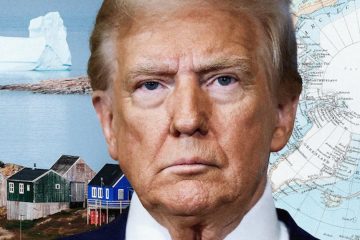
Headlining this year’s 80th General Assembly will be Trump, who calls for slashing U.S. funding for the U.N., stopped U.S. Engagement with the U.N. Human Rights Council has led to an extended halt to funding for the Palestinian relief agency UNRWA and a withdrawal from the U.N. cultural agency UNESCO. He has also announced intentions to withdraw from the Paris climate deal and the World Health Organization. Trump is set to address the public on Tuesday, eight months into a second term characterized by significant reductions in U.S. foreign aid, which have led to widespread humanitarian crises around the world and prompted concerns regarding the future of the U.N. In response, Guterres is making efforts to reduce expenses and enhance operational efficiency. “He enjoys the General Assembly. He enjoys the attention of other leaders,” said Richard Gowan of Trump. “I suspect he will use his appearance to highlight his numerous achievements and possibly reiterate his claim to the Nobel Peace Prize.” Trump characterizes the U.N. as possessing “great potential,” yet asserts that it must get its “act together.” He has upheld the same cautious approach to multilateralism that characterized his initial term from 2017 to 2021 and has also criticized the global organization for not assisting him in his efforts to mediate peace in various conflicts.
“The U.N. has very strong efforts in peace mediation … but we have no carrots and no sticks,” Guterres stated. The Security Council stands as the sole U.N. entity capable of imposing sanctions; however, it remains paralyzed regarding the conflicts in Gaza and Ukraine due to the veto powers held by the U.S. and Russia. “The United States has carrots and sticks. So in some situations, if you are able to combine the two, I think we can have a very effective way to make sure that some peace process at least can lead to a successful result,” Guterres said. He and Trump are anticipated to engage in their first formal meeting since Trump resumed office in January – part of over 150 bilateral discussions that the U.N. chief has arranged, referring to the week as “the World Cup of diplomacy.” Leaders are convening as the conflict between Israel and Hamas militants in the Gaza Strip nears its two-year mark, while a humanitarian crisis deepens in the Palestinian enclave. A global hunger monitor has issued a warning that famine has taken root and is expected to escalate by the end of the month.
Israeli Prime Minister Benjamin Netanyahu, who is wanted by the International Criminal Court for alleged war crimes and crimes against humanity in Gaza, which Israel denies, is scheduled to address the General Assembly on Friday. On Tuesday, Israel initiated a long-anticipated ground assault on Gaza City. Israel’s U.N. Ambassador Danny Danon stated regarding the forthcoming New York gathering: “We will remind the world once again that this war will not end with the hostages left behind in Gaza.” Prior to the commencement of the General Assembly speeches on Tuesday, leaders will convene on Monday for a summit – organized by France and Saudi Arabia – with the objective of generating momentum towards a two-state solution between Israel and the Palestinians. Australia, Belgium, Britain, Canada, and France have committed to formally recognizing a Palestinian state, though some have stipulated certain conditions. Palestinian President Mahmoud Abbas will not attend the gathering in person. The U.S., a steadfast ally of Israel, denied him a visa, prompting significant criticism at the U.N. On Friday, the General Assembly cast their votes to permit him to appear via video.
“Palestine is going to be the huge elephant in this session of the General Assembly,” stated Palestinian U.N. envoy Riyad Mansour. Another conflict dominating the U.N. agenda, yet on which minimal progress is anticipated, is Russia’s war in Ukraine, now extending beyond three years. Ukrainian President Volodymyr Zelenskiy and Russian Foreign Minister Sergei Lavrov are set to address the General Assembly. Russian President Vladimir Putin typically does not participate in the annual U.N. gathering. The 15-member U.N. Security Council, responsible for upholding international peace and security, is expected to convene discussions on Ukraine and Gaza during the high-level General Assembly session. Last-minute diplomacy is set to unfold in New York regarding Iran’s nuclear program, as Tehran aims to prevent the reinstatement of all U.N. Security Council sanctions on the Islamic Republic by September 28. Iranian President Masoud Pezeshkian and Foreign Minister Abbas Araqchi are anticipated to attend the United Nations.