Trump’s China trip postponement follows last-minute revisions
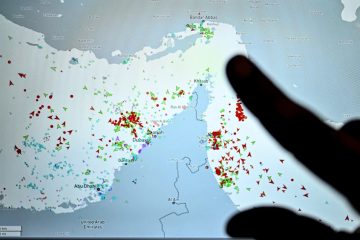
President Donald Trump has consistently employed last-minute changes regarding foreign travel and meetings with heads of state as he aims to secure a diplomatic advantage and keep international partners vigilant. Trump’s request this week to delay a planned trip to China initially set for March 31 to April 2 exemplifies a recurring trend of postponing or canceling high-profile meetings that he deems unaligned with his interests. During his initial and subsequent terms, he has relished the uncertainty he creates among both allies and adversaries regarding his travel itineraries. On several occasions, he has altered his schedule on the fly, frequently aiming to assert dominance, convey a message to foreign capitals, or sidestep potential embarrassment. During his first term, Trump canceled a visit to Denmark when that country stated that Greenland wasn’t for sale, canceled a meeting with Vladimir Putin while the Russian president was en route, and ignited speculation regarding a potential meeting with North Korea’s Kim Jong Un. This time, Trump first suggested postponing a much-anticipated summit with China during a weekend interview. He made the comment while urging China and other nations to assist him in addressing Iran’s obstruction of the Strait of Hormuz, which has been ongoing since the conflict with the Islamic Republic commenced on Feb. 28. Following this, his aides promptly clarified that Trump was not postponing the meeting in an attempt to pressure Chinese President Xi Jinping into assisting the US with reopening the strait — a request that has garnered little response from other nations.
On Monday, Trump stated that he needed to remain in the US due to the war. “I want to be here.” I feel compelled to be here. “And so we requested that we delayed a month,” he said. “It’s very simple.” A conflict is underway. “I think it’s important that I be here.” White House Press Secretary Karoline Leavitt earlier in the day told Fox News that the meeting wasn’t “in jeopardy, but it’s quite possible the meeting could be delayed.” She stated “It’s really just a matter of the timing.” The stakes for the summit were elevated following the prolonged trade war between the US and China throughout the previous year. A delay may ultimately benefit China, which had sought a later date to provide additional time for officials from both nations to finalize details prior to the in-person meeting of the two leaders. A source has stated that China is open to postponing the summit due to the limited preparation time and the potential for the ongoing Iran war to lead to awkward situations. China remains open to moving forward, and there has not yet been any formal communication from the US requesting a delay, said another individual, who asked to remain anonymous to discuss private conversations. Logistical planning is ongoing, even in the face of uncertainty regarding the timing of the event, the person added.
China’s Ministry of Foreign Affairs has yet to provide a response to a request for comment. A variety of reasons may contribute to the postponement — Trump has been increasingly avoiding travel and favors having world leaders come to pay their respects at the White House or his Palm Beach estate. The American president, a former reality television star, relishes in maintaining an air of suspense among both allies and adversaries regarding significant decisions. He is now engulfed in a conflict he anticipated would conclude quickly, yet there is no definitive resolution in view and scant support from other nations willing to engage in it. For Trump, hinting at a change in schedule is a familiar tactic. Similar to how he threatens — and occasionally retracts declarations — to impose tariffs or withdraw from international treaties, Trump perceives his foreign visits as yet another opportunity to negotiate with other nations. “He delights in mixed messages,” remarked Republican strategist Matthew Bartlett, who further noted that it remains uncertain how much influence Trump genuinely wields over China. “Leverage is a beautiful thing when you have it and a brutal thing when you think you have it and don’t,” he said. This is not the first occasion on which Trump has openly hesitated regarding a meeting with Xi. Last fall, prior to the scheduled meeting at an international summit, he informed reporters that “maybe it won’t happen.” Ultimately, that session did take place. At times, Trump suggests a cancellation but fails to act on it. He notably canceled a scheduled 2018 summit with North Korea’s Kim in Singapore due to irritation over some heated rhetoric from Pyongyang. In a letter, the US president described it as a “truly sad moment in history.” However, he quickly became more amenable following a conciliatory statement from North Korea, leading to the rescheduling of the meeting. Though the summit yielded no diplomatic breakthrough, he characterized it as a significant success.
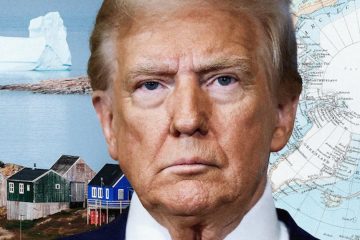
At other times, Trump cancels and maintains his position, possibly to steer clear of a meeting he perceives could pose a problem or lead to embarrassment in the future. In 2019, a visit to Denmark was scheduled, but he stated he would not proceed with it as the prime minister had “no interest in discussing the purchase of Greenland.” He also canceled a meeting with Putin at the 2018 Group of 20 meeting — when Putin was already en route — over Russia’s decision to fire on Ukrainian ships. In 2018, Trump abandoned plans to visit London for the inauguration of a new US embassy, expressing his discontent with the chosen location. However, in doing so, he steered clear of potential protests. At various times, Trump has departed from foreign engagements prematurely, to apply pressure or convey frustration. Last year, he departed a meeting of the Group of Seven major economies in Canada before it concluded. In 2018, during another G-7 summit in Canada, Trump withdrew from a joint communique following a confrontation with then Canadian Prime Minister Justin Trudeau and left ahead of schedule. In 2019, he repeated this action by canceling a press conference at the conclusion of a NATO summit. That followed a video in which a group of world leaders were seen mocking Trump.
At times, Trump has entrusted others to undertake journeys on his behalf, opting out of certain trips at the last minute. In 2018, he called off a trip to South America, referencing a crisis in Syria, and dispatched Vice President Mike Pence instead. In 2019, Trump dispatched Pence to Poland for an event marking the 80th anniversary of the onset of World War II, while he remained in the United States, intensely tracking a hurricane as it unfolded. He engaged in sending tweets and videos, and at one point, he displayed a manipulated map that contradicted the storm’s projected trajectory. Last year, Trump opted not to attend the Group of 20 nations in South Africa and initially stated he would send Vice President JD Vance in his place, but ultimately chose to have no representation whatsoever. Critics perceive these tactics as Trump introducing additional chaos to the global arena. However, he enjoys maintaining an air of mystery by being consistently unpredictable. By weaponizing access, Trump highlights the significance he attributes to face-to-face interactions. A self-styled dealmaker, he regards a meeting with the US president as a reward in its own right and has often taunted other nations regarding his travels and engagements during both his first and second terms. His get-togethers seldom involve the extensive preparation usually associated with such events — nor do they typically yield the same pre-arranged outcomes.