Trump Says Canada Thrives Thanks to US After Carney’s Critique
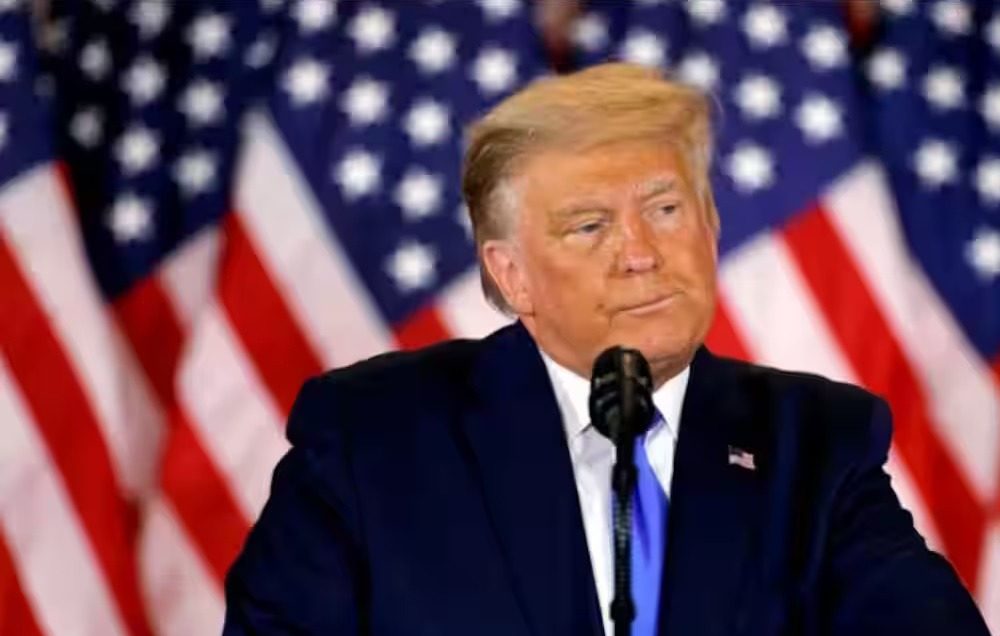
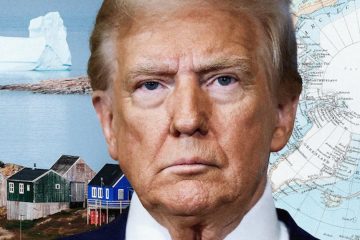
US President Donald Trump criticized Mark Carney for his perceived ingratitude regarding American military protection, responding sharply after the Canadian leader called on mid-sized nations at Davos to unite against aggressive superpowers. During his address at the World Economic Forum on Wednesday, Trump highlighted that his proposed Golden Dome missile shield would extend its defense to Canadian airspace. “Canada receives numerous benefits from us, by the way.” They ought to express gratitude, yet they do not. I observed your prime minister yesterday. “He wasn’t so grateful,” Trump said. “Canada lives because of the United States. Keep that in mind, Mark, the next time you express your views.” Carney’s speech on Tuesday resonated throughout the annual assembly of political and business leaders. He stated that the international rules-based order is essentially finished and contended that the world has transitioned into a period “where the most powerful pursue their interests using economic integration as coercion.” He refrained from naming Trump directly, yet referenced strategies closely linked to the US president — “tariffs as leverage, financial infrastructure as coercion, supply chains as vulnerabilities to be exploited” — and called on nations to resist by fostering new avenues of collaboration.
“Middle powers must act together because if you are not at the table, you are on the menu,” he stated. The comments were particularly notable considering Canada’s enduring economic ties and military collaboration with the US. Carney, 60, a former central banker, secured his position last year with a commitment to lessen that reliance. He has since signed a limited trade deal with China and has begun to roll out billions in new defense spending. Canada is contemplating investments in the Golden Dome system, which the US president has estimated at $175 billion; however, a analysis suggests the cost could reach as high as $1.1 trillion. The proposal — which includes unverified space-based technology — aims to safeguard the continent against threats such as ballistic missiles, hypersonics, and advanced cruise missiles.
The two nations currently collaborate in the operation of the North American Aerospace Defense Command, commonly referred to as Norad. In 2022, Canada announced a C$38.6 billion ($28 billion) initiative to modernize the system. The funding encompasses a newly developed radar network in Australia, designed to detect incoming missiles, as announced by Carney in March. Canada has historically relied on the US for continental defense — particularly in the Arctic, where Norad and US capabilities support a significant portion of the region’s security. However, the relationship has not been unilateral. Canada has joined the US in various conflicts, including those under the United Nations banner during the Korean War and in Afghanistan following the terrorist attacks of September 11, 2001. Over 40,000 Canadian soldiers participated in the Afghanistan mission; 158 lost their lives.
Carney departed the World Economic Forum on Wednesday, coinciding with Trump’s arrival. One of his final meetings was with NATO Secretary General Mark Rutte, and a readout from Carney’s office emphasized Canada’s intention to quadruple defense spending over a decade and enhance Arctic security. The release also indicated a cohesive stance on Greenland, as Trump persists in asserting that the US must govern the Arctic island. Rutte and Carney reiterated their backing for Denmark’s sovereignty, emphasizing that decisions regarding Greenland’s future are to be made by Greenland and Denmark alone.