Trump and Xi to Finalize TikTok Deal, Shape US-China Relations
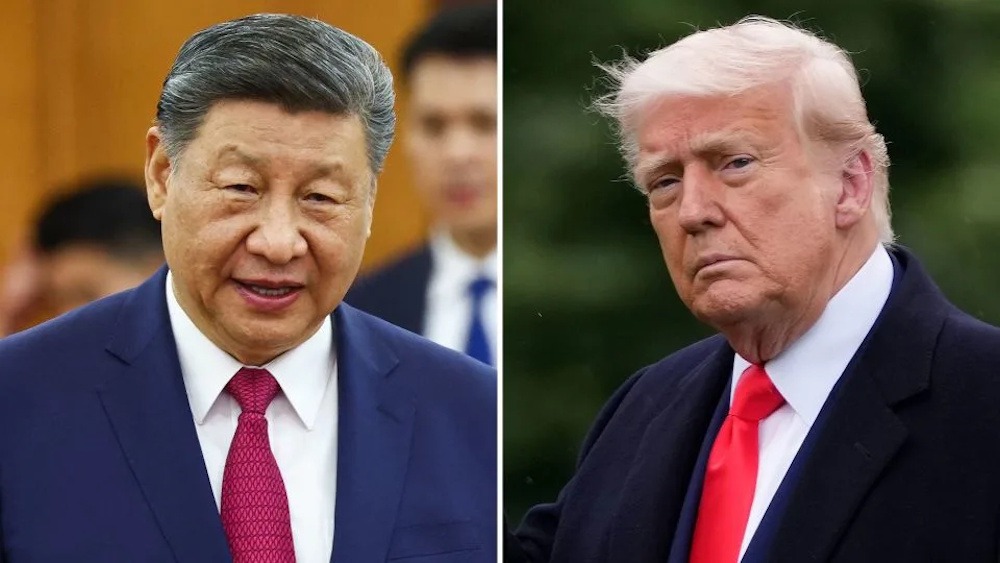
US President Donald Trump is anticipated to engage in discussions with Chinese leader Xi Jinping on Friday, aiming to finalize an agreement that would permit the widely-used social media application TikTok to continue its operations within the United States. The call may also provide insights into the possibility of a face-to-face meeting between the two leaders, aimed at finalizing an agreement to resolve their trade conflict. Additionally, it could shed light on the future trajectory of relations between the world’s two superpowers.
This would mark the second conversation with Xi since Trump resumed his presidency and implemented steep tariffs on China, which initiated a series of reciprocal trade restrictions that have put considerable strain on the relationship between the two largest economies. However, Trump has shown a readiness to engage in negotiations regarding trade agreements with Beijing, particularly concerning the social video platform that is at risk of a US ban unless its Chinese parent company divests its controlling interest. In June, the two men engaged in discussions aimed at alleviating the rising tensions surrounding China’s limitations on the export of rare earth elements, which are essential components in a wide array of products, ranging from smartphones to fighter jets.
On Thursday, Trump stated, “I’m speaking with President Xi, as you know, on Friday, having to do with TikTok and also trade.” We are nearing the finalization of agreements on all aspects of the matter. He stated that his relationship with China is very good; however, he remarked that Russia’s war in Ukraine could come to an end if European countries were to impose higher tariffs on China. Trump did not indicate whether he intends to increase tariffs on Beijing regarding its acquisition of oil from Moscow, similar to the actions he has taken with India. On Thursday, the Chinese Embassy in Washington refrained from confirming the call or any forthcoming summit between the leaders. However, spokesperson Liu Pengyu emphasized that heads-of-state diplomacy serves an irreplaceable function in offering strategic guidance for the relationship between China and the United States. Sun Yun, who serves as the director of the China program at the Washington-based think tank Stimson Center, expressed optimism regarding the forthcoming dialogue. Sun stated that both sides possess a robust desire for the leadership summit to take place, emphasizing that the specifics hinge on the trade deal and the potential outcomes that can be realized for both parties during the summit.
In the wake of a US-China trade meeting that took place earlier this week in Madrid, US Treasury Secretary Scott Bessent remarked that the two sides have come to a framework agreement regarding the ownership of TikTok. However, it is anticipated that both President Trump and President Xi will be the ones to finalize this arrangement on Friday. Trump, who has acknowledged the app’s role in securing him another term, has repeatedly extended the deadline for the app to be separated from its Chinese parent company, ByteDance. To ensure TikTok’s continued operation in the United States, compliance with a law enacted last year is essential. This legislation aims to tackle pressing issues related to data privacy and national security. Trump remarked, “TikTok has tremendous value,” emphasizing that the United States holds that value in its grasp, as it is ultimately the authority that must grant approval. Concerns have been raised by US officials regarding ByteDance’s origins and ownership structure, highlighting the legal framework in China that mandates Chinese companies to comply with government requests for data. Another issue that warrants attention is the proprietary algorithm responsible for determining the content that users encounter on TikTok. On Monday, Chinese officials announced that a consensus had been achieved regarding the authorization of intellectual property rights, which encompasses the algorithm. Furthermore, both parties have come to an agreement to entrust a partner with the management of U.S. user data and the security of content.
Raja Krishnamoorthi, who serves as the ranking Democrat on the House Select Committee on the Chinese Communist Party, asserts that for TikTok to adhere to legal requirements, its data and algorithm must genuinely be under American control. Leading Officials from the United States and China have engaged in four rounds of trade discussions from May to September, with another round anticipated in the upcoming weeks. Both parties have temporarily suspended exorbitant tariffs and have taken a step back from stringent export controls; however, numerous issues continue to linger without resolution. During the call, Trump is expected to attempt to convey that the United States holds a favorable position in trade negotiations. Xi is expected to emphasize China’s economic influence and caution that the advancement of bilateral relations will depend on the reduction of US tariffs, sanctions, and export controls. No agreements have been reached regarding the restrictions on technology exports, the procurement of American agricultural goods by China, or the issue of fentanyl. The Trump administration has enacted further tariffs of 20% on Chinese goods, a move tied to accusations that Beijing has not adequately curtailed the influx of chemicals utilized in the production of opioids into the United States.
The trade war initiated by Trump’s second term with Beijing has resulted in significant losses for U.S. farmers, impacting one of their most crucial markets. Between January and July, there was a significant decline of 53 percent in American farm exports to China when compared to the same timeframe in the previous year. The extent of the damage was particularly pronounced in certain commodities; for example, US sorghum sales to China experienced a staggering decline of 97 percent. Josh Gackle, the chairman of the American Soybean Association, expressed his intention to closely monitor the results of Friday’s call, noting that China, the largest foreign purchaser of US soybeans, has temporarily halted its acquisitions for this year’s new crop. There remains an opportunity. “It’s encouraging that the two countries continue to talk,” Gackle said. There appears to be an increasing sense of frustration among farmers, stemming from their inability to secure a deal thus far.