Trump and Xi Talk Trade, Taiwan, and Ukraine Before April Summit
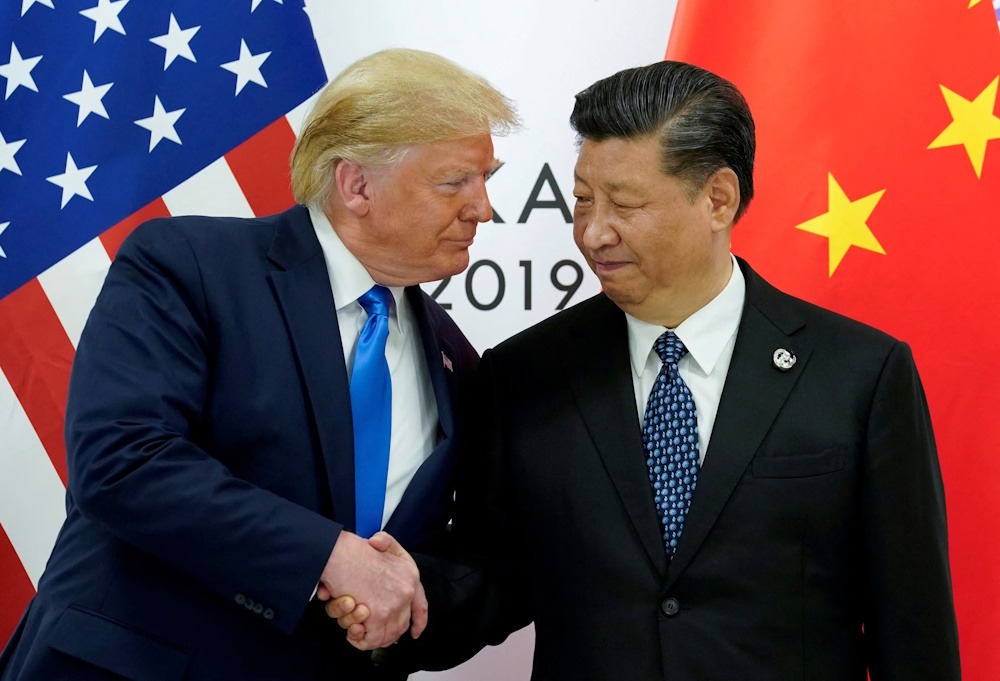
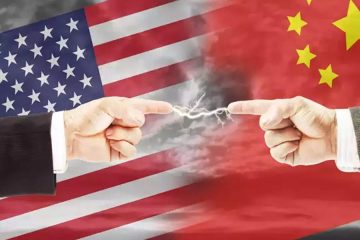
US President Donald Trump and President Xi Jinping of China engaged in a discussion regarding trade and geopolitical flashpoints, including Taiwan, during a call on Wednesday, in anticipation of a scheduled in-person meeting in April. Trump characterized the call as “excellent” and “long and thorough,” noting that the discussion included plans to boost Chinese purchases of US soybeans to 20 million tonnes for the current season, along with acquisitions of oil and gas and “airplane engine deliveries.” Trump stated that China has pledged to import 25 million tonnes of American soybeans “for next season.” The two leaders also discussed his planned visit to China in April, broader trade issues, Russia’s war in Ukraine, and Taiwan. Trump remarked that the conversation was “all very positive!” The Chinese government, however, framed their discussion regarding the self-governing island, which it regards as its own territory, in a more contentious manner. Xi addressed the Taiwan issue, specifically urging the US to approach arms sales to Taipei with “utmost caution” and asserting that Beijing will never permit the island to be separated, as stated by China’s Foreign Ministry. Xi urged both parties to enhance communication, effectively address differences, and broaden cooperation. “Neither neglect small acts of goodwill nor commit minor wrongdoings,” Xi stated. “We should proceed one thing at a time and steadily build mutual trust.”
Later, Trump informed that the conversation lasted an hour and mentioned that alongside his spring visit to China, Xi intended to visit Washington “toward the end of the year.” The discussion, he stated, encompassed “a lot of topics.” Trump stated in the interview “It’s important that I have a good relationship, and for him, that he has a good relationship with me.” Analysts highlighted the absence of reference to China’s recent diplomatic tensions with Japan as an indication that the relationship has seen improvement over the past few months. The leaders’ final phone call in November was marked by escalating tensions between Beijing and Tokyo regarding Taiwan. “The positive tone in both readouts is consistent, boding well for the relationship beyond 2026,” said Neo Wang. Nevertheless, the contrasting accounts of the dialogue concerning Taiwan reveal that persistent tensions remain between the world’s two largest economies, even as Trump and Xi have aimed to ease a trade conflict that escalated soon after the US president resumed his position last year. Washington approved arms sales to Taiwan worth as much as $11.15 billion last year — one of its largest ever — in an effort to bolster the island’s defenses and deter potential Chinese aggression. The action provoked strong condemnation from Beijing, which stated its firm opposition to the US arms sale.
“Xi’s emphasis on Taiwan may reflect the Chinese side’s displeasure towards the Trump administration’s recent approval of a large arm-sale package for the island, but it doesn’t appear that this issue is going to derail the ongoing bilateral truce,” said Gabriel Wildau. Wednesday’s call occurs as Trump and Xi are scheduled to engage in several meetings this year, with a summit possibly taking place as early as April. Earlier Wednesday, Xi engaged in conversation with his Russian counterpart, Vladimir Putin. US-China relations have stabilized following the one-year trade truce reached by Xi and Trump in South Korea last year. Prior to that, reciprocal tariff increases and export restrictions unsettled global financial markets and heightened concerns about an economic downturn. Despite the detente, China’s efforts to bolster trade relations with traditional US allies, Trump’s seizure of Venezuelan strongman and Beijing ally Nicolas Maduro, and the persistent pressure campaign against Iran have jeopardized that delicate peace. Shipments of Venezuelan oil to China, which averaged 400,000 barrels a day last year, fell to zero in January following a US naval crackdown on the transport of sanctioned crude from that country. Trump has stated that he welcomes Chinese investment in Venezuela as he aims to rebuild the country’s beleaguered energy infrastructure.
The US president has issued a warning of tariffs against any nation engaging in trade with Iran, as he seeks to intensify pressure on the Islamic Republic’s leadership to negotiate an agreement regarding its nuclear program. China stands as the leading purchaser of Iranian oil globally. Trump’s own sweeping tariff regime, along with concerns that the US may no longer be a dependable economic or security partner, have prompted some allies to pursue stronger relations with Beijing. Several European leaders have sought an audience with Xi, including French President Emmanuel Macron and British Prime Minister Keir Starmer, who both traveled to Beijing in recent months as part of a diplomatic reset. Canada has reached an agreement with China regarding trade matters, reflecting Ottawa’s decision to diversify its trade in light of ongoing tensions with Trump. Trump has also taken steps to strengthen alternative sources of rare earths in an effort to reduce China’s dominance over critical minerals, announcing earlier this week plans to initiate a $12 billion stockpile. The European Union is actively proposing to the US a partnership aimed at exploring collaborative efforts to source the essential minerals required for contemporary technologies. Both the US and EU have become reliant on an abundance of inexpensive Chinese minerals, granting Beijing significant influence over their supply chains.
In October, Trump and Xi convened on the margins of the Asia-Pacific Economic Cooperation Summit in South Korea, where they reached an agreement to reduce tariffs and take action against the influx of fentanyl and other illegal drugs into the United States. In the interim, significant advancements have been made on other issues. Trump collaborated with Xi recently to finalize a long-anticipated agreement for TikTok and its Chinese parent company, ByteDance Ltd., to hand over portions of their US operations to a group of American investors. A deal was originally set to be finalized by January 2025 to prevent a US ban on the widely used social media app; however, Trump extended the deadline multiple times to allow TikTok additional time to complete the agreement. The future of this matter emerged as a significant bargaining chip for China in wider trade negotiations.