Shenzhou 21 Makes Record-Breaking Docking with Space Station in Just 3.5 Hours
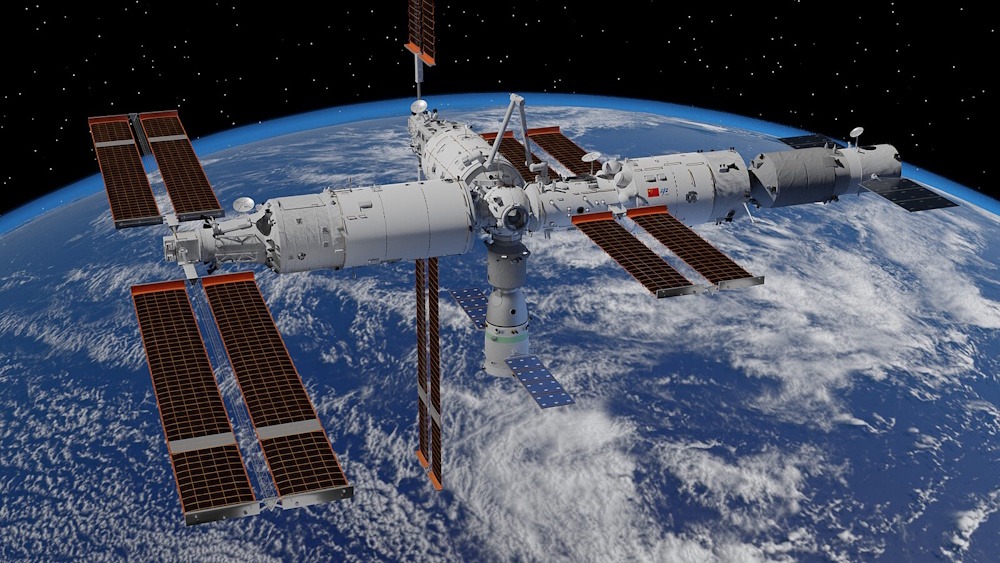
On Saturday, China announced that its Shenzhou 21 spaceship successfully docked with the country’s space station, achieving this feat with its latest crew of three at a record speed following a successful launch. The entire docking process lasted approximately 3.5 hours, which is three hours shorter than previous missions, as stated by the China Manned Space Agency. The Shenzhou 21 spaceship launched as scheduled at 11:44 pm on Friday from the Jiuquan launch center in northwestern China. The three astronauts aboard Shenzhou 21 are set to enter the Tianhe core module of the space station. The crew features pilot and mission commander Zhang Lu, who previously participated in the Shenzhou 15 mission to the space station two years prior. The other two are embarking on their inaugural flight. Wu Fei, 32, an engineer, stands out as the nation’s youngest astronaut to embark on a spaceflight. Zhang Hongzhang is a payload specialist who transitioned from a researcher concentrating on new energy and new materials to the role of an astronaut.
Zhang stated that the team aims to transform the Tiangong space station into a utopia through activities such as tai-chi, gardening, and the appreciation of poetry. Similar to their predecessors, they will remain at the station for approximately six months. The astronauts aimed to execute 27 scientific and applied projects in biotechnology, aerospace medicine, materials science, and various other fields while in space. In a historic move, China is dispatching mice to its space station for the first time. According to Han Pei, an engineer at the Chinese Academy of Sciences, “Four in total, two males and two females, will be monitored to study how weightlessness and confinement affect their behavioral patterns. This will help us master key technologies for the breeding and monitoring of small mammals in space and make a preliminary assessment of the mice’s emergency responses and adaptive changes in space environments,” Han said.
According to the reports, the space mice were chosen from a pool of 300 candidates following over 60 days of rigorous training. According to the reports, the mice are anticipated to remain in the space station for five to seven days before returning to Earth aboard Shenzhou 20. China’s space program stands as a significant source of national pride and exemplifies the country’s technological advancements achieved over the past two decades. In 2003, China embarked on its inaugural crewed mission, joining the ranks of the former Soviet Union and the United States as only the third nation to achieve this milestone. Zhang Jingbo, a spokesperson for the China’s Space Agency, stated that the research and development work is advancing smoothly for the agency’s plans to send an astronaut to the moon. “Our fixed goal of China landing a person on the moon by 2030 is firm,” Zhang said ahead of the launch.
The Tiangong, or Heavenly Palace, space station has positioned China as a significant contender in the realm of space exploration. The construction was solely undertaken by China following its exclusion from the International Space Station due to US national security issues. The People’s Liberation Army, the military arm of the ruling Communist Party, oversees China’s space programme. In a collaboration with Pakistan, China is selecting two Pakistani astronauts to travel to China for training. The space agency intends to dispatch one of them on a brief mission as a payload expert, marking the inaugural visit to the space station by a foreign astronaut.