Russian aggression in Ukraine fulfills Trump’s ultimatum to Putin
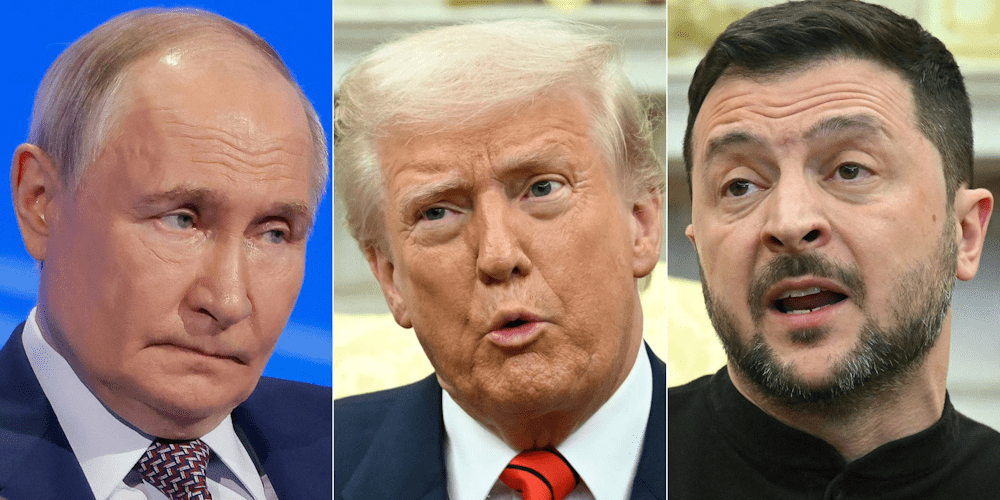
It has been 42 days since President Donald Trump issued Russia a 10-to-12 day ultimatum to reach a ceasefire in Ukraine or confront “very severe consequences,” and 229 days since he assumed office, claiming he could resolve the war in 24 hours. The outcome thus far: A severe intensification of Russia’s invasion. What will it require for Trump to act on his repeated threats, reiterated last week, to employ both sticks and carrots in his interactions with Vladimir Putin? One might consider that moment to be approaching. In Beijing, Putin appeared to mock Trump while observing a military parade showcasing Chinese weaponry explicitly aimed at Taiwan and its American ally.
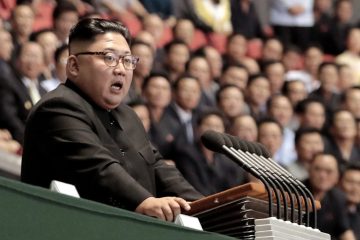
In a calculated move, he extended an invitation to North Korea’s Kim Jong Un to join him in his armored Aurus Senat limousine, echoing Trump’s earlier gesture in Alaska, where he offered the same to the Russian leader in the 10-ton US presidential Cadillac referred to as “The Beast.” This provoked a strong response, as evidenced by Trump’s reaction on Truth Social, and rightly so. Over the weekend, Putin escalated his offensive, launching a historic barrage of over 800 drones and missiles at Ukraine, and notably targeting the main government building in Kyiv for the first time. Since his inauguration, Trump has provided Putin with many of the concessions he seeks in Ukraine. He has flattered, assigned blame to his own country for Russia’s unprovoked invasion, reduced military aid for Kyiv, and even — whether intentionally or not — assisted Russia in regaining lost territory by restricting Ukrainian access to US intelligence at a crucial time.
What further actions can Trump realistically pursue before recognizing what should have been evident from the outset: that Putin seeks no peace unless it entails Ukraine’s capitulation and Europe’s withdrawal? Currently, as the US President reiterates the need to wait and see what Putin desires (really?), President Volodymyr Zelenskiy reports that Russia has gathered 100,000 troops for a new offensive aimed at capturing the strategic mining town of Pokrovsk, located in Ukraine’s eastern Donetsk province. This was all foreseen long ago. I wrote from Pokrovsk, shortly after Trump’s November 2024 election, to caution against the very path he has chosen, urging him instead to leverage the significant influence he would possess as president to persuade Putin to engage in authentic peace negotiations. This continues to be the most prudent approach for Europe and the US, as well as for Ukraine, but there is no indication that Trump is engaged. During his call with European leaders and Zelenskyy on Thursday, as they sought to finalize plans for an international force to uphold any peace negotiated by the US, Trump appeared more focused on ensuring he would not be held accountable if no agreement materializes.
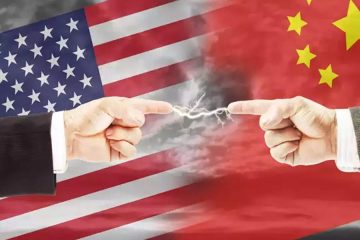
Trump reportedly voiced his frustration during the call regarding Europe’s continued purchase of oil from Russia. He called on them to halt their actions and to apply pressure on China to follow suit, mirroring the US’s approach of imposing punitive tariffs on India. This situation is peculiar on multiple levels. First, it is accurate that Europe persists in purchasing oil from Russia; however, a rerouting loophole is being addressed, and the bulk of this oil is acquired directly by only two nations — Hungary and Slovakia — due to an exemption they secured in return for not obstructing an EU ban. Both nations are governed by populist leaders who align with Putin, exhibit hostility towards the EU majority, and maintain a close relationship with Trump. If anyone has the ability to convince Viktor Orban and Robert Fico to abandon their inexpensive, piped, Russian oil, it is the 47th US president. Similarly, Trump has not attempted to pressure China into stopping its imports of Russian oil because, as he often states, he lacks the leverage. He discovered early on in the initial rounds of a tariff war with Beijing that President Xi Jinping possesses numerous avenues for retaliation. If the US lacks the strength to compel Xi’s actions, then Europe is undoubtedly in an even weaker position, as Trump is well aware.
However, if these are merely justifications for inaction, what accounts for Trump’s cautious approach in handling relations with Moscow? One explanation, excluding conspiracy theories, is that he has effectively trapped himself, similar to his situation with the Epstein files. After energizing his supporters with the claim that Democrats were concealing a list of individuals to whom Jeffrey Epstein had provided underage girls, Trump faced political repercussions when his administration announced that it had searched thoroughly and uncovered no such list. Trump has also crafted a narrative regarding Ukraine. The narrative suggests that it is a corrupt place, distant and inconsequential to US interests, ultimately destined to capitulate sooner or later, as Russia is simply larger and more powerful. Furthermore, the conflict is the responsibility of everyone except Russia. It was initiated by NATO, former US President Joe Biden, or the Ukrainians themselves — take your pick — just not Putin, the individual who issued the order to invade. The US, in this disturbing narrative, has squandered significant amounts of taxpayer money that was essential for domestic needs. Fortunately, once Trump assumed the presidency and had the opportunity to meet with Putin, this unnecessary conflict would come to an end. That hasn’t worked out, as Putin did initiate the war and has thus far not succeeded in achieving his objectives. Pokrovsk has endured a prolonged siege for nearly a year, and with the US now pursuing elusive threats fabricated in the Kremlin, he finds himself with a prime opportunity to achieve success in capturing it. There is no reason to halt and seek reconciliation.
I have a feeling that, on some level, Trump recognizes the predicament he has found himself in. He has raised tariffs on India, citing its purchase of Russian oil. During the weekend, he informed reporters of his preparedness to advance to a second phase of sanctions against Russia. Nevertheless, the US president provided no clarity on the timing or method of his intentions, nor did he seem to recognize that altering Putin’s decision-making will necessitate a comprehensive shift in strategy that extends far beyond mere economic pressure. Trump’s inclination is to distance himself from Ukraine and delegate responsibility to Europe, as he appears to hold the belief — similar to that of former US Secretary of State James Baker during the early 1990s Yugoslav wars — that the US doesn’t “have a dog in that fight.” If that is the situation, then he, similar to Baker, is mistaken. As that war, World Wars I and II, North Korea’s deep involvement in Ukraine, and last week’s summit and military parade in Beijing illustrate, events in Europe seldom remain confined to the continent.