Putin Announces Russia’s First Closed Fuel Cycle Nuclear System by 2030
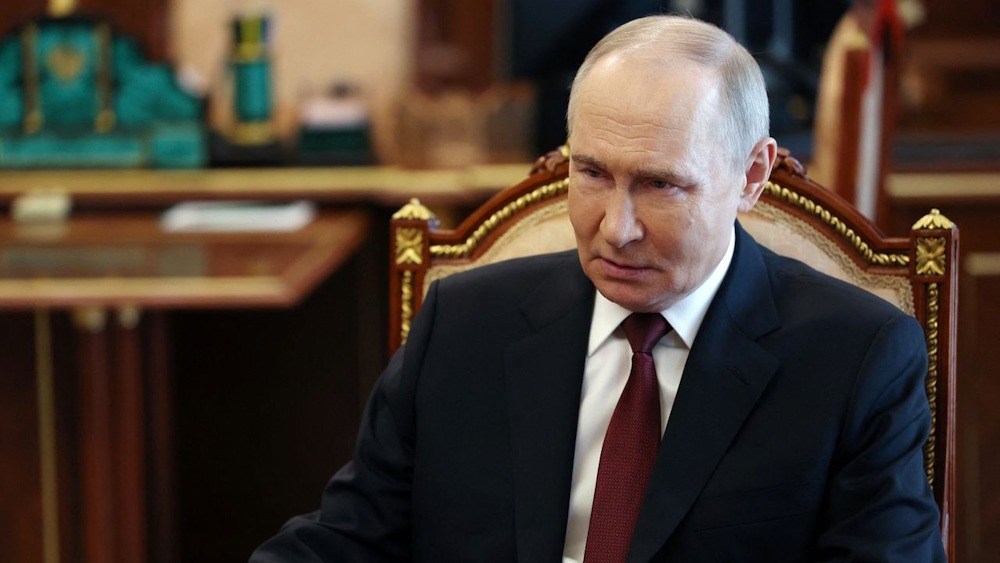
On Thursday, President Vladimir Putin announced that by 2023, Russia will unveil the world’s first nuclear power system featuring a closed fuel cycle. This innovative system is designed to reuse spent fuel multiple times, significantly decreasing the demand for uranium supplies. At the World Atomic Week international forum, which convened several global leaders, including International Atomic Energy Agency Director General Rafael Grossi, Putin made the announcement. “As early as 2030, we plan to launch the world’s first nuclear energy system with a closed fuel cycle in Russia, in the Tomsk Region,” Putin said. During his televised address at the forum, the Russian leader referred to it as a “truly revolutionary development by Russian scientists and engineers”.
He stated that nearly the entire volume, specifically 95 percent of spent fuel, will be repurposed in reactors on multiple occasions. “Such a mechanism will ultimately make it possible to almost completely resolve the problem of radioactive waste accumulation.” Moreover, it is vital to note that it will fundamentally resolve the problem of uranium supply, he stated. Putin extended an invitation to international scientists, urging them to collaborate in the development of technologies that would pave the way for a new era of peaceful nuclear energy. He also emphasized the need for developing innovative models to finance the construction of nuclear power plants. “I believe it is necessary to develop modern models for financing the construction of nuclear power plants and to involve international financial institutions and development banks in such projects,” he said.
Putin stated that the construction of nuclear power plants demands substantial resources, indicating that the risks and benefits must be carefully weighed among the primary stakeholders involved in these projects: states, investors, and consumers. Earlier this year, the New Development Bank, confirmed its readiness to finance nuclear projects. I would like to emphasize this point. At the end of last year, a mechanism for coordinating the efforts of BRICS countries was established at Russia’s initiative, creating a platform focused on nuclear energy, he stated. The World Atomic Week serves as a significant international platform, organized by Russia’s state nuclear energy corporation Rosatom, to commemorate the 80th anniversary of the nation’s nuclear industry. As per reports, approximately 20,000 representatives from over 100 countries are in attendance.
This diverse group includes ministers, business leaders, scientists, and senior officials from prominent organizations such as the International Atomic Energy Agency, the World Nuclear Association, and the World Association of Nuclear Operators. Among those present are Belarusian leader Alexander Lukashenko, Acting President of Myanmar Min Aung Hlaing, Armenian Prime Minister Nikol Pashinyan, Ethiopian Prime Minister Abiy Ahmed Ali, IAEA Director General Grossi, along with delegates from Egypt, Iran, Niger, and Uzbekistan.