Nations Clash Over Key Choke Points Against Trump’s Strategy

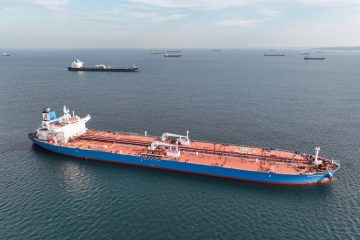
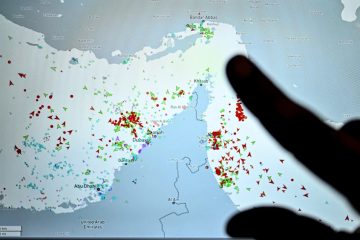
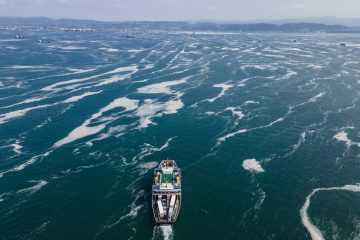
President Trump has confidently exercised the power of the United States on the global stage, adopting a more aggressive stance both economically and militarily in an effort to influence the actions of other nations. From high tariffs to the war with Iran, Mr. Trump has asserted that this assertive approach on the global stage has only benefits, and that previous leaders were misguided for not leveraging America’s strength. However, a distinct disadvantage of the strategy is becoming apparent. While numerous nations have complied with the president’s demands, a few have discovered a remarkably effective new strategy to resist. Mr. Trump’s aggression has provided them with the chance to assess their dominance over critical choke points, posing a threat to both the United States and the global economy. One significant choke point is the Strait of Hormuz. Iran, which represents less than 1 percent of global economic output, exerts control over the shipping lane that carries a fifth of the world’s oil and gas. The closure that commenced when the United States and Israel initiated attacks on Iran at the end of February has obstructed shipments of fuel, fertilizer, and other goods, resulting in a significant increase in gas prices and heightening concerns among US farmers and manufacturers.
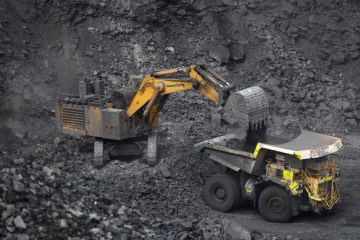
One year ago on Thursday, Mr. Trump entered the Rose Garden and announced tariffs on what he referred to as “Liberation Day,” marking another experiment in retaliatory coercion. While numerous governments — including influential economies such as the European Union — adhered to US demands, China stood out as a significant exception. Beijing has implemented a licensing system for the export of rare-earth minerals and magnets, granting China unmatched authority over the global manufacturing landscape. Makers of cars, semiconductors, fighter jets, and other goods — the backbone of a US factory system that Mr. Trump aims to revive — rely on rare earths, the majority of which are processed in China. Although China is granting certain licenses and permitting a limited flow of rare earths, many manufacturers are experiencing shortages in their supplies. China has halted exports of these materials to companies associated with the US military, resulting in significant challenges for them in sourcing alternative suppliers. Mr. Trump’s choice to postpone a trip to China by approximately six weeks until mid-May has raised concerns among some executives who were optimistic that his encounter with Xi Jinping, the Chinese leader, might ease the tension.
The challenges highlight a stark reality for the president: Despite the strength of the American economy, its deep connections with the global landscape can still lead to significant vulnerabilities. Edward Fishman remarked that the global community had observed how the mineral controls had prompted Mr. Trump to retreat from China last year. According to Mr. Fishman, following Mr. Trump’s January threat to take over Greenland, even European officials began exploring potential choke points in US trade. “The lesson is that the way to deal with American economic coercion is to fight back,” he stated. “Iran now is demonstrating that once more.” China initiated the development of a rare-earth control system prior to Mr. Trump’s re-election, a strategy that is not entirely unprecedented. The United States has a well-documented history of leveraging supply chains as a tool of influence, ranging from its dominance over the global banking system to efforts aimed at restricting the transfer of advanced artificial intelligence technology to China.
However, Mr. Trump escalated American antagonism, employing measures that included tariffs and military strikes. One of his fundamental principles has been that the United States ought to enhance its ability to leverage its power. He contends that, as the largest consumer market globally, the United States has the ability to compel other nations to engage in trade under conditions that are less advantageous for them, and that with its formidable military strength, it can oust leaders from Venezuela to Iran. Mr. Trump has rejected any criticism suggesting that those actions breach international alliances, laws, or conventions, choosing instead to view the world through the lens of raw power. The nations that have effectively countered him, such as China, appear to understand that same principle, reacting in economically detrimental manners in an attempt to compel him to relent. It is yet to be determined if Iran’s dominance over the Strait of Hormuz will lead Mr. Trump to reconsider his campaign. However, the disruption seems to be motivating him to seek a swifter resolution to the conflict.