Luxury Car Sales Slide in China, Hurting European Automakers
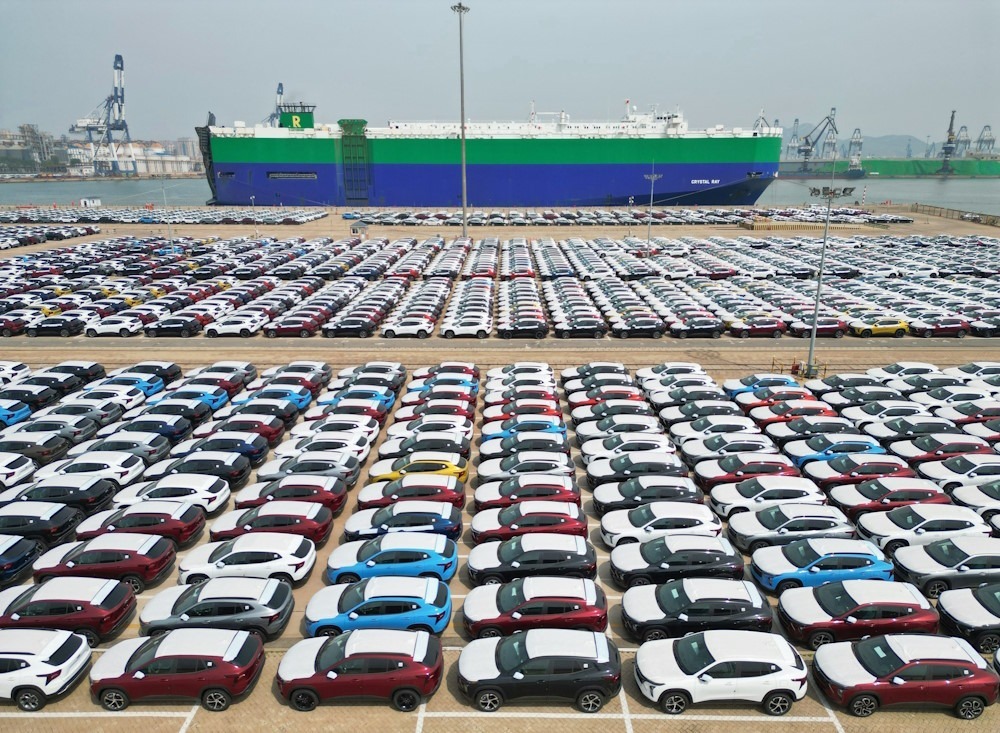
The appetite for foreign luxury cars in China is diminishing as consumers increasingly choose more affordable domestic brands, frequently available at significant discounts, which align with their preferences for sophisticated electronics and comfort. This poses a significant challenge for European carmakers such as Porsche, Aston Martin, Mercedes-Benz, and BMW, who have historically held a strong position in the upper echelons of the world’s largest auto market. A sustained decline in the property market in China has resulted in diminished enthusiasm among consumers for significant purchases. Meanwhile, the affluent are becoming increasingly reticent about publicly showcasing their wealth, said Paul Gong. A significant number of car buyers have been influenced by a trade-in subsidy of 20,000 yuan (USD 2,830) provided by the Chinese government for the acquisition of electric and plug-in hybrid vehicles. According to Gong, consumers often opted for more affordable, entry-level vehicles, where the discounts have a greater impact, and these cars are predominantly manufactured in China. “Slowing economic growth is one key driver behind weaker demand for premium cars,” said Claire Yuan, referring to a segment that typically counts car brands such as Mercedes-Benz and BMW.
Mexico’s significant tariff increase will impact Indian auto exports by $1 billion. The market share of premium car sales in China, typically priced above 300,000 yuan (USD 42,400), has more than doubled from 2017 to 2023, reaching approximately 15 percent of total sales, according to S and P. The trend is now reversing. The share of premium car sales decreased to 14 percent in 2024 and further declined to 13 percent in the first nine months of 2025, according to S and P. Chinese automakers are increasingly making their presence felt. Despite a slowdown in luxury auto sales, Chinese manufacturers, such as electric vehicle maker BYD, have demonstrated a more aggressive approach to technological innovation compared to many Western brands. Analysts noted that these companies are frequently introducing new electric vehicles and hybrids at more affordable prices, including premium models. Yuan stated, “Their (Chinese carmakers’) products are more competitive and more affordable even in the premium segment.” That is the reason these foreign brands are steadily losing momentum.
According to the China Association of Automobile Manufacturers, the share of passenger car sales held by Chinese brands rose to nearly 70 percent in the first 11 months of this year. It was reported Thursday that German brands held a 12 percent share, Japanese brands around 10 percent, and US brands nearly 6 percent. In recent years, BYD has surpassed Volkswagen to become the largest car seller in China. According to the China Passenger Car Association, BYD has emerged as the top-selling car brand this year in China for new energy vehicles, encompassing both electric vehicles and hybrids. BYD has reduced prices of its electric and plug-in hybrid models by as much as 34 per cent, creating competitive pressure on significant rivals such as Geely and Leapmotor. According to its latest earnings report, Mercedes-Benz’s sales by units in China experienced a decline of 27 per cent compared to the same period last year during the July-September quarter. The sales of BMWs and its subsidiary brand Minis in China experienced a decline of 11.2 percent year-on-year during the first nine months of 2025. Porsche and Aston Martin also noted the impact of declining demand in China. Italian luxury carmaker Ferrari has announced a 13 percent decline in car shipments to mainland China, Hong Kong, and Taiwan for the period of January to September compared to the previous year. Sales were observed to have declined exclusively in that region during that period.
Ola Kllenius, informed investors in late October that the hyper-competition in China is here to stay for the foreseeable future. The carmaker stated that the market situation in the premium and luxury segment in China remained tense. The decline in interest in luxury vehicles is significantly impacting dealerships. Li Yi, a salesperson in charge of second-hand cars at a Beijing Porsche centre, stated that a 2024 Panamera 2.9T with a mileage of approximately 20,000 kilometres (12,400 miles) is priced at 950,000 yuan (USD 134,300). The former owner acquired it for approximately 1.4 million yuan (USD 198,454). “It’s mainly due to the sluggish economic situation,” Li said. It is not solely Porsche. Benz, BMW, Bentley, and Rolls-Royce are all encountering a similar predicament. Porsche and Bentley belong to the Volkswagen group. At a used-car market in Beijing, four other car dealership representatives who spoke, with premium cars being sold at markedly reduced prices over the past year. China’s monthly auto production in November exceeded a record of 3.5 million units for the first time, as reported by the CAAM on Thursday. However, domestic auto sales experienced a decline of 4 percent year-on-year due to waning demand, following the cessation of certain trade-in subsidies in various regions. Who possesses financial resources in today’s world? “People’s pockets are cleaner than their faces,” joked one used car salesperson who identified herself as Hao. “Prices have been sliding for two years and she offers bigger discounts,” said the salesperson, who did not provide her full name as she was not authorized by her company to speak to the media. “Now they think hard before they spend,” she said.