Japan’s rare earth plan helps West minimize China dependence
This year, the world responded with concern as Beijing implemented sweeping export controls on rare earths, the essential minerals used in the production of a wide range of products, from automobiles to cutting-edge electronics. For Japan, the experience seemed reminiscent of the past. China holds a significant dominance over the supply of the metals. In 2010, Japan faced a significant challenge when China effectively severed ties amid a territorial dispute between the two nations. Tokyo has since discreetly assembled a supply chain that is significantly less reliant on China. For Japan, this serves as a crucial safeguard against political risk, particularly highlighted by a recent escalation in tensions between the nations. As the United States and other nations strive to secure rare earths beyond China and enhance their domestic supplies, Japan’s experience offers valuable insights into effective strategies, as revealed through interviews with current and former government officials, business executives, and industry experts in Japan. “The urgency of the rare-earths situation is just now dawning on the United States and Europe,” said Naoki Kobayashi. “For Japan, this painful lesson came 15 years ago,” he stated.
President Trump has stated, “I believe it will take the United States about a year to secure ample rare-earth supplies.” However, Japan exemplifies the challenges involved in extricating itself from China’s influence, particularly regarding its highly cost-effective rare-earth processing facilities. Experts assert that such an endeavor necessitates both ongoing government backing and global cooperation. In September 2010, a collision near disputed islands involving a Chinese fishing trawler and two Japanese Coast Guard vessels escalated into a diplomatic and economic crisis. Japan has detained the captain of a Chinese ship, prompting Beijing to respond with an unannounced, two-month embargo on rare-earth exports. Initially, the importance of China’s action was overlooked by certain Japanese officials. Tatsuya Terazawa held the position of overseeing economic policy at Japan’s trade ministry in 2010. He remembered that the ministry’s chief auto industry official hurried to his desk, alerting him that the entire automotive supply chain could be halted due to the abrupt cutoff. “I had to confess, I had zero knowledge about rare earths,” Mr. Terazawa stated.
He stated that his colleague clarified that these materials were crucial components for the magnets utilized in motors throughout Japan’s automotive industry. Japan, similar to many industrialized nations, had relinquished control of this crucial supply almost entirely to China. Mr. Terazawa played a pivotal role in shaping the upcoming suite of economic policies for the trade ministry. He assembled a package, valued at just over $1 billion at that time, designed to mitigate Japan’s supply chain vulnerability to rare earths. It encompassed significant assistance for Japanese organizations to broaden their rare-earth supply sources. “At the time, I was criticized that I was demanding much more money than necessary,” Mr. Terazawa stated. “But I was determined that Japan never repeat this incident.” The timing was, in certain respects, advantageous. Sojitz, a Japanese conglomerate, and Jogmec, the government body responsible for mineral resource security, were exploring alternatives to Chinese sources for rare-earth materials. Lynas, an Australian mining company, faced financial difficulties. Lynas aimed to establish the world’s first integrated rare-earths supply chain independent of China, focusing on mining the ores in Australia and refining them in Malaysia. However, it faced challenges in gathering the necessary capital to boost production at its Malaysian refining site.
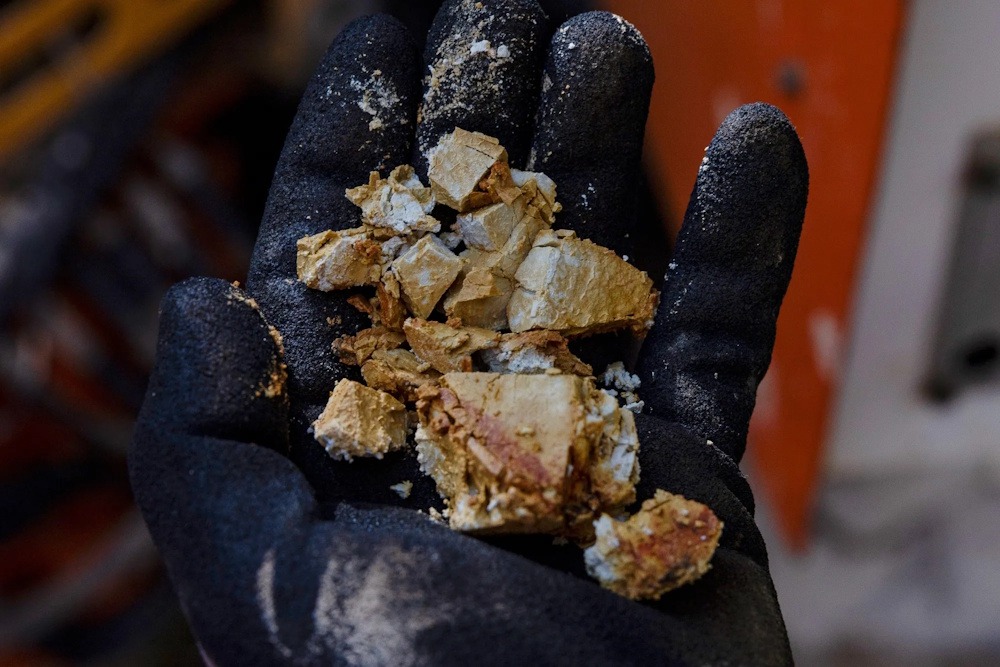
Sojitz needed to seek sources of rare earths beyond China. “Factories in many places would have to stop operating,” said Kosuke Uemura highlighting the critical need for stable supplies. “Lynas was the only option,” he said at the time. In 2011, Jogmec and Sojitz entered into an agreement that facilitated $250 million in loans and equity for Lynas. The transaction ensured that Japan would have a long-term supply of rare earths sourced from outside China. In Western Australia today, workers are being flown out from Perth on rotations to extract rare-earth ore from an open-pit mine owned by Lynas, located on the remote Mount Weld volcanic plug. The partially purified concentrate is subsequently transported 5,000 miles to the company’s facility in Kuantan, Malaysia — until this year, the sole large-scale rare-earth separation plant functioning outside of China. The materials undergo a chemical process, resulting in individual rare-earth oxides that are sufficiently pure for manufacturing purposes. From Malaysia, the metals are transported another 3,000 miles to Japan, where Sojitz oversees distribution to domestic magnet makers. In Japan, magnets find application in various products, including vehicles manufactured by automakers such as Toyota.
Japan has made substantial improvements to its supply chain resilience. During the 2010 trade dispute, industry estimates indicated that Japanese rare-earth imports from China accounted for 90 percent or more; however, that figure has since decreased to approximately 60 percent to 70 percent. Sojitz received its initial significant shipments of rare earths from the Malaysia facility in 2012 and has consistently broadened the range of metals it imports. In October, it incorporated a type of specialized, heat-resistant magnet ingredients into its portfolio. Mr. Uemura stated that the most challenging bottleneck was the refining process in Malaysia. The process of chemically separating rare earth elements generates substantial amounts of acidic waste along with thousands of tons of low-level radioactive byproducts. The management and disposal of waste is both costly and labor-intensive. From 2011 to 2012, the Lynas facility in Malaysia encountered prolonged delays due to strong local opposition and legal hurdles. The facility commenced operations only after it had revised its residue management plan several times. In contrast, Chinese processing factories frequently operate under minimal regulation, with some functioning illegally, resulting in the creation of toxic waste sites. Consequently, Mr. Uemura stated, Sojitz and Lynas face higher costs compared to their Chinese competitors and necessitate public support. “If we were to compete normally with China, we’d be playing on a different field altogether,” he stated. “This gap is absolutely unbridgeable.” This year, China implemented significant rare-earth export controls, initially in April and subsequently in October, limiting both the materials and the processing technology involved. Beijing’s measures were aimed at all exports, not solely those destined for Japan. Despite the temporary suspension of the broader October restrictions due to a truce with the United States in November, nations are actively seeking to reduce their reliance on China. The Trump administration has initiated the allocation of federal funds to develop a domestic supply chain. The initiative involves backing the only rare-earth mining operation in the United States located at Mountain Pass, California, along with support for processing and magnet manufacturing facilities situated in North Carolina and Texas.
The United States has also entered into international agreements aimed at diversifying supply chains away from China. Pacts were established with Australia, the European Union, and Japan, the latter being signed during Mr. Trump’s visit to Tokyo in October. William Pesek remarked that Japan’s initiatives since 2010 demonstrate how China’s present export threats could ultimately be counterproductive, prompting countries to reduce their reliance on its rare earths. He cited Japan as an example. China lifted the 2010 export controls on Japan within a few months; however, Japan persisted in diversifying its supply lines. “Export threats are a hard bell to unring because they become a trust issue,” Mr. Pesek said. For officials in Japan, the current situation presents a chance to collaborate with other nations to address the issue of cost — a challenge that, over the past 15 years, Japan has found difficult to manage independently. “If nations agree to buy more non-Chinese rare-earth materials, they can build scale and eventually bring down costs,” according to Mr. Kobayashi, the trade ministry official. Enhanced coordination may lead to the establishment of stronger connections between Japan, known for its expertise in developing mine-to-magnet supply chains, and nations prepared to host and finance processing facilities. However, Mr. Terazawa, the former trade ministry official who currently leads an energy think tank in Tokyo, asserts that any effort towards international cooperation will serve as a measure of true commitment. “The question we need to be asking is why this didn’t happen over the past 15 years,” he stated. During his time in government, Mr. Terazawa emphasized the importance of rare earths as a vital area for bilateral collaboration, notably during the initial Trump administration. “We are still vulnerable, especially the US is still so vulnerable,” he stated. “The US is a great country, for sure, but I don’t think it can deal with China effectively on its own,” Mr. Terazawa stated. The recent agreements to coordinate serve as the foundation. At this juncture, he remarked, arrives the moment of truth: “Is the US really committed to work with its allies?”