Japan’s Cabinet OKs historic defense budget to counter China
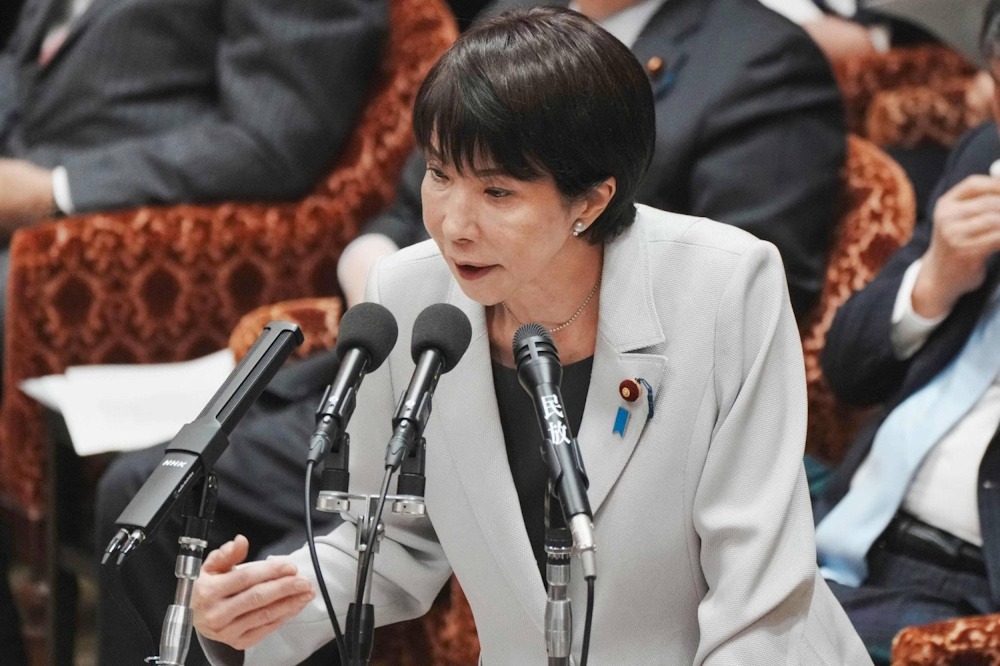
Japan’s Cabinet on Friday approved a historic defence budget plan surpassing 9 trillion yen ($58 billion) for the upcoming year, with the objective of enhancing its strike-back capability and coastal defence through the integration of cruise missiles and unmanned arsenals amid escalating regional tensions. The draft budget for fiscal 2026, commencing in April, reflects a 9.4 percent increase from 2025 and signifies the fourth year of Japan’s continuous five-year initiative aimed at doubling annual arms expenditure to 2 percent of gross domestic product. The rise occurs amid heightened tensions between Japan and China. In November, Japanese Prime Minister Sanae Takaichi stated that her country’s military might engage if China were to act against Taiwan, the self-governing island that Beijing claims must be brought under its control. Takaichi’s government, responding to US pressure for a military increase, committed to reaching the 2 percent target by March, two years ahead of schedule.
Japan is set to revise its current security and defense policy by December 2026, aiming to enhance its military capabilities. Japan has been enhancing its offensive capability with long-range missiles to strike enemy targets from afar, marking a significant departure from its post-World War II principle that restricts the use of force to self-defense. The security strategy currently in place, established in 2022, identifies China as the nation’s foremost strategic challenge and advocates for a more proactive stance for Japan’s Self-Defence Force within its security alliance with the United States. The new budget plan allocates over 970 billion yen (USD 6.2 billion) to enhance Japan’s standoff missile capability, including a 177 billion-yen (USD 1.13 billion) acquisition of domestically developed and enhanced Type-12 surface-to-ship missiles with a range of approximately 1,000 kilometres. The initial deployment of the Type-12 missiles is scheduled for Japan’s southwestern Kumamoto prefecture by March, a year ahead of schedule.
Due to Japan’s aging and declining population and its challenges related to an understaffed military, the government views unmanned weapons as essential. Japan is set to invest 100 billion yen (USD 640 million) to enhance its coastal defenses by deploying massive unmanned air, sea-surface, and underwater drones for surveillance and defense under the SHIELD initiative, scheduled for implementation in March 2028. To expedite deployment, Japan is expected to rely primarily on imports, potentially from Turkiye or Israel. The budget announcement arrives amid escalating tensions between Japan and China, triggered by statements suggesting possible Japanese military intervention if China were to act against Taiwan. Tensions intensified this month as Chinese aircraft carrier drills near southwestern Japan led Tokyo to lodge a protest after Chinese aircraft reportedly locked radar on Japanese aircraft.
The Defence Ministry will establish a new office focused on analyzing operations and equipment to address China’s expanding activities in the Pacific. In June, two Chinese aircraft carriers were observed operating near the southern Japanese island of Iwo Jima simultaneously for the first time, heightening Tokyo’s concerns. Japan is also strengthening its domestic defence industry through collaboration with allies and increased foreign sales following relaxed arms export restrictions. In 2026, Japan plans to allocate over 160 billion yen for joint development of a next-generation fighter jet with Britain and Italy, targeting deployment in 2035, alongside AI-operated drones. Australia selected Mitsubishi Heavy Industries to upgrade its Mogami-class frigate, while Japan has earmarked nearly 10 billion yen to support arms sales. The budget requires parliamentary approval by March and is part of a national budget of 122.3 trillion yen, with Japan set to become the world’s third-largest military spender.