Iran President apologizes to neighbors, rejects US ‘surrender’ demand
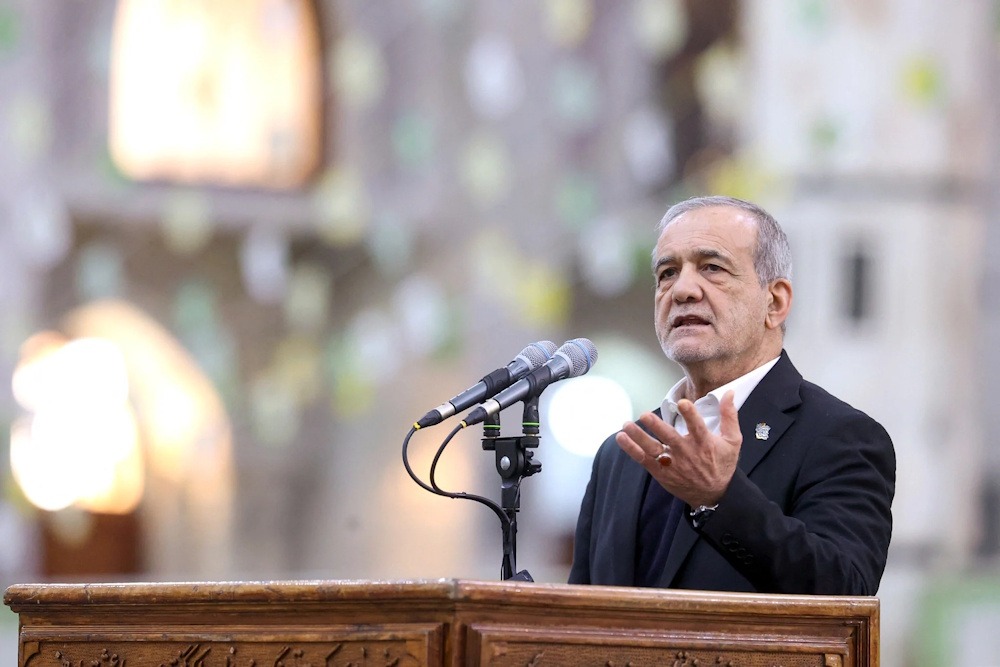
Iranian President Masoud Pezeshkian on Saturday expressed regret to neighboring countries for his nation’s recent series of missile and drone attacks, citing miscommunication within military ranks as the cause, while simultaneously dismissing the United States’ demand for “unconditional surrender.” In a prerecorded address aired on state television, Pezeshkian stated that Tehran would cease attacks on regional countries and expressed regret for the strikes, some of which targeted civilian areas, including airports, resulting in widespread flight delays and cancellations. He stated that Iran’s temporary leadership council had sanctioned the halt of assaults on neighboring nations, except in cases where an attack on Iran was initiated from those countries. Many countries in West Asia host various types of US military bases. He also dismissed Washington’s demand that Iran surrender as a precondition for negotiations, describing it as “a dream that they should take to their grave.”
The comments followed US President Donald Trump’s statement on Friday, emphasizing that there would be no agreement with Iran unless it consented to unconditional surrender. Pezeshkian’s remarks emerged during a time of heightened tensions in the region, as Iranian strikes were directed at Arab West Asian states early Saturday. Air raid sirens echoed across Bahrain, as Saudi Arabia reported the interception of drones targeting the Shaybah oil field and successfully shot down a ballistic missile directed at Prince Sultan Air Base, where US forces are stationed. Explosions were reported in Dubai, leading authorities to activate air defence systems. At Dubai International Airport, passengers were relocated to underground train tunnels following the activation of alerts. Long-haul carrier Emirates subsequently announced that all flights to and from Dubai had been suspended until further notice. At least one drone was observed striking near the passenger concourse at Dubai airport.
Meanwhile, Israel, which initiated the joint strikes last week alongside the US, announced that it had executed a comprehensive series of strikes on Iranian targets, with reports of explosions and smoke rising over western Tehran. Incoming Iranian missiles prompted alerts throughout Israel, leading residents to seek refuge in bomb shelters. The US and Israel have conducted significant strikes on Iranian military sites, leadership targets, and components of its nuclear programme during the conflict that began exactly a week ago. The Supreme Leader of the Islamic Republic, Ayatollah Ali Khamenei, was killed in the initial wave of strikes last Saturday morning. US Treasury Secretary Scott Bessent cautioned during a television interview that the “biggest bombing campaign” of the war was still to come.
In a social media post on Friday, Trump emphasized that the US would only entertain a deal following Iran’s “unconditional surrender” and the rise of what he referred to as “acceptable leaders”. Officials report that the conflict has resulted in the deaths of more than 1,200 individuals in Iran, over 200 in Lebanon, and approximately a dozen in Israel, with six US troops also having lost their lives. Iran’s ambassador to the United Nations has stated that the country would “take all necessary measures” to defend itself.