India pushes US trade pact to dodge Trump’s Brics fury.
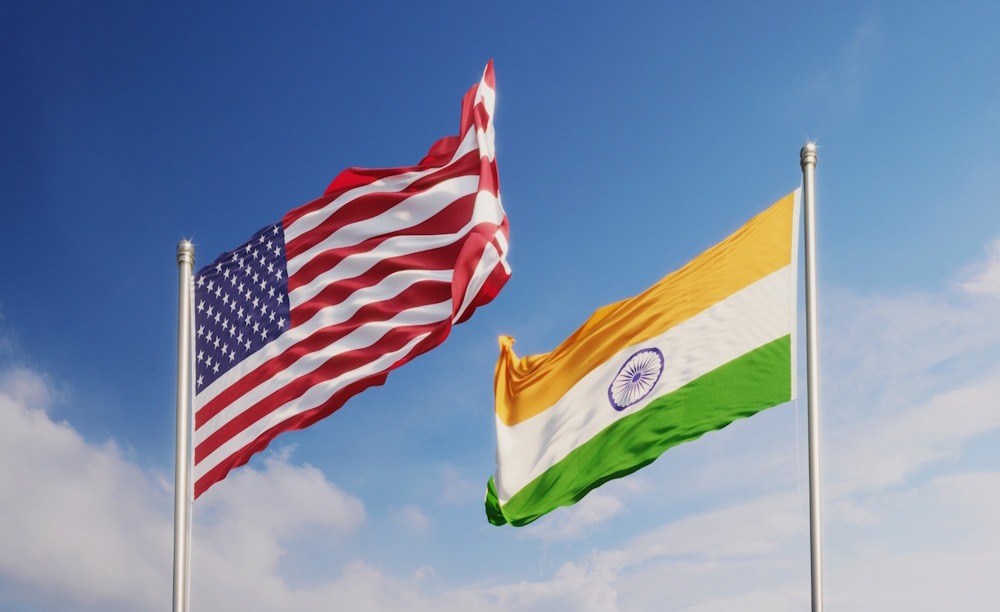
India is attempting to protect itself from President Donald Trump’s criticism of Brics by emphasizing that it has no intentions of contesting the US dollar’s global supremacy, according to sources familiar with the situation.
The US leader has described the Brics group of developing nations as “anti-American” and has accused it of attempting to undermine the dollar’s status as the world’s key currency. He has consistently cautioned about a 10 per cent tariff on all 10 Brics members, including India, while asserting that a trade deal with New Delhi is imminent.
On Wednesday, Trump implemented a new round of levies, including a 50 percent tariff on Brazil, marking one of the highest tariffs announced to date, set to take effect in August. The letter to Brazil follows a two-day Brics summit in Rio de Janeiro, where leaders issued a joint statement criticizing trade-distorting tariffs. Brazil and South Africa have criticized Trump for his anti-Brics remarks, while India has chosen not to respond publicly, indicating a careful approach to its relationship with Washington.
Officials in New Delhi are monitoring Trump’s latest tariff threats, but do not perceive any immediate cause for concern. Officials, speaking on condition of anonymity due to the private nature of the discussions, stated that the US leader believes Brics aims to challenge the dominance of the US dollar, a goal not shared by India. India does not endorse efforts for a unified Brics currency, and any involvement in local currency trade agreements is focused exclusively on mitigating risks, they stated. “Trump is unhappy with some Brics members who have been talking about an alternate reserve currency,” stated Mohan Kumar, a former Indian envoy and lead negotiator at the World Trade Organization, currently teaching at OP Jindal Global University. “India has consistently distinguished between local currency trade and de-dollarization and therefore doesn’t fall in that category.”
As New Delhi prepares to take on the Brics chairmanship in 2026, it must carve out a distinct identity from members such as China and Russia, who aim to strengthen the bloc as a counterbalance to the US. India is confident that its strategic importance to the US and its neutral currency position will lead to a different treatment compared to other Brics nations. India has been nurtured by various US administrations over the years as a strategic ally and essential regional counterbalance to a more assertive China. In April, US Vice President JD Vance stated that the fate of the 21st century “is going to be determined by the strength of the United States and India partnership.”
However, recently those ties have faced strain after Trump claimed credit for brokering a ceasefire between India and Pakistan in May. Modi has countered Trump’s assertions that he leveraged trade as a bargaining tool to achieve a truce. The Trump administration has reached out to Islamabad, including its influential army chief, following the conflict, raising concerns in New Delhi.
The success of the India-US trade deal is crucial, with both nations committed to finalizing it by this fall. Shashi Tharoor, an opposition lawmaker who has spearheaded India’s diplomatic efforts since the Pakistan conflict, stated that a trade deal would symbolize the robust relationship between the two nations. “The relationship with the US is in a good shape,” he stated during an interview in London on Tuesday. If the terms of the trade deal are agreed, “that will be a very, very healthy sign.” Following months of discussions, Indian trade negotiators have presented their best offer to the Trump administration and are now waiting for a response.
The recent tariff threats from Trump could serve as a bargaining chip to obtain additional concessions from New Delhi. Trump has previously threatened to impose 100 per cent levies on Brics if they abandon the dollar in bilateral trade. “We need to distinguish between President Trump’s narrative and his action,” Kumar stated.