Important regions oppose China’s refining capacity cut
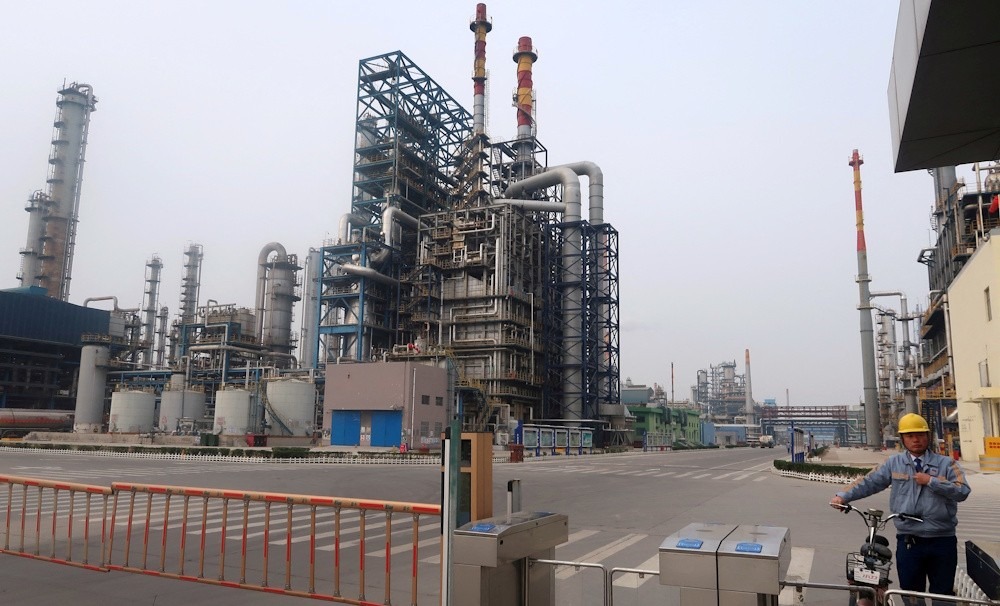
“Build the new before abolishing the old” could serve as an epitaph for China’s commitment to addressing its issue with industrial overcapacity. The Shandong government, along with others, has embraced the Politburo slogan as part of its strategy to address the oil refining surplus. The province is home to the majority of the smaller, independent processors that account for more than one-fifth of China’s capacity. Barely profitable, the so-called teapots find themselves at the forefront as Beijing initiates its anti-involution campaign against the fierce competition in the oil industry. Or they ought to be. Shandong stands as a critical area highlighting the ongoing friction between central government directives and their implementation at the regional level. These regions continue to depend on waning industries to provide employment, generate tax revenues, and uphold the GDP goals established by Beijing. “This is probably the most common reason that market participants give for skepticism about the anti-involution campaign,” stated Christopher Beddor. “Local officials might curb output in some areas, but as long as there’s a growth target, they will always be tempted to pull punches or subsidise something else instead,” he said. “When the rubber hits the road, there’s nearly always a bias in favor of growth.”
In Shandong’s case, the province has committed to scaling back its refining operations to prioritize more lucrative petrochemical plants. However, it has also reinstated tax rebates for its legacy processors and has contributed to the revival of capacity in support of its local economy. China’s oil refiners must reduce their production of transport fuel, as the energy transition indicates that demand has diminished. Inexpensive gasoline and diesel pose a challenge for the economy as they contribute to deflation. The central government specifically targeted oil refining, alongside steelmaking, during its annual policy meeting in March. The call for anti-involution has intensified, and a comprehensive reform focused on boosting chemical production while sacrificing fuel is underway. Other resource sectors, such as solar manufacturing and copper smelting, are also under scrutiny, yet they have predominantly been allowed to seek their own solutions. The refining and steel industries are receiving notable focus from Beijing, as waning demand intensifies their challenges, potentially facilitating efforts to compel them to downsize. The danger lies in the fact that not addressing overcapacity in two of the least successful sectors threatens progress in tackling the issue in more dynamic parts of the economy.
According to a source, the current nationwide refining capacity stands at approximately 920 million tons per year, which is below the government’s cap of 1 billion tons that was implemented this year. The difference between the two figures provides flexibility to develop contemporary, cohesive facilities prior to the decommissioning of smaller, obsolete plants. In any case, much of the teapot capacity remains significantly underutilized due to the extremely thin margins. “To put the industry on a sustainable footing, about 100 million tons need to be phased out, a process that could take as long as five years,” Li Xinhua said. Amy Sun, stated, “I expect only about 60 million tons to be shuttered by 2030 as wily teapot operators find ways to scrape by.” Together with new facilities coming online, Sun believes capacity may decrease by only 1.4 percent by the end of the decade. “To account for the drop in demand for gasoline and diesel, the cut to annual capacity needs to be more than 100 million tons by 2030,” according to analyst Claudio Lubis. However, with new refineries on the horizon, “the country’s nameplate capacity may actually rise by the end of the decade, not decline,” he stated.
New refineries are not the sole concern. One of the three Shandong plants that declared bankruptcy last year has resumed production as of June, while the other two are in the process of preparing to restart operations after being acquired by local competitors, according to sources who requested anonymity due to the confidential nature of the information. The new owners received additional crude import quotas from the central government, a crucial support for the teapot sector, following successful lobbying efforts by provincial authorities, according to sources. Local officials are expected to offer additional support to the refineries, which may include tax breaks and preferential treatment in project approvals. The Shandong authorities have reinstated tax breaks on fuel oil purchases, a more affordable feedstock utilized by teapots, for at least six local plants following a reduction in rebates at the beginning of the year. There was no response from the Shandong provincial government or its economic planning agency to phone calls requesting comment. Global money managers are returning to China after years of reluctance, drawn by a remarkable stock rally and the nation’s progress in high-tech sectors.
China’s September business surveys are likely to offer further evidence of a slowdown in the economy during the third quarter. Chinese industrial profits surged after months of declines, indicating that national campaigns to address overcapacity and excessive competition are yielding positive results. According to BE, the increase was attributed to lower costs rather than a surge in demand. China’s automakers will require permits to export electric vehicles beginning next year, indicating that the country’s officials are intensifying their oversight of the world’s largest car market.