IMF Chief: World Unprepared for Iran War Threats
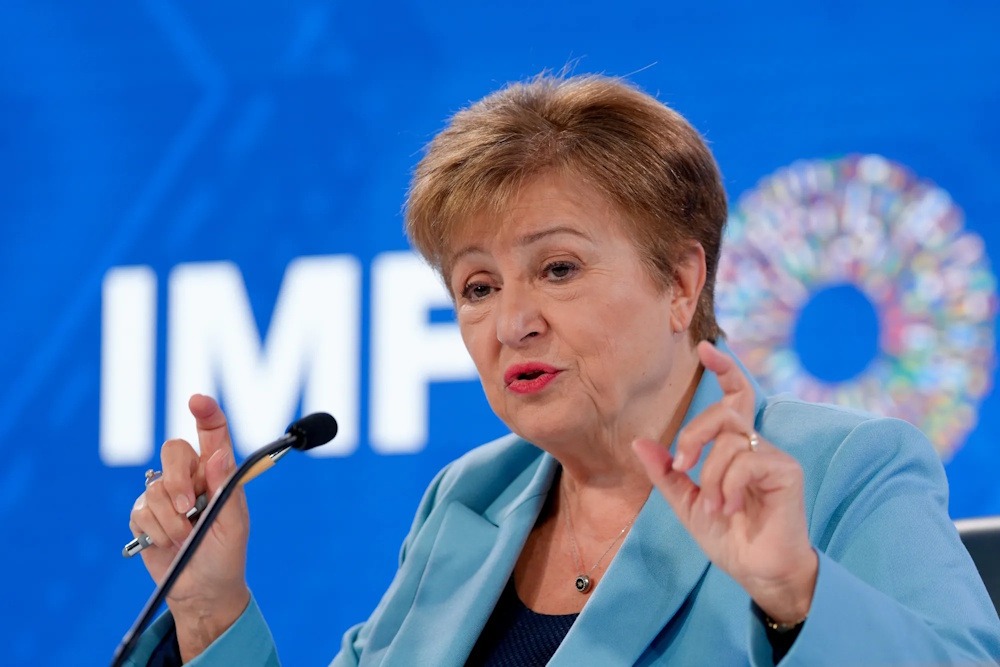
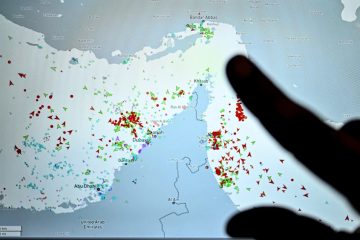
The International Monetary Fund is preparing to revise its projections for global growth downward due to the conflict in Iran, highlighting concerns about a world economy that lacks the resilience to effectively manage shocks, according to the Fund’s chief in an interview on Tuesday. Prior to the US-Israeli assault on Iran, Kristalina Georgieva indicated in Washington that “we were on the way of upgrading our growth projections for 2026. In light of the war’s impact, we will proceed with a downgrade.” The forthcoming figures are expected to be released next week, coinciding with the convening of global policymakers in the US capital by the IMF and World Bank. Georgieva conveyed that her message to them will be: “Buckle up.” By restricting shipments from the energy-rich Gulf region, the war has resulted in a “negative supply shock, meaning that it pushes prices up,” Georgieva stated. “Consequently, prioritizing attention to inflation is essential.” She also cautioned that the global economy is now less equipped to handle a significant downturn, possessing less effective instruments than it did prior to the Covid pandemic.
Moreover, escalating great-power tensions have complicated international cooperation during emergencies, even as such emergencies become increasingly frequent. “The world is confronting this shock following the sustained impacts of Covid and the war in Ukraine: in other words, with diminished policy space,” Georgieva stated. Few governments have implemented significant strategies to reduce their post-Covid debt burden, she stated. In addition to the energy constraints, the conflict has adversely impacted global fertilizer markets and is anticipated to exacerbate food insecurity on a global scale. The United Nations World Food Program cautioned last month that nearly 45 million additional individuals could descend into “acute food insecurity” if the conflict persists beyond the middle of this year, alongside oil prices sustaining levels above $100 a barrel. Brent crude futures were observed at approximately $110 on Tuesday, reflecting an increase from around $70 prior to the onset of hostilities on February 28. The prices for physical oil barrels, along with essential derivatives such as diesel and jet fuel, have experienced a significant increase. The President of the United States, Donald Trump, is indicating a significant escalation later on Tuesday should Iran fail to agree to unblock shipments. In response, Iran has stated it would retaliate by targeting additional Gulf energy assets, heightening concerns that the global fuel crisis may intensify.
Georgieva indicated that the energy squeeze will be experienced by all, albeit in an asymmetrical manner. “If you are in the proximity of the conflict, the impact on you is more severe,” she stated. “If you are an importer of energy, the impact is felt more acutely. And if you have very little or no fiscal space whatsoever, if you have no buffers, you feel it but your businesses and households feel it more.” She stated that central banks will need to “balance attention to inflation with concern about not suffocating growth” — a notable difference from the pandemic downturn in 2020, when fiscal and monetary responses were synchronized in response to a decline in both demand and supply. “Exercise caution in your response to the shock; it represents a particularly sensitive juncture,” Georgieva stated. On the budgetary front, governments globally — particularly in Asia, which relies significantly on Gulf energy — have implemented measures to mitigate the energy surge, such as subsidies or price ceilings.
Georgieva cautioned that certain nations are “taking actions that are not sufficiently calibrated to their fiscal space,” though she did not specify which ones. She also urged governments to refrain from implementing measures like export restrictions on essential commodities “that are going to make the problem for everybody more difficult to solve.” Earlier this year, the IMF emphasized a robust global economy projected to grow by 3.3% in the current year. For the second time in a year, Georgieva will convene a spring meeting where policymakers will confront a new global challenge originating from Washington. The most recent occurrence transpired during the peak of the trade conflict initiated by the Trump administration. “We have been urging our members to recognize we are in a more uncertain, more shock-prone world,” stated the IMF chief. Strong fundamentals, robust institutions, and sound policies that foster productivity and growth are what provide protection. And when the clouds dissipate to some extent, establish your buffers.