Global trade flows will struggle again in 2026
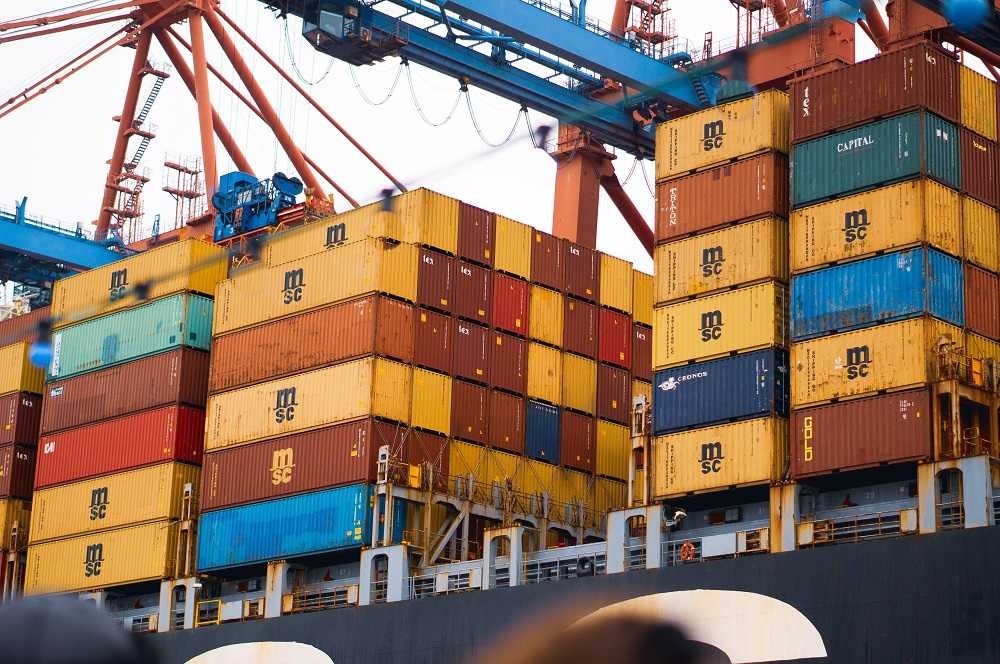
The global trading system, concluding one of its most transformative years in a century, now enters another period fraught with challenges to stability and growth. Merchandise trade across the globe remained resilient through 2025, despite US President Donald Trump beginning to construct a tariff wall around the world’s largest economy. Data indicates that global container volumes increased by 2.1% in October compared to the same month last year. Yet beneath the overall resilience are shifting undercurrents: The US experienced an 8% contraction in inbound volumes, while imports into Africa, the Middle East, Latin America, and India all demonstrated robust growth. “World container supply chains have already begun to adapt and reconfigure trading patterns,” McCown wrote in a research note on Monday. Following a 15.2% increase in container imports for the full year of 2024, “to say that the annual total for 2025 will be in diametric contrast is an understatement.” According to McCown, Trump’s trade threats were among the primary reasons for the restructuring of shipments. “If 2025 was the year of the tariff,” he wrote, “then 2026 will be the year of tariff consequences.”
In recent weeks, various experts have expressed their expectations for increased trade turmoil in the coming year, highlighting these four issues as the most frequently discussed. The US, Canada, and Mexico are set to begin their review of the North American free-trade agreement that was implemented in 2020. The negotiations will lead the three nations into “new territory” due to the innovative provision permitting an update after merely six years, as stated by US Trade Representative Jamieson Greer to lawmakers this month. Greer stated that the government received over 1,500 responses during the public comment period prior to the upcoming review. “Many stakeholders expressed support for the USMCA and many explicitly called for the agreement to be extended,” Greer stated. “At the same time, virtually all stakeholders also called for some form of enhancement to the agreement.” However, any “improvement” for one of the three members of the trade bloc may come at the expense of another. And that establishes the context for a challenging series of negotiations for the largest US trading partners, whose industries are grappling with the impact of American import taxes. Tensions have escalated between the US and Canada following Trump’s decision to end trade negotiations with the northern neighbor in October, a move prompted by anti-tariff advertisements that included Ronald Reagan.
Experts, including Lars Jensen, the CEO of the consultancy Vespucci Maritime, suggest that for container ships and other essential vessels of global trade, the upcoming year may present two shocks that, while appearing beneficial, could disrupt global supply chains in a manner reminiscent of the Covid pandemic. The initial alteration would involve the world’s cargo fleet reverting to the Red Sea, instead of the extended journey around southern Africa that ships have been compelled to take for the last two years. Since the implementation of the Gaza peace plan in October, Houthi attacks in the Red Sea have significantly decreased, rendering the old route more attractive. Carriers such as France’s CMA CGM SA and Denmark’s A.P. Moller-Maersk A/S have commenced sending a limited number of ships through. However, a complete return to the Red Sea and the Suez Canal shortcut connecting Asia and Europe will “flood the market with a lot more capacity” and lead to “massive port congestion issues in Europe,” Jensen stated. The second blow may be more influenced by demand, as noted by Jensen. If the US economy accelerates as quickly in 2026 as Trump administration officials predict — fueled by an investment boom and lower interest rates — the resulting inventory restocking could overwhelm the shipping industry’s capacity to manage it. At the forefront of the White House’s 2025 achievements are trade agreements with several significant economies, many of which acquiesced to Trump’s requests, including investment commitments and improved market access for US exports. In return for their compliance, their products were subjected to a tariff rate that was more favorable than the duty they would have faced had they chosen to retaliate. However, these do not represent conventional, binding trade agreements complete with enforcement mechanisms and detailed regulations. Instead, there exists merely a one-year truce with China, rather than a comprehensive accord — neglecting the US’s most lopsided trading relationship. There remains concern that agreements could still unravel, particularly considering the possibility of pressure from Beijing on any country willing to collaborate with Washington at China’s detriment. Recent developments have highlighted the inherent risks involved. Following the White House’s announcement of its “landmark trade deal” in July, Indonesia has been pushing back against US trade demands, concerned that these could limit its autonomy. The nation is now anticipating the signing of an agreement in late January. China expressed discontent to Malaysia and Cambodia regarding the trade agreements they established with Washington, cautioning them against actions that could jeopardize Beijing’s interests. Even the UK has encountered new challenges emerging.
Last week, Greer highlighted the European Union and India, noting that contentious discussions regarding their respective trade deals are poised to extend into the new year. In a recent social media post, Greer’s office issued a warning of potential retaliation against the EU, citing what Washington views as excessive regulation of American tech companies. One of the most significant uncertainties in trade discussions as we approach 2026 is the upcoming US Supreme Court decision regarding the legality of Trump’s so-called reciprocal tariffs — the extensive levies he enacted on the majority of major trading partners. If Trump does lose the case, a pivotal question for the economy and the nation’s fiscal outlook will be whether the government will need to refund the money that American importers paid in tariffs. It is uncertain whether this will occur in a timely or organized manner. Kevin Hassett stated that even if the high court does not rule in the administration’s favor, it would be “pretty unlikely that they’re going to call for widespread refunds, because it would be an administrative problem” to distribute those. Betting markets indicate a 75% likelihood of a Trump loss, suggesting that the administration may need to utilize alternative authorities available to the president to implement tariffs. During a recent inquiry at the Atlantic Council regarding the potential for a quieter tariff landscape in 2026 compared to this year, Greer refrained from providing a prediction. “That’s a question for President Trump,” he stated.