China’s economy weakens as industry output, retail sales fall annually
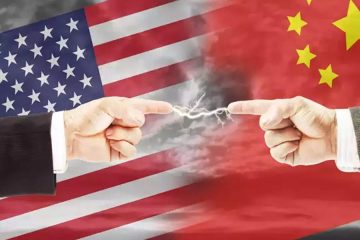
In October, China’s factory output and retail sales experienced their slowest growth in more than a year, intensifying the pressure on policymakers to overhaul the $19 trillion export-driven economy, as the ongoing trade war with the US and weak domestic demand amplify risks to growth. For decades, officials maintaining momentum in the world’s second-largest economy have relied on stimulating its industrial complex to boost exports when consumer spending falls, or using public funds to finance infrastructure to elevate GDP. However, Trump’s tariff war highlights China’s reliance on the world’s largest consumer market, and even an economy as vast as China can extract only so much growth from additional industrial parks, power substations, and dams. Friday’s indicators offered little optimism for a swift recovery, and as data deteriorates monthly, the imperative for reform intensifies. “China’s economy is facing pressures from all sides,” stated Fred Neumann, adding that export-driven growth will be hard to sustain next year, leaving domestic demand to pick up the slack, though reversing slowing investment and consumption will be difficult without major stimulus.
In October, industrial output grew 4.9 per cent year-on-year, the slowest since August 2024, missing forecasts and dropping from September’s 6.5 per cent rise, while retail sales rose 2.9 per cent, their weakest since last August and below expectations. Policymakers recognize the need to fix structural imbalances, boost household consumption, and confront heavy local government debt that prevents provinces from achieving financial independence. Yet structural reform carries political risks, especially as Trump’s trade war adds pressure. Fu Linghui said the external environment remains unstable while domestic structural adjustments face considerable pressure. Exports unexpectedly declined in October as producers struggle with profitability in alternative markets after months of front-loading to avoid tariffs. Meanwhile, car sales broke an eight-month growth streak despite expectations of a pre-subsidy-phase-out surge, alarming analysts since Q4 is normally the strongest auto sales period and despite having an extra holiday-supported sales day.
Retail figures rose due to the Singles’ Day shopping festival, yet consumer sentiment remained weak compared with prior years, showing that heavy discounting is failing to entice shoppers. “The loss of momentum in the second half remains disappointing given the stated importance of domestic demand,” said Lynn Song, who attributed the slowdown to the end of trade-in subsidy schemes and said new policy will be needed next year. The decline in investment adds challenges as weak confidence weighs on the economy, with fixed asset investment falling 1.7 per cent in the first ten months, deeper than expected, after a 0.5 per cent drop from January to September. Last month, the Communist Party outlined its five-year economic strategy, pledging to significantly raise household consumption’s share of GDP while strengthening its industrial foundation. Some economists question whether Beijing might again choose the path of least resistance—directing resources to large state firms while neglecting private producers and households—an approach that may already be underway.
“The headline figure is being propped up by state-owned enterprises in infrastructure,” noted Yuhan Zhang. A prolonged downturn in the real estate market, a major reservoir of family wealth, continued, with new home prices posting their fastest monthly decline in a year. “Structural issues are dragging down growth,” said Xu Tianchen, adding that while stimulus room exists, officials would prefer to reserve it for 2026. China needs only 4.5–4.6 per cent Q4 growth to meet its 5 per cent annual target, reducing policymakers’ appetite for additional stimulus. The combination of slowing industry, fading consumer strength, shrinking investment, and external trade pressures underscores the deepening structural headwinds facing China as policymakers attempt to navigate economic risks while avoiding politically sensitive reforms.