China’s Economy Surges Ahead of West Asia Conflict
China’s primary economic indicators outperformed expectations at the beginning of the year, indicating a strengthening momentum prior to the upheaval in Iran that disrupted the global growth and inflation outlook. Industrial production increased by 6.3 percent in the January-February period compared to the same time last year — marking its fastest growth since September and rising from 5.2 percent in December. According to data released by the National Bureau of Statistics on Monday, fixed-asset investment unexpectedly expanded by 1.8 per cent, following a contraction for the first time on record in 2025. Retail sales increased by 2.8 per cent in the initial two months, a notable acceleration from the 0.9 per cent recorded in December, surpassing the 2.5 per cent median forecast. “In January and February, the main economic indicators showed a marked rebound, and the economy was off to a good start,” the NBS stated in a release accompanying the data. “But we also need to recognize that the impact is deepening from changes in the external environment, and geopolitical risks continue to escalate.”
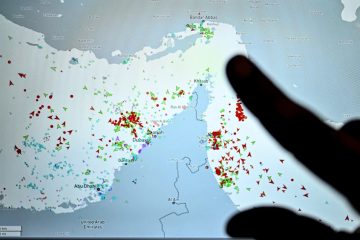
The figures offer the initial official glimpse into the condition of the world’s second-largest economy this year. China typically releases aggregated data for January and February to mitigate distortions arising from the irregular timing of the Lunar New Year holiday. China’s economy began the year on a surprisingly robust note, following 2025, which marked the slowest growth since the country emerged from Covid lockdowns in late 2022. With domestic consumption and investment cooling, gross domestic product growth slowed in the fourth quarter to 4.5 per cent compared to a year earlier. However, over the last two weeks, the escalating conflict in West Asia has significantly disrupted energy markets and led to a new interruption in trade.
Although China is not as susceptible to an oil price shock compared to other significant economies in Asia, its export sector remains at risk from the challenges posed to global growth and inflation. China’s property investment fell by 11.1 percent in the first two months compared to the same period last year, a decline that is less severe than the 19.3 percent drop anticipated by economists. The urban unemployment rate has risen to 5.3 percent, surpassing all predictions. Beijing has set its annual economic growth target at 4.5 per cent to 5 per cent, marking the least ambitious goal since 1991, albeit from a significantly larger gross domestic product base. Despite unexpectedly robust exports in the initial months of 2026, the future now depends significantly on the length and severity of the conflict that commenced with US and Israeli actions against Iran on February 28.
Thus far, authorities have taken a measured stance, opting to monitor the situation as it develops rather than hastily implementing new policies. Earlier this month, the government introduced a somewhat reduced fiscal stimulus plan for this year. Chinese leaders are recognized for fulfilling the economic objectives they establish, yet the manner in which they attain this year’s more modest target will be crucial. The nation’s increasing dependence on exports as a means to stimulate growth is generating friction with trading partners and not providing advantages to households.