China’s economy is resilient, yet citizens feel the pinch
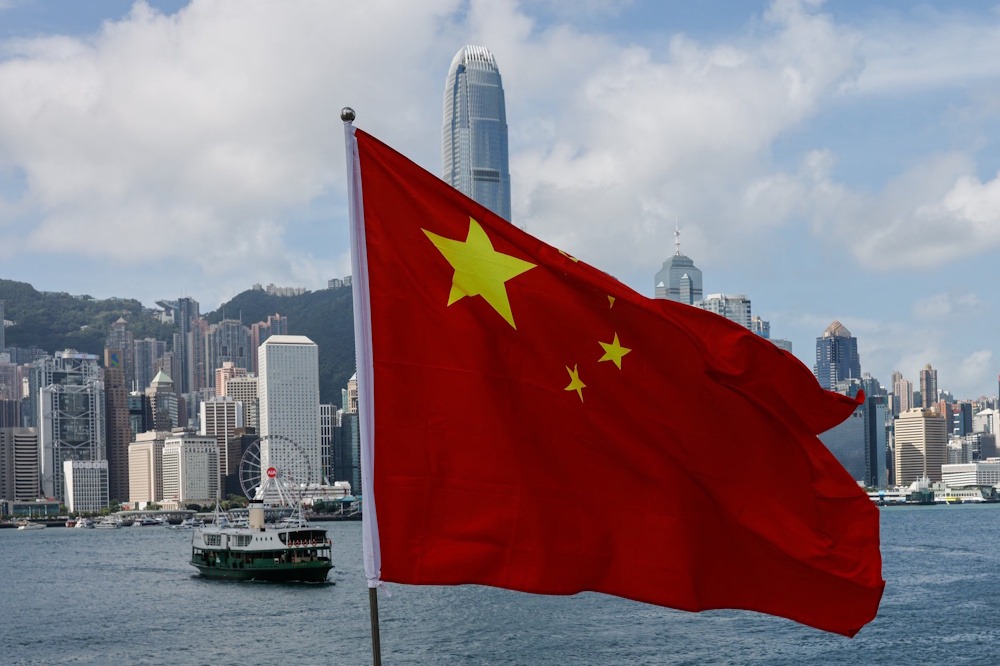
By certain indicators, China’s economy appears robust, characterized by strong exports and advancements in artificial intelligence and other cutting-edge technologies. However, this is not the sentiment shared by many everyday Chinese citizens, who have been grappling with the pressures of declining property values and uncertainty regarding their employment and earnings. While certain industries flourish due to government backing for technologies like AI and electric vehicles, small business owners are facing challenges as their customers reduce spending. Some economists contend that the world’s second largest economy is expanding at a pace that is more sluggish than the official statistics indicate, despite the possibility that China may achieve its official annual growth target of approximately 5 per cent by 2025. Beijing has successfully sidestepped a potentially devastating full-scale trade war with Washington following President Donald Trump’s agreement with Chinese leader Xi Jinping; however, numerous long-term challenges persist. “Business is very tough right now as people don’t have much disposable income,” said Xiao Feng. “It seems the wealthy don’t have the time, and the ordinary folks don’t have money to spend,” said Xiao. After accounting for all expenses, such as rent, labor, and utilities, I find myself merely breaking even.
Xiao and his wife, who works as a nurse, are parents to a 10-year-old son. With her stable income, she has become the household’s breadwinner. “Before, I used to contribute about 100,000 yuan (about $14,250) annually to the household,” said Xiao, who has cut his staff from eight to five as competition has intensified. However, I have not received any income for approximately six consecutive months now. Beijing-based commercial property agent Zhang Xiaoze stated that he used to earn as much as 3 million yuan (nearly $428,000) annually during the peak years of the mid-2010s. He now generates approximately 100,000 yuan each year, and he remarked that the business environment is exceedingly challenging. “Demand is weak because many companies are relocating out of Beijing,” Zhang said. The core problem is that individuals lack financial resources. “There are times when I must dip into my savings to support the family,” he said. China’s ruling Communist Party is advocating for leader Xi’s emphasis on high-quality growth and domestic innovation as it redirects investment and policies towards a consumption-driven growth model and high-tech industries. As it swiftly rose to prominence as an export manufacturing superpower, China made substantial investments in infrastructure, including railways, highways, ports, industrial zones, and various property developments. While enhancing consumer spending and business investment are essential objectives, exports continue to be a crucial engine of employment and economic expansion. In the first 11 months of this year, Chinese exports reached a remarkable $3.4 trillion, bolstered by increasing shipments to Southeast Asia and Europe, which helped counterbalance a significant decline in exports to the U.S. This figure stands in contrast to imports totaling $2.3 trillion. “China’s economy is amidst what I call a Great Transition,” said Lynn Song, “as it moves away from the growth engines that drove growth the past three decades.”
Similar to the situation in the U.S., the AI boom in China has contributed to increases in share prices. However, the influx of resources into the technology sector has not resulted in a direct wealth effect for the majority of individuals, stated Song. Many feel that the situation on the ground does not align with the relatively more optimistic growth picture, he said. The disparity between the official economic growth statistics and the sentiments of many Chinese citizens indicates that China’s true growth could be significantly lower than what the official data implies, stated Zichun Huang. Recent economic data suggest that growth is experiencing a slowdown. Retail sales saw a modest increase of 1.3 per cent in November compared to the same month last year, a slowdown from the 2.9 per cent growth recorded in October. In the first 11 months of 2025, fixed-asset investment experienced a decline of 2.6 percent. According to a recent report, disposable household income growth has been lagging behind pre-pandemic levels in recent years, with income gains from property having nearly disappeared. The International Monetary Fund has recently adjusted its growth forecast for China, increasing it from 4.8 per cent to 5 per cent, aligning closely with the official target. Additionally, banks such as Goldman Sachs have also revised their projections for China’s economic growth in recent months. Estimates differ. Source anticipates growth at an annual rate of 3 per cent to 3.5 per cent this year. The Rhodium Group, a think tank, estimates it at 2.5 percent to 3 percent. The confidence of consumers and investors in China largely depends on the property sector, which serves as the primary store of wealth for most households. Housing prices have decreased by 20 percent or more since reaching their peak in 2021.
The significant decline ensued after a stringent enforcement against rampant borrowing within the real estate sector, which ignited a debt crisis. According to reports, new home sales experienced a decline of 11.2 per cent by value in the first 11 months of this year compared to the same period last year. Property investments experienced a decline of nearly 16 per cent year-on-year. Xiao, the owner of a billiards hall in Beijing, purchased an apartment in the Tongzhou district in 2019 for over 3 million yuan. ($428,000). It currently holds a value of approximately ($342,000). “I drive a ten-year-old car and have no plans to replace it given the economic climate,” Xiao said. If my apartment hadn’t lost so much value, I might have already purchased a new one. Xiao stated that he previously allocated a significant amount of money towards his son’s tutoring fees. “But now we’ve cut that entirely and teach him ourselves instead,” he added. I find myself grappling with uncertainty regarding the economic outlook. A tutor based in Tianjin, who provided only his surname Zhou due to restrictions from his company regarding media communication, reported that his income has decreased by over a third as a growing number of parents have ceased enrolling their children in tutoring sessions. “Because of the economic situation, parents are unwilling to spend money on tutoring,” said Zhou. They favor large group classes over one-on-one tutoring. Business is significantly worse than it was previously — approximately 50 percent worse than during the COVID period, he added. The outlook appears grim. Most forecasts indicate that the economy is expected to grow at a slower pace in 2026 and beyond, as China’s leaders make adjustments through incremental policies while delaying essential reforms that could enhance consumer confidence. Economists noted that challenges ahead focus on consumption and investment; however, with the housing market continuing to show weakness, growth momentum may be sluggish.
Excess supply in numerous industries, such as autos, steel, and consumer goods, remains a persistent issue, leading to a decline in both prices and profits. According to reports, Chinese export prices have decreased by more than 20 percent overall since early 2022. The report indicated that government efforts to control price wars have thus far yielded minimal results. The nation’s expanding trade surplus, exceeding $1 trillion in 2025, is contributing to trade tensions, which could provoke protectionist actions that might hinder exports. Economists like Michael Pettis from the Carnegie Endowment for International Peace contend that a significant transformation is necessary for workers to retain a greater share of the nation’s wealth. However, that currently seems to be politically unfeasible. A budget hotel owner in the northern city of Shijiazhuang expressed concern about the outlook as people reduced spending on various expenses, including business trips. “I don’t see an immediate rebound in the economy,” said the Zhai. I lack a high level of education, making it nearly impossible to switch industries. Other industries are facing challenges as well. “My lease expires next May or June,” he added. If the situation has not improved by that time, I will proceed to shut down the hotel.