China targets 4.5%–5% GDP in 2026 amid property collapse
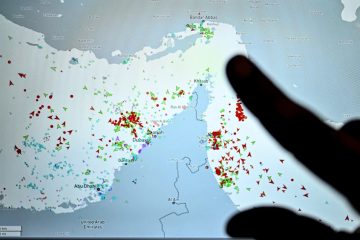
On Thursday, China revised its GDP target to a range of 4.5 to 5 per cent for the year, pointing to the effects of Trump’s trade tariff war, the growing global crisis related to the US-Iran conflict, and internal economic challenges, such as a decline in the property market and increasing unemployment. Chinese Premier Li Qiang announced a target similar to last year’s in his work report delivered at the annual National People’s Congress, the nation’s parliament, which commenced here on Thursday. Over the last three years, China has upheld a five per cent goal for its GDP despite growing domestic economic difficulties. This year, the target has been set within a range of 4.5 per cent to 5 for the first time. China’s economy saw a growth of 5 per cent last year, reaching $20.01 trillion, supported by robust exports despite US tariffs, although domestic consumption, a continual challenge, remained weak.
President Xi Jinping is present at Thursday’s opening session, accompanied by more than 2,000 deputies. In presenting his work report, an annual feature, Li stated that the government aims for an economic growth of 4.5 per cent to 5 per cent this year and will strive to achieve even better results in practice. The main goals for development this year include a forecasted urban unemployment rate of around 5.5 per cent, the creation of more than 12 million new urban jobs, and an expected increase in the consumer price index of about 2 per cent. Li also addressed the rise in personal income alongside economic growth, the fundamental balance in the payments system, steady grain production at around 700 million tonnes, and a decrease of about 3.8 percent in carbon dioxide emissions per unit of gross domestic product. Concerning domestic demand, which has been stagnant for years and has resulted in China’s heightened dependence on exports for GDP growth, Li mentioned that China will proactively boost consumption and roll out a strategy for income growth for both urban and rural residents.
The country is preparing to launch special initiatives focused on boosting consumption, including a range of practical measures intended to increase the earnings of low-income groups, enhance property income, and improve the remuneration and social security systems in 2026. A total of 250 billion yuan will be allocated for consumer goods trade-in programmes, and a special fiscal-financial coordination fund of 100 billion yuan will be established to support the expansion of domestic demand, he said. On Wednesday, China commenced its annual parliament season, amidst a backdrop of global unrest arising from the US-Iran conflict, notable military purges carried out by Xi, and ambitious efforts to cultivate new productive forces like AI to revitalize the sluggish economy. Xi, 72, currently in his unprecedented third term in office, displays no indications of any structured political opposition from within the ruling Communist Party or the influential military.
On Wednesday, he participated in the inaugural session of the national advisory body of the Chinese People’s Political Consultative Conference, which comprises more than 2,500 officials from civil society, the party, and the military. He also attended the NPC opening session on Thursday, alongside the senior leadership of the ruling Communist Party of China. The two sessions marked the beginning of China’s yearly political season, which lasts for two weeks, where the leadership makes public appearances and takes part in internal discussions. Xi’s presence was notable, marking his first appearance with party officials of all ranks and PLA members, as he attended the proceedings after the recent extensive purges of the Chinese military.