China Rises as the Top Challenger to US Dominance
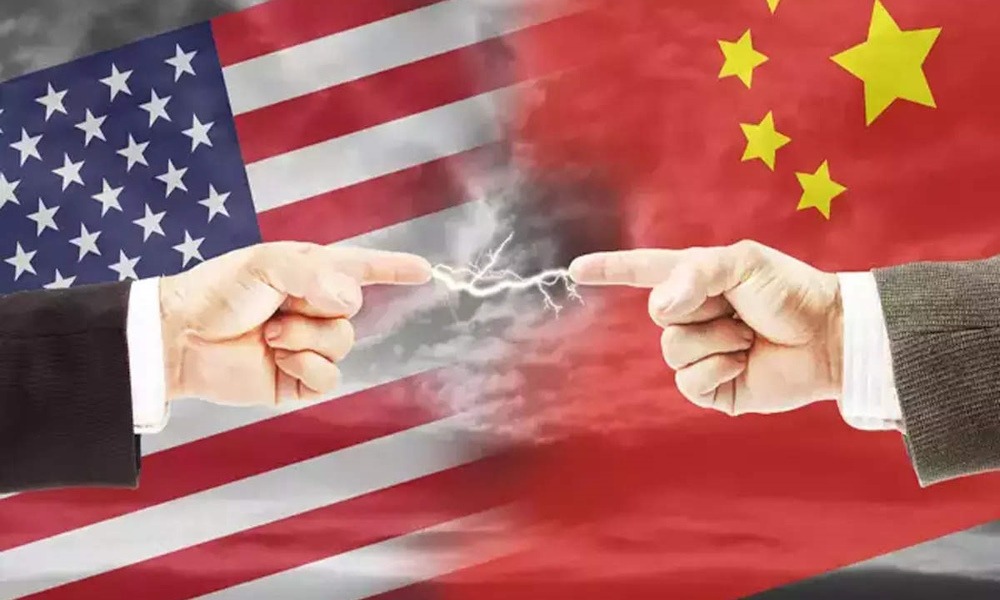
Envision a global political landscape where the United States stands as the reigning authority. In this universe, China stands as the challenger. It does not seek to dismantle American power. Rather, it is establishing itself as a competing source of authority. A new paper by Hannah Bailey, contends that Beijing is embracing the strategies of a global opposition party. This approach is not novel; however, the current actions of Washington are facilitating its implementation significantly. This week, reports indicate that China has been instrumental in advocating for a ceasefire in the Iran conflict. As tensions escalated, Beijing — Tehran’s biggest trade partner — engaged in behind-the-scenes efforts to persuade it to adopt a less confrontational stance in Pakistan-mediated talks. These optics are significant: As Washington is increasingly perceived as an erratic provocateur, Beijing has positioned itself as a stabilizing force. Chinese officials have publicly urged for restraint and cautioned about the implications of the conflict on global energy markets. That is precisely how an opposition campaign operates. China does not need to resolve conflicts outright; it simply needs to demonstrate that it is playing a constructive role. Even unrealistic peace proposals, such as Beijing’s positioning on Ukraine or West Asia, serve to reinforce its objective of providing an alternative for countries seeking options beyond Western leadership. If this trend persists, the repercussions may lead to a slow shift in favor of China. It would transform the international system to align with Beijing’s preferences, prioritizing state sovereignty over individual rights, stability over political freedom, and economic development at the cost of democratic governance.
Southeast Asia stands as a pivotal arena in the ongoing US-China rivalry, providing some of the most evident indications that this dynamic is already unfolding. A slim majority of respondents in the closely monitored ISEAS-Yusof Ishak Institute’s State of Southeast Asia 2026 survey indicated that they would align with China over the US if compelled to make a choice. Tellingly, 51.9 per cent identified American leadership under President Donald Trump as their top geopolitical concern — even higher than worries about Beijing’s own muscular behavior. That skepticism is certainly justified. For numerous governments, the challenge lies not in managing China — it is in navigating the uncertainty created by Washington. The region stands as one of the most severely impacted by the economic repercussions of the US-Israel conflict with Iran, which has disrupted a crucial energy supply and jeopardized growth projections. The unpredictability of US tariff policies and the calls for heightened defense spending have not contributed positively to sentiment either. Even America’s closest allies, some of whom have historically had strained ties with Beijing, are making adjustments. This week, Australia’s Prime Minister Anthony Albanese emphasized the importance of cooperation with China regarding energy and regional stability, reaffirming Canberra’s dedication to maintaining a “stable and constructive relationship.” In Europe and North America — the traditional core of the US-led order — there are also indications of hedging. European leaders have broadened their economic ties with China, even in the face of security apprehensions. Canada, too, has taken steps to stabilize its relationships.
In January, Ottawa and Beijing took measures to alleviate trade tensions, which included reducing tariffs on Canadian rapeseed and lowering barriers impacting Chinese electric vehicles. In a manner typical of an ambitious opposition party, Beijing highlights the shortcomings of the current administration while presenting itself as a more reliable and consistent ally, offering innovative solutions. China is taking steps to influence international regulations in sectors where the US is retreating. This past week, it advocated for the establishment of an international ocean protection body aimed at overseeing the UN High Seas treaty, while also proposing global governance programs as alternatives to the American-led order. It is supporting that message with resources via infrastructure financing and coalition building in international groups like Brics and the Shanghai Cooperation Organization. These relationships frequently operate on a transactional basis, yet they also generate leverage — nations economically linked to China are more inclined to align with its preferences. If not properly managed, this system may start to mirror a global order historically influenced by the US, but with China taking the lead this time. Domestic companies would find it easier to operate across aligned markets, their finance would support development, and their strategic interests would be more broadly safeguarded.
None of this is imminent. China faces a lack of universal trust, with significant concerns persisting regarding economic coercion, political influence, and transparency. Even in Southeast Asia, where Beijing is gaining influence, concerns regarding its actions persist strongly. The same ISEAS survey indicates that nearly half of respondents regard its assertive actions in the South China Sea as a significant concern. China seems to prefer campaigning over governing, as noted by Bailey and Hall in their paper. Criticism from the sidelines is far easier than shouldering the full costs of leadership on a global scale, as the US has done. As its influence expands, Beijing will encounter increasing expectations to provide tangible solutions. For countries navigating this shift, hedging will be the default strategy; however, it is not without its risks. Enhanced collaboration among middle and smaller powers will be crucial to prevent excessive reliance on a single entity. For Washington, the lesson is clear: restore consistency, rebuild alliances, and re-engage globally. There is scant evidence that the current administration will undertake any of those actions. The area that China is capitalizing on will only expand further.