China-Japan Face New Diplomatic and Economic Strains
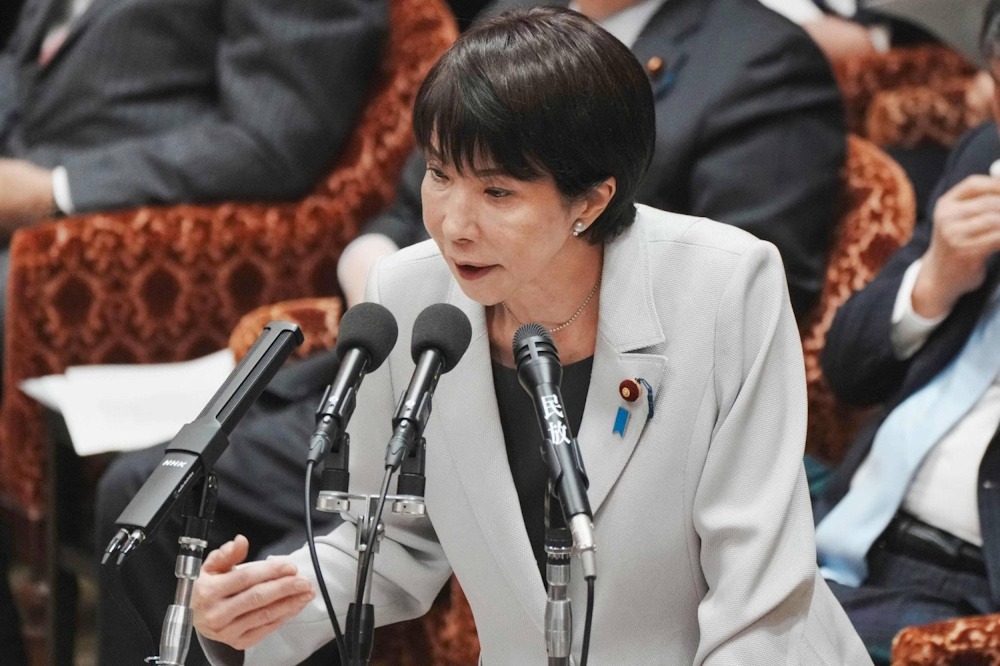
A week marked by escalating economic and political tensions between neighboring nations China and Japan concluded without any indication of resolution on Friday. The Chinese ambassador in Tokyo dismissed his host nation, while Japan reported delays in shipments to suppliers in China due to the ongoing dispute. The two developments capped a week in which China expressed its displeasure with Japan by implementing new export controls, condemning what it referred to as Tokyo’s renewed militarism, and strengthening ties with another regional neighbour, South Korea, during its leader’s visit to Beijing. On Friday, the Chinese Communist Party’s flagship newspaper, People’s Daily, continued its barrage of criticism. In an editorial, it was stated that new militarism will lead Japan back into the abyss. History stands as a clear warning, yet the Japanese right wing is once again resorting to its familiar tactics. In recent days, China has issued pointed criticisms toward Japan following remarks made by Prime Minister Sanae Takaichi, who indicated in November that she would not dismiss the possibility of intervention should China employ military force against Taiwan. China considers self-governed Taiwan to be its sovereign territory and has stated it would resort to force if necessary. It conducted extensive military drills in the vicinity late last month.
China maintains its export controls. On Thursday night, the Chinese embassy in Japan announced its rejection of a petition from Japan’s Foreign Ministry, which requested the retraction of new export controls on dual-use items that could potentially be utilized by the Japanese military in weaponry. The ambassador, Wu Jianghao, asserted that China’s action was wholly legitimate, reasonable, and lawful, emphasizing its importance to national security. On Friday, Japanese officials stated that they are monitoring the situation to ensure that Japanese exports of agricultural, fisheries, and other goods are being managed by China without any delays. The Japanese news agency Kyodo reported that outgoing shipments of sake and processed food from Japan to China were being held up due to diplomatic tensions, further exacerbating the dispute. According to sources, Kyodo reported that the shipments experienced delays in customs on the China side. The sources indicated that the sake might have been chosen as a representation of Japan. Japan’s chief cabinet secretary, Minoru Kihara, acknowledged reports indicating that certain Japanese exports to China have encountered delays. He declined to provide commentary on specific commercial transactions. “It is important that agricultural, fisheries and other exports from Japan are smoothly carried out,” Kihara said. We will monitor the situation attentively and implement suitable actions. He did not specify what those might be.
Japan and China share a complicated history marked by the Japanese colonization of Taiwan in 1895. The nations have engaged in two wars, and the imperial government in Tokyo harshly occupied regions of China during the early 20th century. The nations uphold diplomatic ties and collaborate on various issues; however, they sometimes resort to governmental channels to criticize one another during conflicts. The choice of wording in the People’s Daily editorial and other rhetoric from China was noteworthy. It refrained from generalizing about the Japanese populace and instead focused on the right wing of the country, to which Takaichi is affiliated. A report Thursday regarding Japan’s nuclear ambitions consistently highlighted the right wing, while the People’s Daily editorial urged the peace-loving Japanese populace to remain highly vigilant towards their government. “Japan’s future lies not in the dangerous fantasies painted by the right wing, but in the thorough reckoning with its history of aggression,” People’s Daily stated. Rare earths as a pressure point. Kihara, the government spokesman, stated, “Chinese export controls of rare earths already in place have caused serious impact on global supply chains. We believe that international trade of rare earths should be carried out smoothly,” Kihara said. Industry and Trade Minister Ryosei Akazawa refrained from confirming whether China’s dual-use goods ban encompassed new measures regarding rare earths. Azakawa stated that the effect on Japanese industries is already considerable, as approximately 70 percent of rare earths, utilized in various products including electronic components and automobiles, are sourced from China.
“Rare earths are extremely important minerals, and the export controls have already affected our country tremendously,” Akazawa said. He declined to comment on whether Japan would contemplate retaliation. During the visit this week of South Korean President Lee Jae Myung, China notably conveyed its positive sentiments towards South Korea while he met with Chinese leader Xi Jinping. Following the signing of millions in new export contracts, Lee proclaimed a new chapter in the development of Korea-China relations. During his visit, Chinese state media, which had recently cautioned that travel to Japan by Chinese citizens might pose risks, provided extensive coverage and noted that outgoing Chinese travelers to South Korea during New Year’s had exceeded those to Japan. On Friday, there was at least one small positive indication in the relations between Beijing and Tokyo. During a Foreign Ministry briefing in Beijing, spokesperson Mao Ning received the news of the passing of a former Japanese ambassador to China. She conveyed the nation’s condolences.