China Dismisses Trump’s Call to Reopen Hormuz
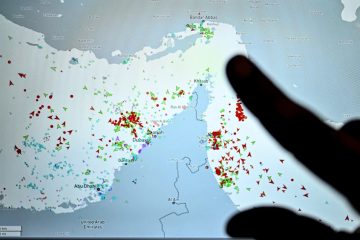
China will not assist the United States in reopening the Strait of Hormuz as requested by President Donald Trump. However, analysts suggest that China likely welcomes the postponement of Trump’s much-anticipated visit to Beijing, as the US faces the possibility of becoming mired in West Asia. The latest developments are unfolding as Trump’s Iran war enters its third week, encountering increasing pressure as oil shipments have ceased through the strait, and US allies have declined to enhance security in the area. There are growing concerns that China, the United States’ foremost geopolitical rival, might gain from a conflict that many believe was poorly thought out. “President Trump’s request to delay his long-awaited summit with President Xi Jinping underscores how significantly he underestimated the fallout from Operation Epic Fury,” said Ali Wyne. A display of US power intended to intimidate Beijing has, in fact, revealed the fragility of US dominance: Unable to independently reopen the Strait of Hormuz, Washington now finds itself reliant on its main strategic rival to navigate a crisis it has created.”
The Chinese Foreign Ministry provided an ambiguous response when questioned about its potential assistance in reopening the strait, reiterating its appeal for “parties to immediately stop military operations, avoid further escalation of the tense situation and prevent regional turmoil from further impacting the global economy. Beijing, which had never officially confirmed Trump’s state visit, originally scheduled for March 31, has signaled a willingness to collaborate with the US to reschedule the visit by stating that the two sides “remain in communication.” The postponement was clarified to be unrelated to Trump’s request for China to assist in reopening the Strait of Hormuz. On Tuesday, Trump stated that the Chinese “were fine” with the delay and asserted “a very good working relationship with China.” Sun Yun, director of the China programme at the Stimson Centre, stated, “I think the Iran request is now going to be less pressing for China to fulfil.” Simultaneously, Chinese diplomats have been actively engaging with nations in West Asia, committing to a constructive role in alleviating tensions and fostering peace. On Sunday, Beijing, via the Red Cross and the Red Crescent, provided Iran with an emergency humanitarian aid package amounting to USD 200,000. This aid is designated for the families of children and teachers who lost their lives in the bombing of the Shajarah Tayyebeh elementary school building in Minab, Iran.
The Chinese ambassador to Iran has condemned the attack on the school. A delay in the state visit is welcomed by both the Trump administration and China, stated Brett Fetterly, a managing principal in the China practice at The Asia Group, a consultancy based in Washington. “I think the political environment is difficult for the United States to have the commander in chief travel abroad while managing military operations,” Fetterly said. “From the perspective of China, it is advantageous to take additional time to gain a clearer understanding of President Trump’s specific desires. A recent trade discussion in Paris between the two governments seems to have resulted in minimal consensus and indicated that challenges persist in tackling fundamental disparities in trade, technology, and economic security, Fetterly stated. “At the end of the day, both sides really needed some time to define what the range of deliverables are,” he said. The US business community has voiced apprehension that the preparations for the summit may not have been adequate to yield meaningful agreements. Transfers of military assets from the Indo-Pacific region to West Asia, including a significant number of Marines deployed there as part of a rapid-response unit and an anti-missile defense system, have sparked concerns that the US may lose sight of its declared priority to refocus on Asia.
“The longer this war continues, and the more forces that are shifted out of Asia, the more it will feed Asian allies’ concerns about US distraction and resource constraints,” said Zack Cooper. “A delay in the state visit could also mean a delay in any arms sales to the self-governing island of Taiwan to deter attacks from Beijing,” he said. China has pledged to take Taiwan by force if necessary, while the United States is bound by its own law to provide the island with adequate resources for self-defense. The issue continues to be the most contentious in US-China relations. “I believe that China is happy to delay the visit and reap the benefits as the United States once again gets bogged down in the West Asia,” Cooper said. And Beijing likely doesn’t need to take significant action, he remarked: “I think most Chinese experts and officials believe that the United States is undermining itself, so they just need to get out of the way.”