China boosts innovation, self-reliance to fight US rivalry
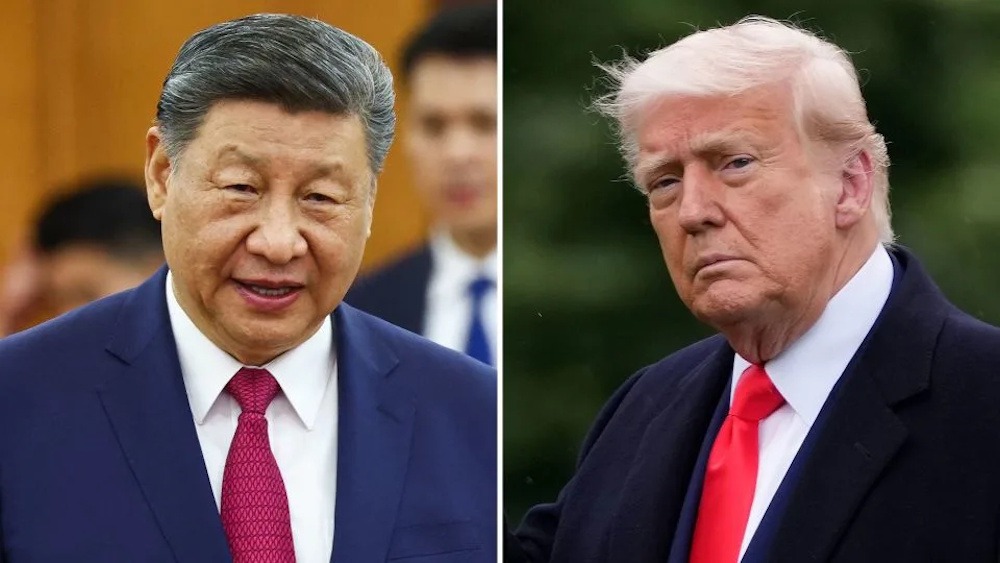
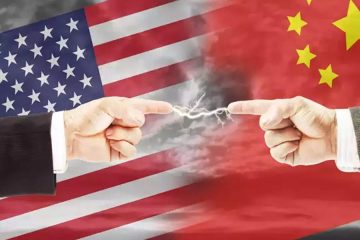
China is advancing to the next stage of its competition with the US and indicating a strengthened emphasis on self-sufficiency. In the realms of innovation, industry, and advanced technology, President Xi Jinping is confident that this strategy will fortify Beijing’s resilience in the face of escalating competition. This goes beyond mere economic concerns. It is also a matter of security. In October, Beijing and Washington reached an agreement for a one-year pause in trade hostilities; however, instability is poised to characterize their relationship for years ahead. Although this strategy is not novel, Xi is intensifying his efforts amid the trade war and a decelerating domestic economy. October’s export figures revealed an unexpected decline, underscoring the difficulties confronting Beijing. The party’s Fourth Plenum last month provided insights into the president’s priorities. Taking place every five years, the gathering consists of the Communist Party’s inner circle, where they, alongside Xi, determine the direction of party affairs and ideology.
In the communiqué, officials emphasized science and technology as the foundational elements of the upcoming five-year plan, set to be finalized in March. These are not mere slogans. Beijing perceives President Donald Trump as a source of instability and is bracing for a more tumultuous global economy, observe Neil Thomas and Lobsang Tsering. China is leveraging American pressure as a catalyst to hasten domestic innovation, channeling funds into its firms. It emphasizes sectors like aerospace, artificial intelligence, and quantum computing, while also aiming to reduce reliance on foreign suppliers. Beijing is not the only entity adopting a strategy of self-reliance. India has a comparable, albeit less effective, policy aimed at promoting domestic manufacturing and decreasing reliance on imports, much like the approach taken by the US. The world’s second-largest economy has advanced its military-civil fusion, collecting the most sophisticated civilian research from across the globe to enhance its defence capabilities. This enables China to advance dual-use technologies, ensuring that advancements in AI, chips, or supercomputing are directly channeled to the military.
Under Xi, the PLA has evolved into a highly advanced force, proficient in operations that extend well beyond China’s borders. Nonetheless, this plan encounters obstacles — and not solely from Washington. The Chinese leader’s extensive anti-corruption campaign and purges have significantly diminished the ranks of the party’s inner circle and the military. According to the reports, only 168 of the 205 Central Committee members attended the plenum, marking the lowest attendance for the session since the Cultural Revolution. There are no indications that Xi’s power is diminishing. The CCP reiterated its appeal to “unite more closely around the Central Committee with Comrade Xi Jinping at its core,” highlighting the leader’s ongoing supremacy. However, his legitimacy is rooted in his ability to provide ongoing economic prosperity for his citizens, and Trump’s trade war complicates that effort. Today, the US maintains a dominant position as it possesses the advanced technology that China requires. However, that advantage will diminish if Beijing establishes an ecosystem it can truly depend on. The world has witnessed the outcomes when the Communist Party sets its sights on achieving success in a particular industry. In the last ten years, significant state-led investments have positioned China at the forefront of green industries, including solar panels, batteries, and electric vehicles. It aims to replicate that strategy in the fields of semiconductors, advanced machinery, biotechnology, and quantum computing.
The implications are significant. America’s technological leverage may diminish, and global supply chains could shift even more toward China’s influence. To prevent that scenario, the US and its allies must take immediate action by investing in alternative supply chains and networks of allies. Advancing the Promoting Resilient Supply Chains Act, which received unanimous approval from the Senate in June but is currently encountering delays, would be prudent. While external pressure on Beijing proves beneficial, it is essential for Washington to strengthen its own industrial base as well. American companies aiming to engage in business within China should anticipate increased state intervention, more stringent trade and investment conditions, and an expansion of export controls. However, this moment also offers a chance. China’s system may appear powerful, but it is not without vulnerabilities. The situation is characterized by profound structural challenges, including a downturn in the property market, local government indebtedness, and a decline in demographics. Anticipating the most unfavorable outcomes is the most effective strategy to gain an advantage over an adversary. Xi is constructing a China that depends on its own resources. The United States must prepare for that eventuality.