Asian Economies React to New Trump Tariffs
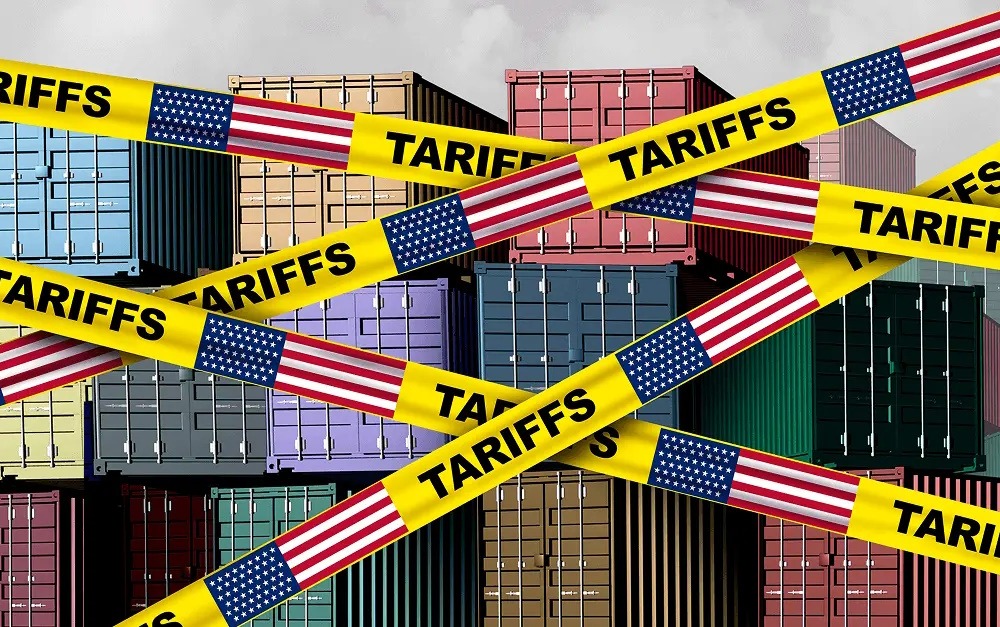
US trading partners in Asia began to consider new uncertainties on Saturday following President Donald Trump’s commitment to impose a new tariff on imports, just hours after the Supreme Court invalidated many of the extensive levies he had employed to initiate a global trade war. The court struck down several tariffs that the Trump administration had enacted on major Asian exporters, including China, South Korea, Japan, and Taiwan, which are pivotal in global tech supply chains and represent the largest chip markets worldwide. Shortly thereafter, Trump declared a new 10 percent tariff on US imports from all nations, set to commence on Tuesday for an initial duration of 150 days, enacted under a different statute. Experts cautioned that this might be the initial step in a series of actions, leading to increased uncertainty for companies and investors.
In Japan, a government spokesman stated that Tokyo “will carefully examine the content of this ruling and the Trump administration’s response to it, and respond appropriately.” China, set to welcome Trump in late March, has not yet issued any comments or taken countermeasures during its prolonged holiday. A senior financial official in Hong Kong characterized the situation in the US as a “fiasco.” Christopher Hui remarked that Trump’s new levy underscored Hong Kong’s “unique trade advantages. This demonstrates the stability of Hong Kong’s policies and our certainty … it illustrates to global investors the significance of predictability,” he stated. Hong Kong functions as an independent customs territory distinct from mainland China, thereby protecting it from the direct impact of US tariffs imposed on Chinese products. While duties have focused on mainland exports, products made in Hong Kong have typically encountered lower rates, enabling the city to sustain trade flows despite escalating Sino-US tensions. Prior to the Supreme Court ruling, Trump’s tariffs had put a strain on Washington’s relationships throughout Asia, especially with export-reliant economies that are woven into US-bound supply chains. The ruling pertains solely to tariffs enacted under the International Emergency Economic Powers Act, which is designed for national emergencies.
Trade policy monitor Global Trade Alert estimated that the ruling reduced the trade-weighted average US tariff nearly by half, from 15.4 percent to 8.3 percent. For countries confronting elevated US tariffs, the decrease is significantly more pronounced. For China, Brazil, and India, it signifies reductions in double-digit percentage points, although the rates continue to be elevated. Taiwan stated that it was closely observing the situation, highlighting that the US had not yet decided how to execute trade agreements with several nations. “While the initial impact on Taiwan appears limited, the government will maintain close communication with the US to understand specific implementation details and respond appropriately,” a cabinet statement said. Taiwan has recently entered into two significant agreements with the US, which include a Memorandum of Understanding that commits $250 billion in investments, as well as a reciprocal tariff-lowering agreement.
Experts cautioned that the Supreme Court ruling might provide minimal respite for the global economy, as trading nations prepare for Trump to explore alternative methods of imposing tariffs. Nantapong Chiralerspong stated that the ruling could potentially enhance exports, as uncertainty has led to “front loading,” a situation where shippers expedite the delivery of goods to the US in anticipation of possible higher tariffs. Corporate disclosures reveal that firms throughout the Asia-Pacific region reported financial impacts, supply chain shifts, and withdrawals as tariffs escalated into 2025 and early 2026.