OpenAI jitters fire up Sam Altman’s business friends
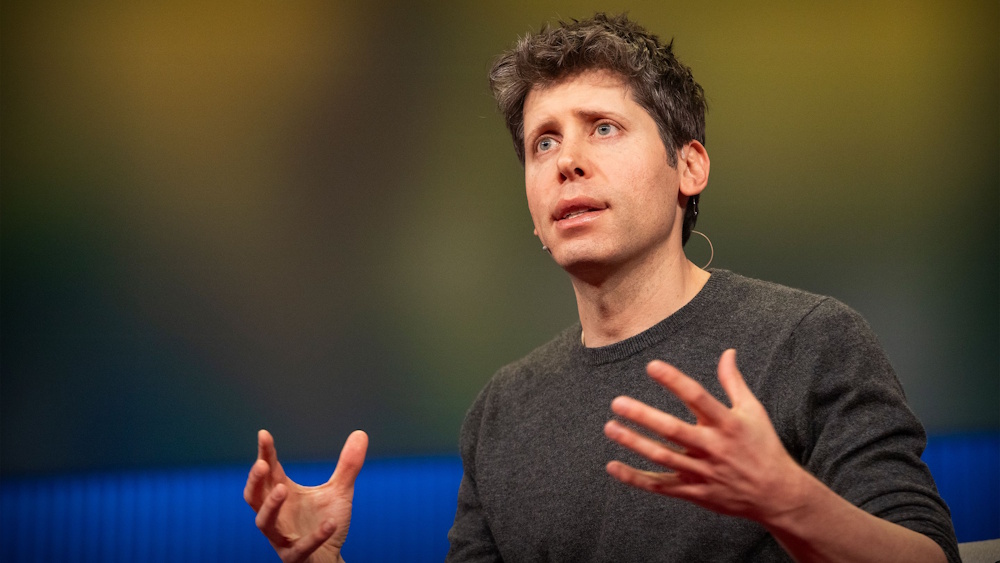
As investors begin to align themselves in the AI race, Sam Altman’s associates are facing setbacks. SoftBank Group Corp.’s shares have plummeted 40 per cent since late October, while Oracle Corp.’s stock has relinquished all gains accrued since early September, when the established database software company unexpectedly gained an AI halo following the announcement of a $300 billion computing deal with OpenAI Inc. The trio are collaborators in the ambitious $500 billion Stargate AI infrastructure project, which seeks to establish data centers throughout the United States. Furthermore, in March, SoftBank’s Chairman Masayoshi Son successfully secured a venture capital agreement with Altman, pledging to invest $30 billion by the end of the year. Investors are now questioning the ChatGPT maker’s dominance following Alphabet Inc.’s release of its latest multipurpose Gemini 3 model — which received glowing reviews — and how a weakened OpenAI may impact its partners’ businesses.
SoftBank values OpenAI at $500 billion, with its stake in the unicorn representing just over 20 percent of its net asset value, or NAV. But what if OpenAI does not hold that level of value? The impact on the Japanese conglomerate would be significant. In the September quarter, SoftBank announced its strongest earnings in three years, driven by a $12.8 billion fair value gain from its OpenAI shares. If the startup is unable to sustain its current valuation in upcoming funding rounds, that will need to be reversed. SoftBank, as an investment management company, is evaluated according to its NAV. One important metric that investors focus on is the liquidity of the portfolio and the speed at which SoftBank can return cash to shareholders. As of now, private holdings, which include the 11 per cent stake in OpenAI, represent approximately 36 per cent of SoftBank’s net asset value, compared to 21 per cent at the start of the year, as per reports. In order to secure a position at Altman’s table, Son has been divesting his most liquid assets to generate funds. He has divested his complete $5.8 billion stake in Nvidia Corp., along with $9.2 billion in T-Mobile US Inc. In conjunction with new bond sales, SoftBank successfully raised $30 billion, a sum sufficient to finalize the OpenAI deal. However, does this portfolio reshuffling serve the interests of shareholders? SoftBank’s stock is currently trading at a 32 percent discount to its NAV, highlighting market skepticism regarding Son’s investing track record.
The circumstances surrounding Larry Ellison’s Oracle appear to be even more dire. The method by which OpenAI intends to finance the $300 billion computing contract remains uncertain. The agreement will extend across five years, commencing in 2027. Meanwhile, the startup is projected to generate only $60 billion in sales at that time, even according to the company’s optimistic forecasts, which investors are beginning to scrutinize with the introduction of Google’s Gemini 3. Earlier this month, Altman stated that he doesn’t seek US guarantees for his startup’s data centers; however, he acknowledged that it could be reasonable for the government to construct and own its own AI infrastructure, reflecting the significant costs associated with this undertaking. Simultaneously, Oracle is making substantial investments to address the significant demand that Altman has assured. In relation to the Stargate project, Ellison has committed more than $100 billion in capital to lease data-center shells, a figure that will be reflected in its financial statements over the coming three years. In a strategic move to expand, Oracle has opted to minimize initial expenses by leasing the land and focusing its financial resources on acquiring chips. As of August, the company held a total debt of $105 billion, as per data.
AI is rapidly evolving into a lucrative venture, and entities with the strongest financial positions inherently possess greater chances of success. Despite numerous bond sales this year, Alphabet continues to report negative net debt. It produces approximately $150 billion in operating cash flow annually and holds nearly $100 billion in cash. In contrast, OpenAI must consistently seek venture capital to manage its expenses, SoftBank divested valuable assets to invest in the unicorn, and Oracle turned to debt-financed land acquisitions to initiate data-center construction.