Asian AI Stocks Dive, Casting Shadows on Global Rally

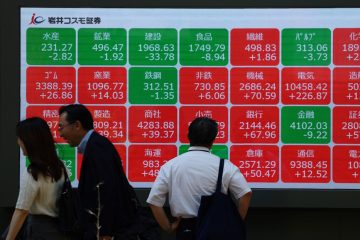
The abrupt decline in Asia’s technology shares last week has unsettled investors, highlighting the possibility that the remarkable surge in artificial intelligence and semiconductor stocks could be approaching a temporary peak. The region has experienced its most significant decline since April, prompted by a tech-led selloff on market. This downturn has brought to light underlying issues: the rally’s limited breadth, a heavy dependence on retail traders, and increasing uncertainty regarding the timing of Federal Reserve interest-rate cuts. “Last week’s selloff is a reminder that Asia’s market structure is just more vulnerable,” said Charu Chanana. “Further corrections will come.” The catalyst, as I see it, was inflated valuations, and we have yet to address that issue. “So the Asia chip market is likely to be volatile.” Asia’s tech sector has surpassed its US counterpart this year, driven by lower valuations and the enthusiasm generated by China’s AI advancements, especially those of DeepSeek. The MSCI Asia Pacific Index has risen 24 per cent in 2025 — poised to surpass the S&P 500 by the largest margin in 16 years.
However, its rapid ascent has also raised alarms regarding potential overheating. Korea’s stock exchange has issued a warning regarding the risks associated with the over 200 per cent increase in SK Hynix Inc. shares this year. The significant gains contributed to the groundwork for last week’s reversal. The MSCI Asia technology gauge experienced a decline of up to 4.2 per cent on Wednesday, marking its largest intraday drop since the US tariff shock in April. South Korea’s Kospi experienced a significant decline of up to 6.2 per cent, while Japan’s Nikkei 225 saw a drop of as much as 4.7 per cent. Key suppliers of Nvidia Corp., such as SK Hynix and Advantest Corp., experienced significant losses, with each company seeing a decline of approximately 10 percent. Experts indicate that Asia’s significant losses highlight a deeper structural concern: the overwhelming dominance of tech giants within regional benchmarks. Taiwan Semiconductor Manufacturing Co. currently represents more than 40 percent of the Taiex, a significant increase from its share a decade earlier. In South Korea, Samsung Electronics Co. and SK Hynix account for approximately 30 percent of the Kospi. Japan exemplifies this trend, with the top five stocks in the Nikkei 225 representing approximately 38 percent of the total weighting. “If anything goes wrong with the AI or semiconductor boom, the Nikkei will plunge immediately,” stated Takehiko Masuzawa.
Analysts say the heavy involvement of retail investors in the current rally has also amplified swings. “With foreign investors still on the sidelines, higher retail and domestic participation is driving greater volatility and sector rotation across Asian markets,” stated Peter Kim. “Less liquidity and institutional participation, and the high beta features of Asian stocks are especially evident in AI themes.” Meanwhile, a strengthening US dollar has intensified pressure on Asian chipmakers, luring funds back to American assets. Traders are reducing their expectations for imminent Fed rate cuts, which removes a significant support for global equities. Indeed, not all observers interpreted last week’s pullback as a cause for concern. “What we saw was taking profit, nothing more, nothing less,” stated Shawn Oh. “Psychology is playing a significant role rather than fundamentals.” Many individuals likely believed there would be a correction at least once as well. Despite the recent downturn, valuations in Asia’s chip sector continue to present a compelling case: Regional semiconductor gauge is currently trading at approximately 18 times forward earnings, significantly lower than the Philadelphia Semiconductor Index’s 28 times.
For some, the Asian tech selloff — prompted by the warnings from Goldman Sachs Group Inc. and Morgan Stanley chief executives regarding the potential for a global stock pullback — served as yet another reason to adopt a more cautious stance. “We’ve been sellers over the past few weeks,” stated Vikas Pershad. “We are focused on prospective returns, which is why we took profits in the sector last month. We’re not at levels where we would be looking to increase our exposure to those sectors yet.”