US Leads the Charge in China’s Humanoid Robot Boom
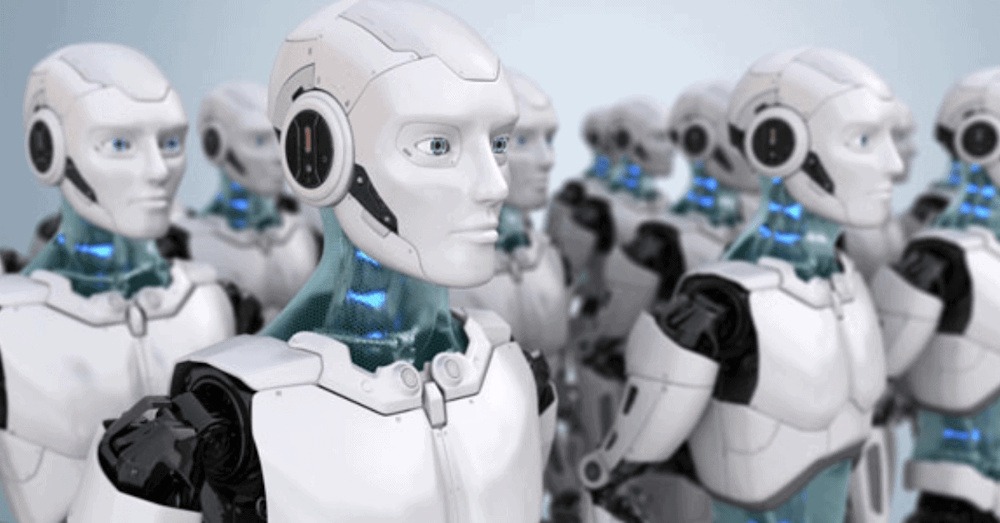
US artificial intelligence and robotics firms have cautioned lawmakers that China’s swift progress in humanoid robots may alter industrial competition and national security assessments, creating a new divide in the escalating tech rivalry between the two nations. During a recent hearing of the House Homeland Security Committee’s cybersecurity subcommittee, executives from companies including Scale AI and Boston Dynamics highlighted the rapid advancements made by Chinese firms, especially Hangzhou-based Unitree Robotics, and urged for coordinated government intervention, as reported. Executives pointed to two immediate signals. Initially, Unitree Robotics’ public demonstration at China’s Lunar New Year gala highlighted a significant increase in capability over the course of a year. Robots that once faced challenges with even simple coordinated movement have demonstrated the ability to execute intricate martial arts routines, featuring backflips and jumps. At the Consumer Electronics Show in Las Vegas, it was noted that Chinese firms showcasing humanoid robots outnumbered their US counterparts by approximately five to one, as stated in the testimony presented at the hearing.
Industry executives have put forth a series of policy responses akin to the previous US measures in the realms of semiconductors and AI. Humanoid robots integrate advancements in artificial intelligence, sensors, actuators, and manufacturing. In contrast to software systems, these entities function within the tangible realm, specifically in factories, warehouses, and possibly in defense settings. Executives in the US identified two significant risks. One is industrial dependence; if China dominates robot-based production, it could begin to control key parts of the automation supply chain. Furthermore, the second aspect is the dual-use capability, as robotic systems intended for logistics or industrial applications can be repurposed for military or high-risk operational contexts. The central argument posits that humanoid robotics can be positioned alongside semiconductors and AI models within the realm of critical infrastructure technologies.
India’s position in robotics is evolving; however, it remains at quite an early stage when compared to the US and China, particularly in humanoid systems. The country boasts a burgeoning array of robotics companies; however, the majority concentrate on industrial automation, logistics, or niche applications, rather than on general-purpose humanoids. Kerala-based Genrobotics has developed robots for sanitation and hazardous tasks, notably its “Bandicoot” system, which has been implemented in various states to eliminate manual scavenging. Meanwhile, companies like Sastra Robotics and Svaya Robotics are developing industrial testing systems and collaborative robots (cobots), focusing on enhancing manufacturing efficiency rather than humanoid mobility. A small yet emerging group of companies has commenced efforts on humanoid systems. Noida-based Addverb, an industrial robotics firm, has recently introduced a six-foot humanoid robot tailored for warehouse and industrial applications, with initial plans to deploy approximately 100 units. Startups like Muks Robotics and Machani Robotics are working on enterprise and general-purpose humanoids; however, these initiatives remain in the early stages of development and deployment. At the institutional level, India’s Defence Research and Development Organisation is engaged in the development of a humanoid robot intended for military applications, with prototypes having undergone testing for mobility and manipulation tasks. Funding for robotics in India is increasing, although it still lags behind that of global leaders.
Investment in deep-tech is on the rise, with funds like Yali Capital securing Rs 893 crore to support sectors such as robotics, semiconductors, and AI, as reported. The India Deep Tech Alliance, supported by both global and domestic investors, has successfully mobilised over $850 million to back research-intensive startups in robotics and related sectors, according to a report. Nevertheless, in spite of these factors, deep-tech continues to represent a comparatively minor portion of India’s total startup funding, while robotics research and development is still scattered among various institutions, startups, and government initiatives. In the field of robotics, particularly following advancements in China, attention has transitioned from software, models, algorithms, and chips to more tangible systems, particularly those that implement AI in practical applications. While China’s prowess lies in its manufacturing scale and hardware development, the United States possesses an advantage in software and AI systems; however, it falls short in production capabilities. Meanwhile, India is developing capabilities in specialized applications and early-stage humanoid development, but has not yet established itself as a significant player in general-purpose robotics.