Silicon Valley’s ‘small team’ moment benefits from AI

In numerous sectors, managing a large team is a demonstration of capability. A substantial workforce indicates a significant budget, reflecting the strength of your organization and its capacity to drive initiatives forward. Recently, within the realm of start-ups, certain founders have been touting their ability to achieve greater outcomes with a reduced workforce. Silicon Valley has adopted the concept of “tiny teams,” highlighting impressive revenue-to-worker ratios and clusters of “high agency” employees, each of whom accomplishes significant tasks with the aid of artificial intelligence. A platform promoting itself as the “tiny teams hall of fame,” serving as a directory for such enterprises, has attracted notable media interest. Dan Shipper, the operator of the media start-up Recently, a new term has emerged to describe the phenomenon — the “two-slice team,” which comprises a single individual alongside AI tools. The concept draws inspiration from Jeff Bezos’ “two pizza rule,” a principle established two decades ago suggesting that teams at Amazon should remain small enough to be fed with just two pizzas.
Currently, Shipper contends that merely two slices of pizza suffice. The individual has the capacity to consume both; the AI agent, however, does not experience hunger. “One person can now do so much more” than in the past, Shipper stated in an interview. At his start-up, multiple products — such as an AI writing tool and an AI file organiser — are overseen by individual employees, who may seek assistance from colleagues throughout the organisation when necessary. This strategy, he contends, allows his small, nascent start-up to develop a range of products in a manner that “used to only be available to really big companies with huge budgets.” It may seem counterintuitive, he noted, yet the strategy has enabled him to increase overall hiring, resulting in an expansion to over 20 employees this year. He stated that without the AI-heavy, two-slice team approach, “we would be a much smaller company because we would not have been able to build any of the stuff that has caused our growth.”
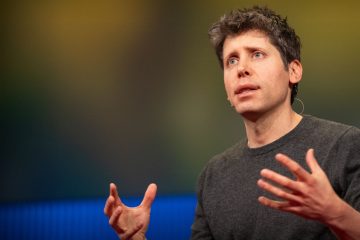
Certain business leaders are issuing bold forecasts regarding small teams. Sam Altman, the chief executive of OpenAI, has indicated that the emergence of a one-person firm achieving a billion-dollar valuation may be imminent. Shipper’s perspective, however, is more nuanced. He envisions companies reorganizing into smaller units, each managed by one or a few individuals, preferably avoiding widespread layoffs. Trade-offs between large and small organizations have always existed. While extensive teams might face challenges in communication and achieving consensus on shared objectives, they “excel at solving problems,” noted Dashun Wang. “Small teams identify challenges that require resolution.”
In his 2019 research regarding team sizes in science and technology, he discovered that smaller teams are more likely to generate new ideas, whereas larger teams excel at refining and developing existing concepts. One format, he stated, is not inherently superior to the other. Even the most modest assembly of individuals will unite people possessing diverse skills and viewpoints. However, Wang observed that any expansion of a solo team is now likely to involve ChatGPT or Claude. A potential drawback of small teams that depend on AI is that “now suddenly they look a lot similar, because they, in some sense, have collaborated with the same person” (who, of course, is not actually a person). The new teammates are unable to partake in pizza. Humans, nonetheless, continue to possess the ability and engage in such actions.