Nvidia Stands at the Center of the AI Revolution
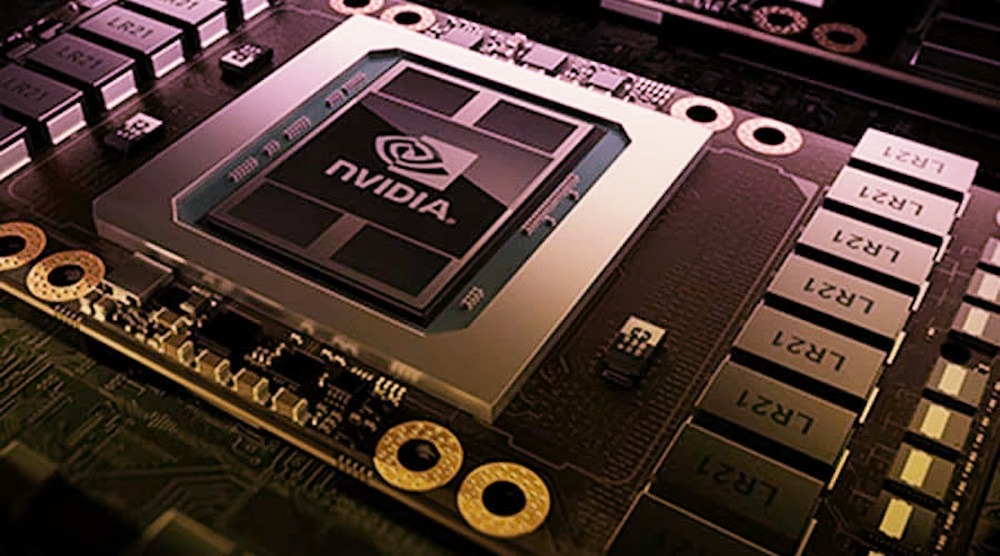
This period of hyperactive growth in the tech industry can indeed be characterized as a historic moment. Nvidia, a key player in the production of computer chips vital for artificial intelligence development, announced on Wednesday that its quarterly profit soared to nearly $32 billion, reflecting a 65 percent increase from the previous year and a staggering 245 percent rise from two years prior. Only three weeks ago, Nvidia achieved the milestone of becoming the first publicly traded company valued at $5 trillion. Microsoft, Google, Apple, and Amazon have now reached valuations in the trillions. In their latest quarters, the four companies disclosed over $110 billion in total profits. “There’s been a lot of talk about an A.I. bubble,” said Jensen Huang, following his company’s impressive quarterly report. “From our perspective, we observe something quite distinct.” However, certain industry insiders suggest that there is an unsettling presence hidden beneath all this cheerful news.
They observe the same remarkable growth and the same impressive wealth creation as Mr. Huang and perceive a house of cards. It is said that determining the extent of the damage in the event of a collapse is a challenging task. Even Nvidia’s growth can be rationalized. The demand for the company’s chips does not necessarily indicate a desire among people to utilize A.I. It simply indicates that companies are developing large A.I. systems with the expectation that someone will be willing to pay for their use. The Nvidia-led rally on Wall Street proved to be short-lived, as the company’s share price fell approximately 3 percent by the close of trading on Thursday. A notable decline in tech stocks led to a downturn across the entire market, resulting in a 1.6 percent drop in the S&P 500 for the day. The core of the pessimist’s argument regarding the A.I. boom lies in the substantial financial investments flooding the start-up sector and the immense sums those companies are allocating to data centers. OpenAI, the company that initiated the surge three years ago, is currently valued at approximately $500 billion, establishing it as the most valuable start-up globally. Anthropic, considered a significant competitor to OpenAI, holds an estimated valuation of $183 billion. Thinking Machines Labs, founded in February, is already estimated to be valued in the tens of billions of dollars.
OpenAI is currently not profitable and does not anticipate achieving profitability until 2030. Anthropic is experiencing losses. Thinking Machines has just launched its inaugural product. That has not deterred them from their spending. Anthropic recently announced its intention to invest $50 billion in new data centers. Sam Altman, OpenAI’s prominent chief executive, stated that his company was dedicated to investing $1.4 trillion in computing power for its A.I. endeavors. “What OpenAI is engaged in is the most dramatic case of ‘Fake It Until You Make It’ that we have ever seen,” said Gil Luria. “They are making huge commitments that they literally can’t afford.” OpenAI and its partners are investing $500 billion into new data centers in the United States as part of what they refer to as Project Stargate. In today’s currency, that amount is sufficient to finance the Manhattan Project 15 times over. The entire Apollo moon project could be funded by this. Twice. “Stargate alone — if it does actually reach $500 billion — would be the largest infrastructure project in the world, several times over,” said Evan Conrad. An OpenAI spokesman stated that the company is confident its trajectory is heading in the right direction, boasting 800 million weekly users and over a million business users. “Progress in generational advancements — like railroads, electricity and the internet — comes from bold investment and long-term conviction,” stated the spokesman, Steve Sharpe. “In under three years we’ve built the fastest-growing consumer and enterprise platform in history.” According to analysts, tech companies, governments, and their partners globally are projected to invest nearly $3 trillion in data centers by 2028. To achieve that, they will secure nearly a trillion dollars in loans from banks and other financial institutions. In the past year, Google, Microsoft, Amazon, and Meta have invested approximately $360 billion in new data centers. Given their substantial profits, they have the means to do so. Other companies must incur debt. This encompasses both well-known entities such as the software giant Oracle and smaller firms with titles like CoreWeave and Nebius.
Due to the fact that this debt is held by a diverse range of financial institutions — encompassing both private credit lenders and traditional banks — experts are finding it challenging to gauge the level of risk present in the system. Critics express concerns that some of the agreements OpenAI has established with chipmakers, cloud computing firms, and others appear to be strangely circular. OpenAI is poised to receive billions from tech companies, while simultaneously returning billions to these same companies for computing power and various services. Concerns have been raised by certain financial analysts that these deals may create an illusion of market strength that does not accurately reflect reality. Ultimately, the health of the market hinges on whether companies like OpenAI can achieve profitability before debt becomes unmanageable. The two companies have refuted the allegations presented in the lawsuit. Nvidia has also entered into agreements that have sparked inquiries regarding whether the company is compensating itself. It was announced that a $100 billion investment would be made in OpenAI. The start-up acquires that funding as it purchases or leases Nvidia’s chips. On Tuesday, Nvidia revealed a comparable $10 billion agreement with Anthropic, which will purchase $30 billion in A.I. computing supported by Nvidia chips. The funds will indeed be allocated to procure computing power from Microsoft, which has also made a $5 billion investment in Anthropic. Goldman Sachs has projected that Nvidia will derive 15 percent of its sales next year from what critics refer to as circular deals.
Numerous companies defend their expenditures by asserting that they are not merely developing a product; they are crafting something that has the potential to transform the world: artificial general intelligence, or A.G.I., a machine capable of performing any task that the human brain can accomplish. The challenge lies in the fact that none of them truly understand how to accomplish it. However, Anton Korinek, an economist at the University of Virginia, stated that the spending would be entirely justified if Silicon Valley achieved its objective. He is optimistic that it can be accomplished. “It’s a bet on A.G.I. or bust,” Dr. Korinek stated. Chatbots and image generators from A.I. companies are currently utilized by hundreds of millions of individuals. Numerous individuals incur monthly expenses that can exceed $100. However, it remains uncertain whether business customers — the true revenue generator for the tech industry — are as enthusiastic about utilizing A.I. Nearly 80% of businesses have reported utilizing A.I. technologies. Many have remarked that these technologies had “no significant bottom-line impact,” as indicated by research. Nonetheless, tech companies assert that business interest is beginning to solidify. Microsoft, Google, and Amazon have all reported that they are experiencing greater customer demand than their current supply can meet, and they anticipate facing constraints well into the next year. Even among certain executives of Silicon Valley’s wealthiest companies, the abundance of money circulating is a cause for concern. Sundar Pichai, the chief executive of Alphabet, Google’s parent company, stated in an interview. “If the market crashes,” he said, “the damage will be widespread. I think no company is going to be immune, including us,” he stated. Industry experts frequently draw parallels between the current A.I. surge and the dot-com bubble of the 1990s. When that bubble burst, hundreds of start-ups vanished, and established companies that were supplying technology to those emerging businesses faced significant losses. However, other start-ups achieved enduring success and truly transformed the world — most notably Amazon and Google. “When bubbles happen, smart people get overexcited about a kernel of truth,” Mr. Altman conveyed to reporters.