Nvidia Develops Tech to Combat AI Chip Smuggling
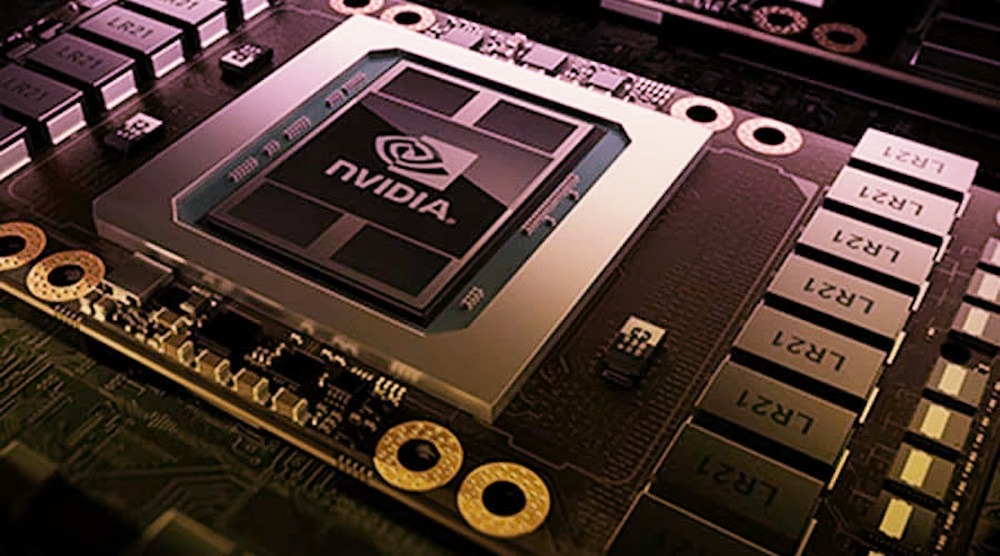
Nvidia has developed location verification technology capable of identifying the country in which its chips are operating, the company confirmed on Wednesday. This initiative could assist in preventing the smuggling of its artificial intelligence chips into nations where their export is prohibited. Nvidia has privately demonstrated the feature in recent months, but it has not yet been released. This would be a software option that customers could install. It would leverage the confidential computing capabilities of its graphics processing units. The software was designed to enable customers to monitor a chip’s overall computing performance—a standard procedure for companies purchasing fleets of processors for extensive data centers. It would utilize the time delay in communication with servers operated by Nvidia to provide insights into the chip’s location, comparable to what other internet-based services offer, as stated by an Nvidia official.
In a report on the software’s existence, Nvidia elaborated on its functionality, revealing plans to make it open-source, thereby enabling external security researchers to scrutinize it. “We’re in the process of implementing a new software service that empowers data center operators to monitor the health and inventory of their entire AI GPU fleet,” Nvidia stated. “This customer-installed software agent utilizes GPU telemetry to oversee fleet health, integrity, and inventory.” Nvidia on Wednesday stated that there are “no features that allow Nvidia to remotely control or take action on registered systems” and emphasized that the telemetry data sent to Nvidia servers is “read only,” indicating that the company’s servers cannot write data back to the chip. “There is no feature within Nvidia GPUs that allow Nvidia or a remote actor to disable the Nvidia GPU,” Nvidia stated. “There is no kill switch.”
The feature will initially be accessible on Nvidia’s newest “Blackwell” chips, which incorporate enhanced security features for a process known as “attestation,” surpassing those of Nvidia’s earlier Hopper and Ampere semiconductor generations. However, Nvidia is exploring possibilities for the previous generations, as stated by an official from the company. If released, Nvidia’s location update could respond to requests from the White House and lawmakers across both major political parties in the U.S. Congress for actions to prevent the smuggling of AI chips to China and other nations where their sale is restricted. The calls have grown louder as the Department of Justice has initiated criminal cases against smuggling rings linked to China, which were reportedly trying to transport over $160 million worth of Nvidia chips to the country.
However, the demands for location verification in the U.S. have prompted China’s leading cybersecurity regulator to summon Nvidia for inquiries regarding the potential existence of backdoors in its products that could enable the U.S. to circumvent the security features of its chips. This week, the regulatory cloud reemerged as U.S. President Donald Trump announced he would permit exports of the Nvidia H200, the immediate predecessor to its current flagship Blackwell chips, to China. Experts in foreign policy voiced doubts regarding China’s willingness to permit companies to acquire them. Nvidia has firmly refuted claims that its chips contain backdoors. Experts in software have indicated that Nvidia could indeed develop chip location verification while maintaining the integrity of its security measures.