Nvidia and Tesla pursue self-driving futures differently
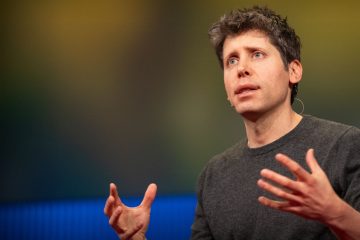
Jensen Huang took the stage at the CES trade show in Las Vegas this week to deliver a compelling presentation for Nvidia Corp.’s autonomous driving technology. The chief executive officer’s vision for self-driving vehicles ventured into the realm of significant competitors such as Tesla Inc. and its leader, Elon Musk. Huang’s remarks initiated a widely observed — albeit notably courteous — indirect multiday dialogue between two of the most prominent figures in technology. It also highlighted a crucial inquiry regarding autonomous driving: Who holds the reins over the technology that will initially fuel consumer vehicles capable of self-driving — and eventually, the driverless cars referred to as robotaxis intended for ride-hailing? Which autonomous vehicle system stands out as the best?
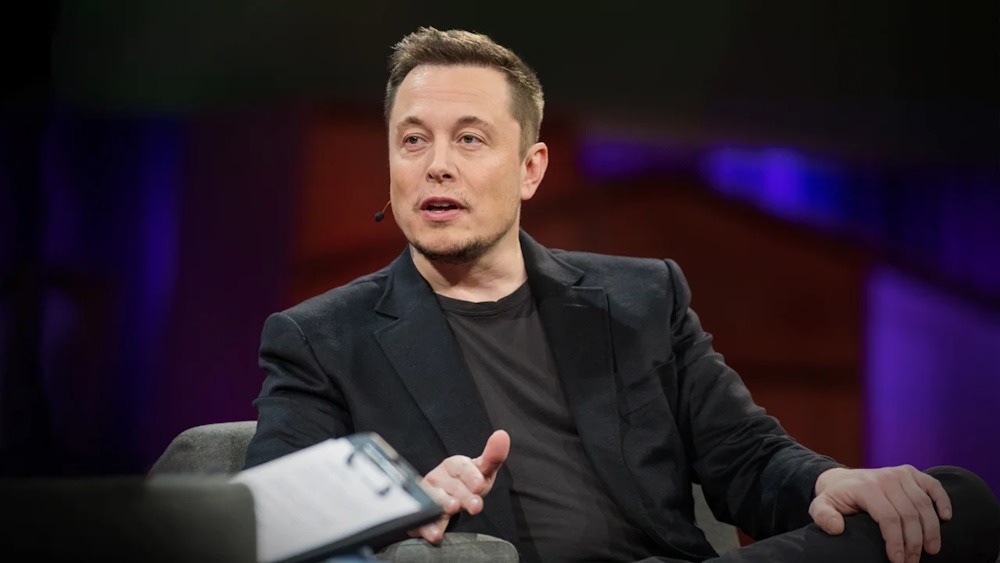
On Monday, Huang delivered a speech at America’s largest technology showcase, highlighting the advantages of Nvidia’s Alpamayo, an open-source AI model aimed at accelerating the development of Level 4 self-driving cars. These vehicles — initially owned by consumers and subsequently operated as part of a robotaxi fleet — are capable of autonomous driving without the need for human oversight or intervention, within a specified geographic region. Nvidia characterized Alpamayo as an element of a more extensive toolkit it provides to automakers, complementing open models. This encompasses robust chips utilized in data centers for training self-driving software, chips embedded within vehicles that function as the car’s “brain” during operation, and simulation software capable of generating extensive driving data virtually — thereby minimizing the time and expense associated with real-world data collection. The proposal was directed specifically at automobile manufacturers. Nvidia aims to provide the intelligence layer essential for autonomy while refraining from manufacturing the vehicle itself; however, it remains intent on retaining ownership of the technology that transforms self-driving into a tangible reality. “The world’s first thinking, reasoning, autonomous vehicle AI,” Huang proudly announced, clad in a shiny leather jacket. That afternoon, Musk contributed to the conversation with a post on X following a user’s sharing of a transcript of Huang’s remarks. “Well that’s just exactly what Tesla is doing,” Musk wrote. The Tesla CEO remarked that although achieving functionality in a system most of the time is relatively straightforward, addressing rare and unpredictable edge cases presents a significantly greater challenge. The world’s richest man has asserted for an extended period that Tesla’s system will possess the capability to reason — that is, to make humanlike decisions in particular traffic situations — following a forthcoming software update.
Earlier this week, his chief AI lieutenant, Ashok Elluswamy, addressed a question on X, stating that a further update will be provided in the current quarter. Huang discovered Musk’s response while participating in an interview. “I wouldn’t be surprised,” Huang interjected, regarding Musk’s assertion of already engaging in reasoning. “I believe the Tesla stack represents the pinnacle of advanced AV technology globally.” Tesla shares concluded the week with an increase of 1.6%, finishing Friday at $445.01. Pierre Ferragu, who maintains a buy rating and a $600 price target on the stock, shared on X earlier in the week following Huang’s keynote that Nvidia’s strategy “validated” Tesla’s approach. The aftermath of Nvidia’s announcement captured wider interest due to its tone. The exchange gained widespread attention — not due to conflict, but rather because of the remarkable restraint displayed. The two rivals recognized one another’s technical expertise while pursuing divergent paths. Tesla and Nvidia share a significant, albeit inconsistent, partnership. Tesla depends significantly on Nvidia’s graphics processing units, or GPUs – the chips utilized in data centers for training its autonomous driving software — while simultaneously developing its own in-house chips to operate that software within its vehicles. Musk has stated that Tesla will have invested approximately $10 billion cumulatively in Nvidia hardware for training by the end of this year, and that amount would be greater if the company had not developed its own AI chips. Musk’s AI startup, xAI, is a significant customer of Nvidia, which is also an investor in xAI. Tesla and Nvidia are fundamentally distinct entities. Tesla manufactures vehicles and develops the complete system from start to finish. Nvidia develops chips and software utilized by others. Their technologies differ as well. Tesla employs a vision-only strategy, depending solely on camera sensors.
The company contends that it represents the most economically viable approach at scale, while also preventing sensors from confusing one another. The remainder of the industry contends that alternative sensors such as lidar, radar, and ultrasonics are superior due to their enhanced safety and redundancy features. However, the situation highlights the ongoing uncertainty surrounding the autonomous vehicle arms race. Tesla relies on Nvidia for the development of its software, while Nvidia simultaneously creates tools that may eventually enable Tesla’s competitors to close the gap. Their routes to consumers are becoming more intertwined. Tesla offers a collection of features referred to as Full Self-Driving (Supervised), which is a driver-assistance system that mandates the vehicle’s operator to stay at the wheel and monitor the road. The system that Tesla offers enables point-to-point driving with navigation and lane changes, and it can respond to traffic conditions; however, drivers must remain attentive and keep their eyes on the road. Nvidia has expanded its offerings to include advanced driver-assistance and autonomy platforms for automakers. Those automakers, in turn, present the systems to consumers through the vehicles they offer for sale. Market analysts view robotaxes as the ultimate goal, with Alphabet Inc.’s Waymo currently at the forefront of real-world commercial deployments, while Tesla contends it can achieve success at scale. Prior to that, the testing phase involves consumer-owned vehicles capable of autonomous driving under the supervision of their owners, acting as a transitional step towards broader acceptance of robotaxis. Tesla views FSD as a crucial foundation for a future robotaxi network that it aims to manage.
Nvidia is pursuing a similar endgame, collaborating with various technology firms, automakers, and ride-hailing services, including Uber Technologies Inc. Nvidia is set to supply the technology, envisioning it as the driving force behind fleets of robotaxis by 2027. Tesla is placing its bets on achieving autonomy as a specialist, whereas Nvidia is establishing itself as the arms dealer, providing tools to the entire industry. Huang stated that the forthcoming Mercedes-Benz CLA will be the inaugural vehicle to utilize Nvidia’s stack, providing FSD-like capabilities. Deliveries are set to commence in the US in early 2026, with a subsequent rollout to Europe and Asia later in the year. Advancing beyond this point necessitates supplementary hardware, like lidar, which increases expenses and highlights the considerable distance today’s vehicles are from achieving complete autonomy. Musk revisited the topic of Nvidia’s advancements in autonomous vehicles on Tuesday, asserting that it presented minimal immediate challenge to Tesla’s initiatives. He stated that the technology was far from being ready for safe large-scale deployment. “The actual time from when FSD sort of works to where it is much safer than a human is several years,” he wrote on X, adding that meaningful competition for Tesla could still be at least five or six years away. Despite the evident ambition, both Huang and Musk have clearly suggested that achieving fully autonomous driving at scale remains a far-off goal. For both, the closer proving ground arrives first: vehicles capable of autonomous driving for part of the journey. The outcome of that phase could significantly influence who prevails in the subsequent one.