NASA Rover Finds Clues of Ancient Life on Mars
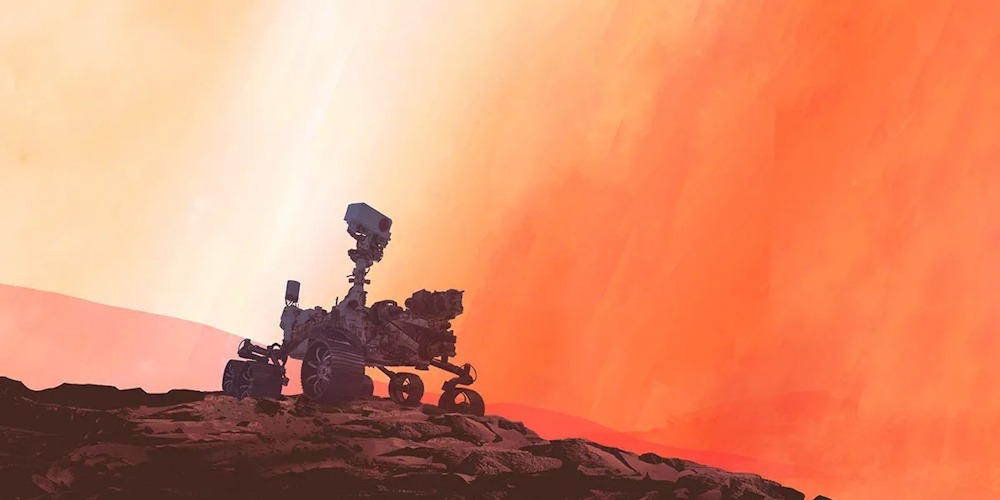
NASA’s Perseverance rover on Mars discovered rocks last year that scientists believe may indicate Mars once supported microbial life. Reports indicates various explanations for a collection of Martian rocks discovered and sampled by Perseverance in July 2024. In the ancient river valley of Neretva Vallis, the rocks consist of mudstones featuring unique, textured spots that NASA described as “intriguing,” earning them the nicknames “poppy seeds” or “leopard spots.”
Scientists believe that the spots may be byproducts of microbes after examining images and data. Ancient microbes may have inhabited the sediment long ago, consuming organic materials. The process transformed the organic matter into the spotted minerals discovered by the rover. NASA representatives will elaborate on the findings during a press conference. Nasa acting administrator Sean Duffy stated, “I’ll be damned” if Nasa does not beat China to the moon. The microbial option is merely one potential explanation, however. The researchers state they cannot dismiss the possibility that the spots were formed by processes unrelated to biological life, highlighting the necessity of analyzing a sample from this area in a laboratory on Earth.
“The sample that we collected, I think, has all of the ingredients needed to address the question of whether or not life was responsible for forming the features that we see in those rocks,” said Joel Hurowitz, a planetary scientist at Stony Brook University. These rocks first drew scientists’ interest last year when Perseverance discovered them, leading to immediate speculation that they may have been formed by ancient life. NASA now confronts an uncertain future concerning its Mars exploration programs. The Trump administration has proposed canceling the Mars Sample Return program, which aims to transport Martian soil samples to Earth, labeling it as “unaffordable.” The Perseverance rover was created as the initial step in the Mars Sample Return initiative. A car-sized robot is drilling into the Martian soil at various locations, collecting samples of dirt and rocks in containers left on the ground. A suite of robots will eventually be sent to Mars to collect samples and return them to Earth.
However, the future of that return is now uncertain due to the recent attempt to cancel the program. NASA disclosed that the Mars Sample Return budget had escalated to $11 billion before Donald Trump assumed office, and sought proposals from the commercial space sector on more cost-effective methods for sample retrieval. NASA did not establish a new direction before the Trump administration suggested cancellation. Senator Ted Cruz attempted to rescue Mars Sample Return through the recent One Big Beautiful Bill Act. As chair of the Senate Commerce Committee, he allocated funds for NASA in the bill to develop a new Mars telecommunications spacecraft for the Mars Sample Return program. However, the program remains on shaky ground.
Hurowitz ultimately hopes the science community will continue to analyze the information gathered by Perseverance. However, he states that the rover isn’t capable of determining if life truly formed these rock formations. “The ideal scenario would be to get the sample Perseverance batched to an Earth laboratory where it can be studied in greater detail,” he said. “If we aren’t able to retrieve the samples, then we’ll just be left sort of pondering this question,” Hurowitz stated. “Is the answer to that question sitting in a tube somewhere on Mars that we haven’t retrieved yet?”