In the age of drones, militaries want cheaper defenses
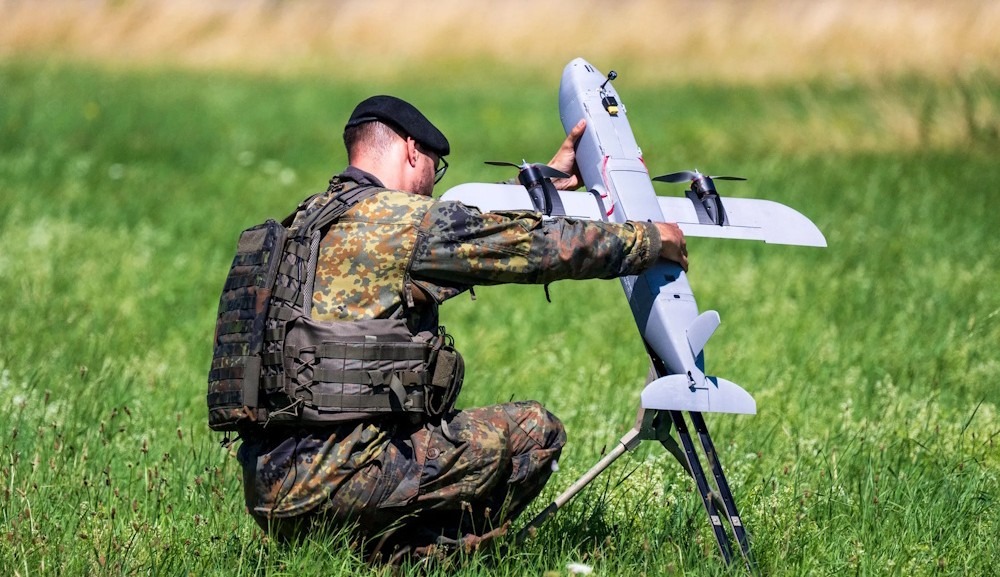
The rise of uncrewed systems in the Ukraine-Russia conflict underscores the critical need for drone defense capabilities. However, militaries globally confront a dilemma: the cost of attack weapons is often significantly lower than the expense required to neutralize them. Drone costs vary from a few hundred to several thousand dollars, with prices rapidly declining due to innovation and mass production. That’s a small portion of the expenditures for most air defense missiles, which at the high end carry price tags of tens of millions for a single shot.
This week at the defence expo in London, efforts to address that conundrum were evident, with halls filled with lasers, missiles, jammers, and various drones aimed at countering small, uncrewed threats. All shared a common goal: to reduce the “cost per kill.” Drones, also known as uncrewed systems for the larger variants, have emerged as pivotal tools in warfare following Russia’s invasion of Ukraine in early 2022. As the conflict progresses, both sides have increasingly relied on drones for surveillance, defense, and attack missions, moving away from traditional battlefield tools like artillery. “In Ukraine, it’s really scaled drone-on-drone warfare,” stated Jan-Hendrik Boelens. “And our interceptor is essentially a small drone, so it has the price tag of a small drone.”
Electronic warfare, which encompasses jamming and spoofing to disrupt drones’ control systems, serves as an additional defensive strategy. Numerous companies at DSEI showcased technology capable of potentially intercepting multiple drones simultaneously. “It would then essentially wipe out the electronics in the entire swarm, and they fall to the ground,” said Mike Sewart. “Instead of a point-and-shoot model that involves targeting those drones individually.” US-based Droneshield and Dedrone showcased portable systems that can be aimed like rifles. At the fair, a variety of lasers capable of disabling drones were showcased, including several iterations of Israel’s renowned Iron Beam, alongside products from smaller firms like Electro Optic Systems and IPG Photonics. Both lasers and electronic-warfare systems are initially expensive and complex to build, but they are inexpensive to operate thereafter. MARSS from the UK has created ground-launched interceptors aimed at minimizing costs and lowering the risk of accidental damage by directly flying through enemy targets. The small, X-shaped missiles utilize battery-powered propellers to reach speeds exceeding 200 miles per hour, subsequently crashing through targets shielded by a titanium nosecone. The interceptors were designed specifically for deployment in oil fields, areas that are particularly sensitive to explosives.
“Nine times out of ten it’s about bang for buck or cost per kill,” said Robbie Draper. Investment has surged due to the increasing demand for anti-drone equipment. Tytan Technologies developing drones to intercept UAVs, has secured $19 million in funding from European investors. The interceptors have been tested by the armed forces of Ukraine and Germany. As attention remains on the Ukraine-Russia conflict, other nations concerned about potential military incursions are seeking to enhance their drone capabilities. Just last week, Polish forces intercepted Russian drones. NATO is experiencing a significant deficiency in anti-drone defenses, as stated by Becca Wasser. Taiwan, wary of a potential invasion from China, has stated that its current stockpile of merely a few thousand drones is insufficient for its requirements. The Pentagon announced a $1 billion initiative last year to explore drone warfare around Taiwan, drawing lessons from Ukraine, where maritime drones largely neutered Russia’s Black Sea Fleet. Germany has recently announced significant drone purchases, albeit at a level lower than that of other European countries.
Companies globally have emerged to supply weapons, while established firms have aimed to create their own products. “The growing number of drone threats means the variety of defensive systems must expand at a faster pace,” said Fabian Hinz. “There is a lot of focus on affordability of counter-UAV solutions, but a more important metric might be availability and scalability of production,” Hinz said. “In other words: even if the money was available, we would not be able to acquire enough.”