Hyundai to Launch Humanoid Robots in U.S. Factory by 2028
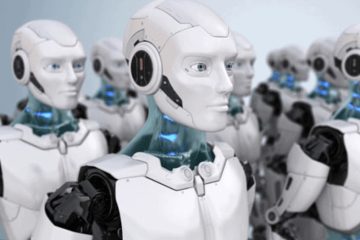
The humanoid robots that Hyundai Motor Group intends to introduce at its production site in Georgia by the year 2028 have been unveiled by the parent company. In accordance with the South Korean corporation, this project is a significant step toward the automation of operations that are both high-risk and repetitive in nature. At the Consumer Electronics Show in Las Vegas on Monday, Hyundai presented the production version of the Atlas humanoid robot, which was built by the company’s Boston Dynamics business. Establishing a factory that is capable of producing 30,000 robots yearly by the year 2028 is the objective that the corporation has announced as its goal. Despite the fact that the firm would not disclose the price of the robots, it did imply that the deployment of the robots will begin at all of its manufacturing locations as part of an effort to develop “physical AI.”
It was reported that the robots would initially begin performing duties related to the sequencing of parts beginning in the year 2028. The uses of the robots are expected to gradually grow as the benefits of safety and quality are verified. According to Hyundai, by the year 2030, it is projected that Atlas robots will move into more sophisticated duties. These responsibilities will include activities that demand large weights, repetitive motions, and complex operations across industrial sites. The robots are designed to reduce the amount of physical strain that is placed on people by managing jobs that are both high-risk and repetitive. This lays the groundwork for greater commercial applications in industrial settings.
Over the course of the previous year, the labor union at Kia Corp., which is a subsidiary of Hyundai Motor, voiced their worries on the further development of automation and the possible implications for workers’ rights. Jaehoon Chang, vice chair of Hyundai Motor, remarked at the Consumer Electronics Show that the firm was aware of worries surrounding job losses. However, he underlined that humans would be required to maintain and train the robots, and that extra staff will be required. The business believes that humanoid robots will become the most dominating category within the physical artificial intelligence industry. This market covers artificial intelligence systems that are incorporated into hardware and are able to receive data from the real world and make choices on their own.
The intersection of artificial intelligence and robotics technologies is expected to occur in the fields of autonomous driving, robotics, and decision-making, in addition to developments in both of these parts of this growing subject. The human-scale hands of the Atlas, which are equipped with tactile sensing skills and the strength to lift up to 50 kilograms (110 pounds), are a feature that Hyundai claims the vehicle possesses. The robot is designed to function in industrial environments such as mining and agriculture, and it is capable of working on its own without human intervention. Hyundai made the announcement that it is accelerating research in this field by developing collaborations with global leaders in artificial intelligence. These agreements include a cooperation with Nvidia and Google, which is focused on improving safety, efficiency, and deployment in the real world.