Green expenditures in solar and EV batteries are China’s Grand plan
Last week, rich democracies experienced a collective shiver as they witnessed Xi Jinping, Vladimir Putin, and Kim Jong Un engaging in friendly conversation and sharing advice on longevity at China’s military parade. There should be greater concern regarding the connections Beijing is establishing in other parts of the globe. The reason lies in the fact that the nation’s clean energy sector is forging connections throughout a broad expanse of the Global South, carrying far greater collective importance than the deteriorating nuclear-armed regimes in Moscow and Pyongyang.
Since 2022, foreign direct investment from China’s green-technology industry has reached between $227 billion and $250 billion. That’s approximately the size, adjusted for inflation, of the post-World War II Marshall Plan that solidified the alliance between the US and Europe. In the late 2010s, as worries about the magnitude of China’s Belt and Road Initiative reached a peak, annual expenditures on all overseas infrastructure projects ranged from $80 billion to $120 billion each year. In 2023 and 2024, green manufacturing investments reached $66 billion and $72 billion respectively, based on data from the China Low-Carbon Technology FDI Database, hosted by Johns Hopkins University and Boston University. Last year’s figure represented approximately 40 percent of China’s total outbound foreign direct investment. This represents the second phase of the global energy transition spearheaded by China. The initial development, which is still relatively recent, originated from the export of finished goods — solar panels, electric vehicles, and batteries.
According to a separate study this week from pro-transition think tank Ember, thanks to that trade, about two-thirds of emerging markets now have a larger share of solar power in their grids than the roughly 9 per cent in the US. One in four are electrifying their entire economies at an accelerated pace. Electric vehicles are being embraced in Turkey, Indonesia, Malaysia, and the United Arab Emirates at a rate that rivals or even surpasses that of developed markets. The United States is increasingly taking on the characteristics of a steampunk relic, remaining reliant on 19th-century furnace-and-turbine technology to power its aspirations for artificial intelligence. This commerce is already influencing the demand for fossil fuels. Last year, China’s solar exports were enough to reduce long-term global carbon emissions by 4 billion metric tons, which is comparable to approximately 40 days of emissions. Pakistan, which has for years regarded gas generation as the cornerstone of its power network, has been requesting suppliers to postpone shipments of liquefied natural gas following a rise in solar imports that has diminished grid demand. Saudi Arabia is experiencing one of the swiftest reductions in petroleum consumption globally, as photovoltaic farms take the place of fuel oil generators.
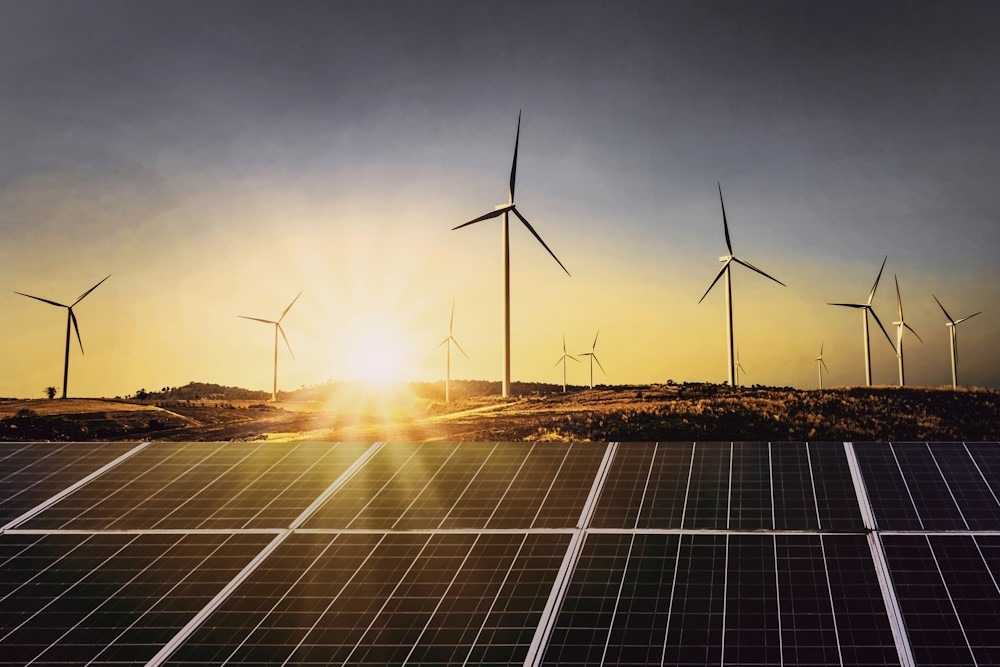
These exports have provoked strong reactions and trade restrictions, however, due to their sheer scale. The second stage of this transition is marked by foreign direct investment that is establishing physical factories, ports, and facilities. These developments will create jobs and attract investments for decades, solidifying host countries’ dedication to clean technology. Consider COBCO, a $2 billion facility for lithium-ion battery cathodes that commenced operations southwest of Morocco’s port of Casablanca in June. Once at full operation, the facility will have the capacity to supply 70 gigawatt-hours of batteries per year, which is large enough to power approximately 1.2 million electric vehicles annually — enough to meet about a third of Europe’s current market demand. A solar panel factory established the same month east of Jakarta has the capacity to produce 1.6 gigawatts of modules annually, which is sufficient to meet nearly all of the additional 17.1 GW of photovoltaic generation that Indonesia has been projecting through 2035. As capacity expands rapidly, aspirations are also on the rise: Last month, the government announced it was working on increasing its solar target sixfold, to 100 GW.
These projects are fundamentally altering the landscape of energy, trade, and international relations in a manner as significant as any event since the 1973 oil crisis. The emergency prompted developed nations to move away from fuel oil sourced from the Middle East as their primary means of grid power, opting instead for nuclear and coal, which were more readily available domestically. The emergence of a clean energy supply chain that is more affordable, abundant, and secure than the existing fossil fuel trade is creating similar opportunities for developing countries. Wealthy nations that regard this transition with apprehension ought to leverage their own knowledge in finance and project management to engage with it. China is currently offering the Global South a pathway to progress: employment opportunities, energy autonomy, economic development, improved air quality, and an opportunity to escape the impending dangers of climate change.
Investments of this nature have served as a significant instrument of soft power since the inception of the original Marshall Plan. Currently, Beijing is providing affordable, clean energy, job opportunities, trade options, and a pathway to prosperity. Washington is presenting tariffs, policy disarray, White nationalist memes, and South Korean workers in shackles following a raid on an EV battery factory. This approach is not conducive to securing victory in the grand strategic contest of the 21st century.