Game-Changing Code Turns Anthropic into an AI Powerhouse
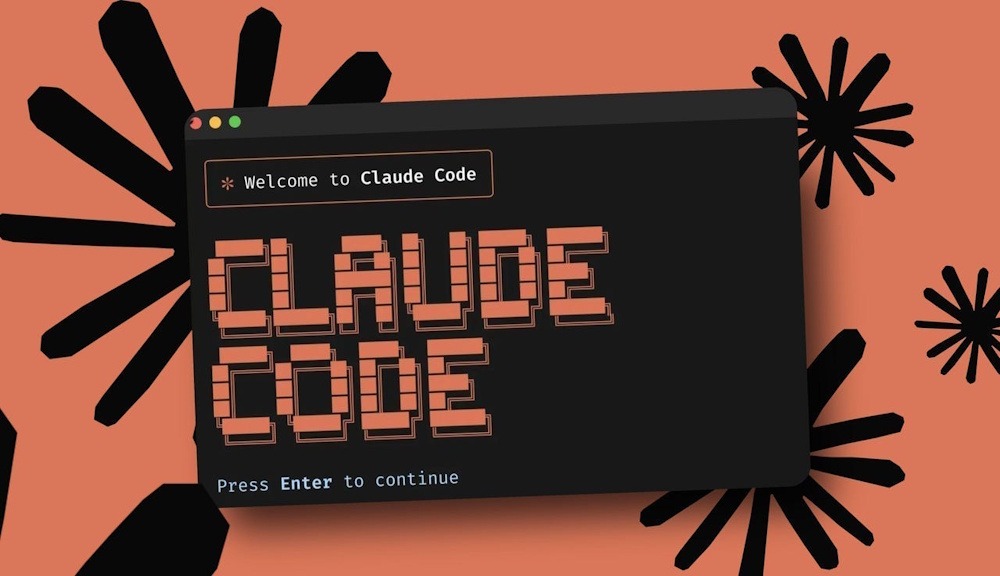
Even Anthropic Chief Executive Officer Dario Amodei expressed surprise at the initial level of enthusiasm for what would become the startup’s next breakthrough product. For months, engineers throughout the company gathered around an internal AI coding tool known as Claude Code, which was initially created as a side project by Boris Cherny. “I recall Dario inquiring, ‘Hey, are you compelling engineers to utilize this?’ Why is everyone using it?” Cherny reflected in a recent interview. “Actually, Cherny explained, all he had to do was give his co-workers access, and everyone voted with their feet.” It was an indication of what lay ahead. Claude Code, made publicly available a year ago this month, rapidly gained traction among software developers globally, establishing Anthropic as a frontrunner in a profitable, burgeoning market for vibe coding products. Other applications such as Microsoft Copilot and Cursor had already gained popularity among this group due to their user-friendly designs, but Claude Code offered the promise of writing and debugging code with greater autonomy. Suddenly, competitors such as OpenAI found themselves in a position where they needed to race to catch up to Anthropic, rather than the reverse.
Claude Code achieved $1 billion in annualised run-rate revenue within the first six months of its release and has since expanded to $2.5 billion, according to the company. Initially adopted mainly by AI-forward startups, Claude Code has now found a foothold with engineering teams at Fortune 500 companies and even among hobbyists without technical skills who are eager to create their own apps. It has been utilized for a wide range of purposes, from cultivating a tomato plant to assisting in the navigation of a NASA Mars rover. On social media, users refer to themselves as “Claude-pilled,” or deeply engrossed in Claude. ChatGPT’s release over three years ago revealed the potential for generative AI to produce clever segments of text, while Claude Code’s launch illustrated how AI can effectively carry out certain aspects of a person’s job with minimal intervention. Anthropic reported that certain users are now allowing Claude Code to operate independently on tasks for over 45 minutes before pausing it. Users of Claude Code typically dedicate 20 hours each week to engaging with the product. The success of Claude Code exemplifies AI’s utility in the workplace while also highlighting the challenges of predicting its real-world applications. The swift embrace of this technology has reignited worries regarding job displacement, notably expressed by Amodei, alongside apprehensions about the potential consequences when autonomous AI systems malfunction. Anthropic states that it has employees dedicated to comprehending and tackling both issues.
More imminently, however, the challenge for Anthropic and its peers is demonstrating their ability to gain traction with AI agents across various professions, similar to their success with coders, a demographic that is quicker to embrace cutting-edge technology. “There are a few areas where these models are actually really getting to the point where they can really change how work gets done,” said Kate Jensen. “Code happened to be the first one.” In the wake of Claude Code’s remarkable success, Anthropic has been striving to broaden its AI services in the fields of health care, finance, and legal services. Those efforts have contributed to a market meltdown in recent weeks as investors express concerns that certain legacy software providers could become obsolete due to advancements in AI technology. On Friday, cybersecurity stocks experienced a decline following Anthropic’s introduction of new features in Claude Code designed to assist companies in identifying security vulnerabilities within their software. “You’re seeing a reaction in large part to just how fast the industry is moving and how quickly the technology is getting better and better,” Jensen said before the security announcement. While certain market swing news may feel “all-consuming” at times, she emphasized the importance of recognizing that legacy software companies can gain advantages by leveraging Anthropic’s technology.
Currently, a significant portion of Anthropic’s progress is still focused on coding. At Spotify, approximately two-thirds of the staff have chosen to utilize Claude Code, surpassing the adoption rates of any comparable product, as stated by Niklas Gustavsson, the company’s chief architect and vice president of engineering. Spotify has developed an internal tool named Honk, enabling staff to communicate with Claude Code via Slack to implement modifications to the music streaming app’s code base. “For many of us, including myself, it was a bit of a mental jump,” said Gustavsson. “I’ve been in this industry for 30 years now, and the code has always been very front and center when I’m working with it.” Claude Code has entirely reversed that. Gustavsson remarked that quantifying the benefits of AI coding tools through a single metric is challenging; however, multiple internal productivity indicators at Spotify have shown improvement since the implementation of Claude Code. Anthropic reported that its engineers’ productivity has surged by 200%, according to one measure, as the use of Claude Code has risen over the past six months. The sales teams, data analysts, and product managers are utilizing it as well. Cherny, currently at the helm of Claude Code, experiences this shift in his daily responsibilities. He prioritizes strategic discussions and customer feedback over tedious tasks such as manually debugging code. “We’re starting to see this world where a customer complains about something, and it’s fixed in a matter of minutes,” he stated. “It doesn’t take weeks anymore. This is simply thrilling for me.”