China submerges data centers for cooling for the first time
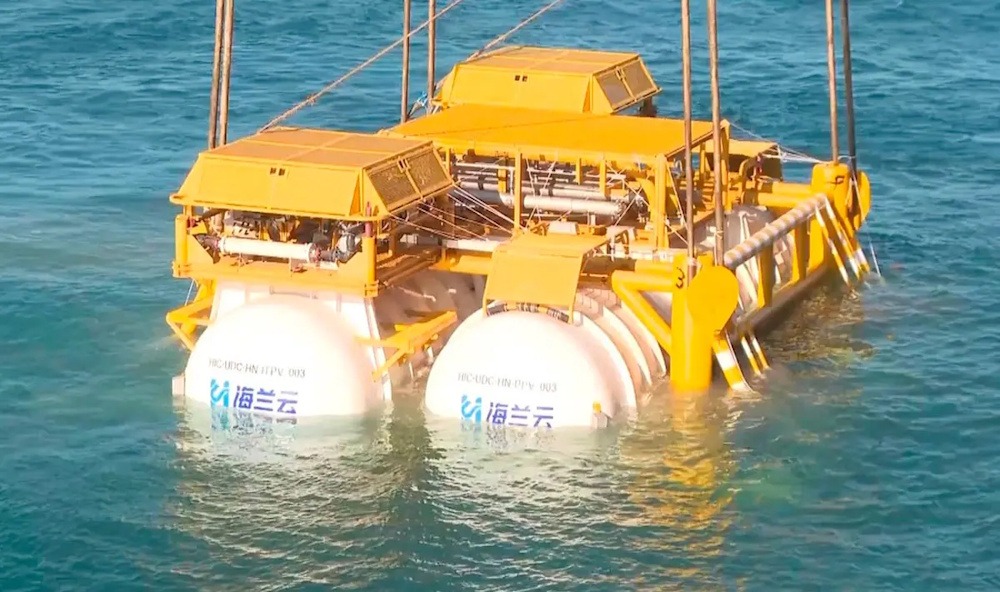
Envision the concept of housing the vast expanse of the internet beneath the ocean’s surface. A Chinese company has set forth an ambitious plan to address one of the most significant challenges in computing: energy-hungry data centres. By submerging servers in the sea off the coast of Shanghai, the project aims to lower the significant cooling expenses associated with operating contemporary digital infrastructure. On a wharf near Shanghai, workers are diligently applying the final touches to a large yellow capsule. This underwater pod, created by maritime equipment firm Highlander in collaboration with state-owned construction companies, signifies a daring advancement in alternative technology infrastructure. In contrast to terrestrial data centres that depend on energy-consuming air cooling or water evaporation, undersea servers utilize the naturally cold ocean currents to maintain low temperatures.
In 2018, Microsoft conducted an experiment with a comparable concept off the coast of Scotland, yet it did not proceed with a commercial rollout. In contrast, Shanghai’s upcoming project, scheduled to be submerged in mid-October, will mark the world’s first operational underwater data centres. It is anticipated to cater to significant clients, such as China Telecom and a state-owned AI computing firm, highlighting China’s initiatives to diminish the carbon footprint of its data infrastructure. The Microsoft project focused mainly on showcasing its feasibility. The company carried out its trial in 2020, affirming that it was technically successful while highlighting construction and operational challenges. In China, government subsidies are backing such initiatives. Highlander secured 40 million yuan ($5.62 million) for a Hainan project in 2022, which remains ongoing.
The Shanghai pod is constructed on land in distinct sections prior to its deployment in the ocean and will primarily depend on energy sourced from adjacent offshore wind farms. Highlander states that over 95 percent of energy will be derived from renewable sources. Ensuring the servers remain dry and protected from saltwater corrosion presents a significant challenge. The company employs a protective coating that incorporates glass flakes on the steel capsule. An elevator links the submerged pod to a section above water, facilitating maintenance access. The report indicated that laying internet connections underwater presents greater complexity compared to land-based servers.
Nevertheless, marine ecologists warn about the environmental consequences. The news report cited Andrew, who stated that the heat emitted by underwater data centres could either attract or repel specific species. Highlander references a 2020 evaluation of its test project near Zhuhai, which determined that water temperature stayed within safe limits. Experts view underwater data centres as complementary infrastructure rather than a replacement, despite the challenges, the news report stated. If successful, this Shanghai experiment could provide insight into a more energy-efficient, ocean-based method of powering the digital world.