China Launches Lunar Timekeeping Software
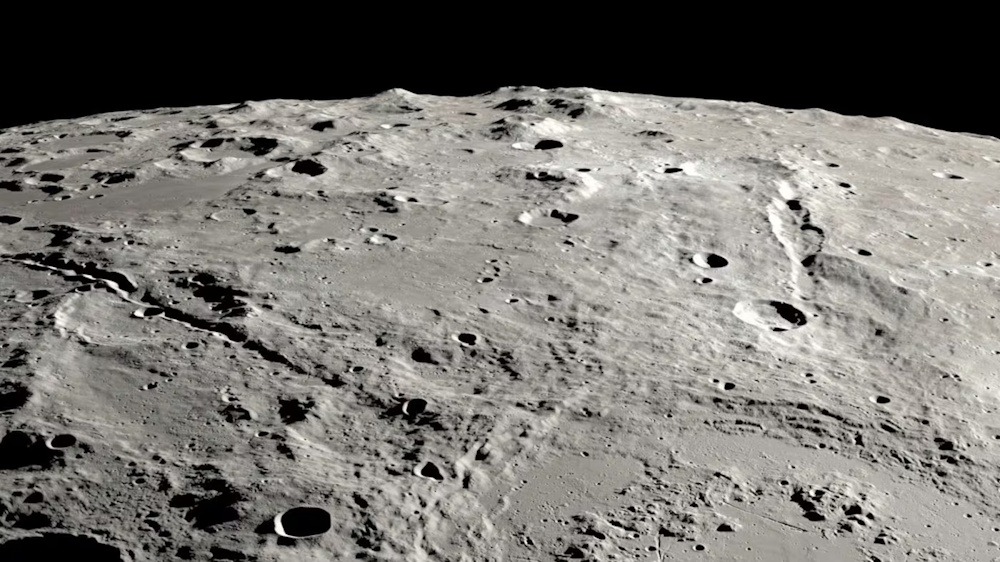
Chinese scientists have developed a new software tool to keep time on the moon, marking a key step as space agencies prepare for more frequent and complex lunar missions. The system is designed to assist spacecraft and future astronauts in achieving more precise navigation and landing by considering the differing passage of time on the moon compared to Earth, as reported. Time does not progress uniformly across all places. Due to the moon’s weaker gravity, clocks on its surface operate at a slightly accelerated pace compared to those on Earth, gaining approximately 56 millionths of a second each day. This effect, elucidated by Albert Einstein’s theory of general relativity, may appear minor, yet it accumulates over time. Consequently, relying on Earth time for lunar missions can gradually lead to inaccuracies, rendering it unreliable for extended operations on the moon.
Researchers from the Purple Mountain Observatory in Nanjing developed a model to address this issue, incorporating the moon’s reduced gravity and its trajectory through space. The report stated that this enables events on the moon to be precisely synchronized with the timekeeping systems utilized on Earth. A paper published in the December issue of Astronomy and Astrophysics reveals that the method maintains accuracy within a few tens of nanoseconds, even when projected over a span of 1,000 years. The team transformed the model into accessible software for users. This enables users to compare lunar time and Earth time effortlessly, eliminating the need for intricate calculations. The researchers stated that the objective was to render lunar timekeeping practical and accessible as missions to the moon become increasingly frequent.
The report cited Jonathan McDowell stating that lunar timekeeping has become a genuine engineering necessity, rather than merely a theoretical concern. “Even differences as small as a microsecond can become important in navigation systems, affecting calculations over periods as short as a minute,” he said. “If future missions want to use a GPS-like system on the Moon, especially for accurate landings, scientists will need to manage this difference, as such technology is likely to be needed within the next few years,” he said. Historically, the time differences between Earth and the moon were not regarded as a significant issue. Lunar missions were infrequent, and engineers depended on Earth time, making adjustments only as necessary. The difficulty in maintaining that approach is increasing. As more spacecraft – and eventually humans – are anticipated to operate on and around the moon simultaneously, relying on mission-by-mission fixes would soon prove impractical.
In acknowledgment of this challenge, the International Astronomical Union in 2024 established a comprehensive framework advocating for the moon to possess its own time reference. The Chinese team advanced this idea by concentrating on transforming the concept into a practical tool for engineers. The report indicated that they depended on accurate data regarding the moon’s motion to monitor how the time disparity between Earth and lunar clocks evolves over time. The researchers developed a software system named LTE440, which stands for Lunar Time Ephemeris. The system automates the comparison between lunar and Earth time, eliminating the necessity for intricate manual calculations. The team acknowledged that LTE440 represents an initial phase and will require additional development to facilitate real-time navigation and future networks of lunar clocks as lunar activity escalates.