China Dominates as Robot Dogs Revolutionize AI Testing
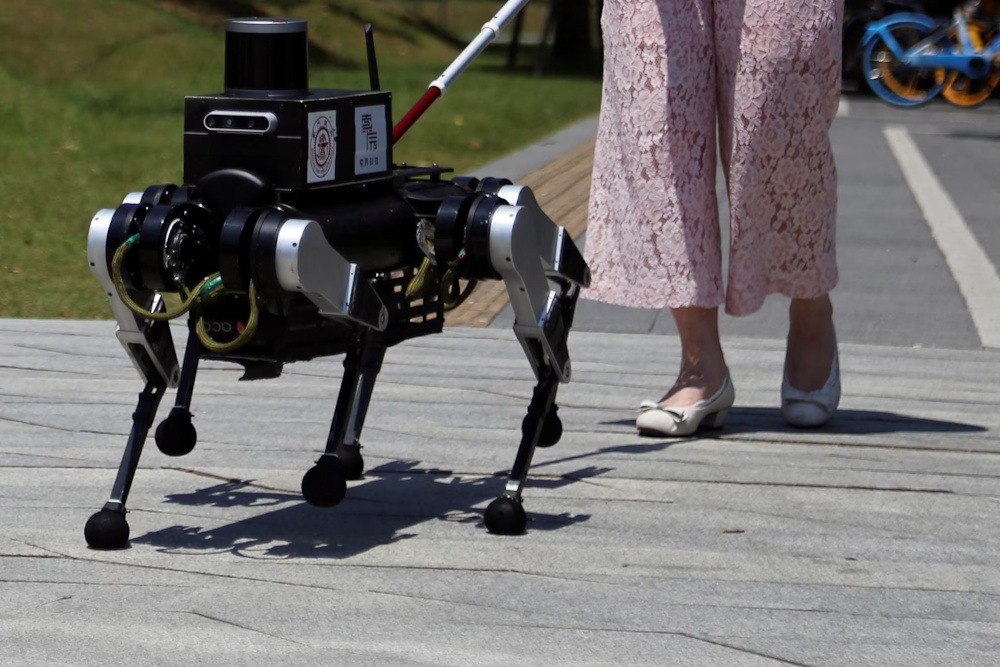
This year has seen a significant increase in attention surrounding humanoid robots. However, quadrupeds — the mechanical “dogs” — are becoming the genuine testing ground for embodied artificial intelligence. These four-legged machines possess an advantage over their upright counterparts in terms of stability and agility, rendering them more appropriate for real-world deployment. A report released last week states that they are the “most advanced general-purpose robots today.” China, rather than the US, already holds a position of dominance. According to the latest publicly available statements, analysts have determined that Hangzhou Unitree Technology Co. is currently at the forefront of the market, commanding approximately 70 percent of the global sales volume for quadrupeds in 2023. The numbers have likely surged since, but even two years ago, Unitree had ten times the total shipments of its closest competitor, US-based Boston Dynamics Inc. It’s a lead that will be challenging for the US to recover. Quadruped robots are rapidly transforming from impressive backflipping demonstrations to significant platforms for testing computer systems that navigate the real world — the same capabilities that humanoids must develop to achieve commercial viability.
Gaining insight into the evolution of the four-legged market provides a glimpse into potential contenders in the humanoid race, a venture that Elon Musk is wagering the future of Tesla Inc. on. Analysts predicts that this market may exceed $5 trillion by 2050. Beijing’s backing of what is termed embodied artificial intelligence has invigorated the domestic robotics industry, while extensive technology and electric vehicle supply chains have reduced costs and accelerated development. Unitree’s ascent illustrates how China’s method of open collaboration has driven advancement. Last week, Unitree unveiled a new educational platform aimed at students to assist in training its robot dogs, particularly the more affordable Go2 model, which begins at a price of $1,600. The initiative expands the Go2 ecosystem, providing opportunities for individuals to engage in operation and maintenance learning, as well as research for applications. It concurrently gathers essential training data while fostering brand loyalty and nurturing the upcoming generation of robotics engineers. This advancement will enable droids to transcend monotonous, fixed tasks and reveal greater potential for utility. Boston Dynamics’ robot dog, Spot, presents a range of advanced capabilities and was introduced well ahead of China’s entry into the market. However, its high cost has prevented it from being accessible in the majority of research laboratories. In contrast, Unitree’s affordability has fostered an ecosystem of developers and academics. As additional laboratories, academic institutions, and a wider community utilize its hardware, it establishes a beneficial cycle for the company to enhance its market presence.
Unitree is currently gearing up for one of the most eagerly awaited initial public offerings in China in years, targeting a valuation of approximately $7 billion. Wang Xingxing observed in the front row during President Xi Jinping’s meeting with tech executives in February, stated earlier this year that the annual revenue exceeded $140 million — and noted that the company has been profitable since 2020, a notable achievement in a sector known for its cash-burning tendencies. The nascent industry continues to face numerous challenges. Despite the considerable excitement, particularly from China, it is not yet prepared for widespread use. Many continue to seek validation through their contributions, rather than merely showcasing their skills. Government support may lead to some of these becoming little more than costly display pieces for state-owned enterprises. Over the past year, some of China’s public robot spectacles have provided ample amusement. During the half-marathon, participants stumbled, fell apart, and a significant number failed to finish the race. A chaotic kick-boxing competition unfolded, accompanied by an uneven soccer match. However, to disregard these maneuvers would be a grave mistake. Every experiment demonstrates the rapid maturation of the technology — at a scale that appeared unattainable merely a few years prior. In numerous respects, it mirrors a technological cycle that has unfolded in sectors such as autonomous vehicles, which predominantly underwhelmed before gradually gaining traction. It also illustrates the scale of the army of engineers in China working on these droids.
Despite the awkwardness of the robot games, Beijing is witnessing its automation initiative transform various industries. According to data released last month China had over 2 million factory robots in operation last year, the highest number of any country. In 2024, the People’s Republic installed a staggering 295,000 industrial robots, surpassing the total installations of the rest of the world combined and exceeding the US installations by more than eight times. The implications for the global labor market are significant, and the threat is already causing concern domestically. China, with its limited protections for organized labor, is intensifying its focus on automation as a demographic imperative. It serves as a striking example of writer Dan Wang’s observation that America is run by lawyers and China by engineers. By reducing costs and gaining the trust of the research community, Unitree is subtly positioning itself to excel across various applications in the emerging industrial era. If the global aspiration for humanoid robots necessitates that they first master walking on four legs before progressing to two, the insights from China on training robot dogs are essential.