AI Data Centres Set to Soar Beyond the Sky
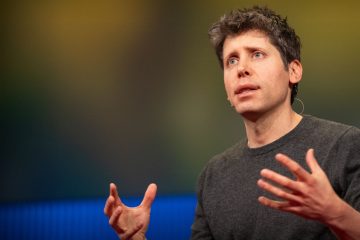
If the architects of the artificial intelligence boom are correct, it is merely a matter of time before data centres — the massive computing facilities that drive AI — will hover in orbit and be visible in the night sky like planets. The dream reminiscent of science fiction is propelled by leaders in the AI and space industries, who are expressing heightened concern that data centers may ultimately demand more energy and land than what Earth can provide. One proposed solution — arguably the only solution, as some assert — is to begin constructing them in space. In November, Google revealed its plans for Project Suncatcher, a space data center initiative set to commence test launches in 2027. At a recent conference, Elon Musk stated that space data centers would represent the most cost-effective method for training AI “not more than five years from now.” Among those expressing their support for the idea are Jeff Bezos, the founder of Amazon and Blue Origin; Sam Altman, the chief executive of OpenAI; and Jensen Huang, the chief executive of Nvidia.
“It is not a debate — it is going to happen,” stated Philip Johnston. “The question is when.” The idea has garnered significant attention as the AI race intensifies, raising concerns about a possible bubble. Meta, OpenAI, Microsoft, Amazon, and other major technology firms are pouring hundreds of billions into data centers across the globe, with OpenAI specifically pledging $1.4 trillion to these initiatives. Saudi Arabia and other nations are investing heavily in these initiatives, while smaller companies accumulate debt and assume financial risks to participate in the frenzy. However, terrestrial data centres are progressively encountering constraints. In numerous locations, the initiatives are insufficiently equipped with the power necessary to meet computing demands. Local opposition has emerged regarding concerns that data centers are increasing utility bills and worsening water shortages.
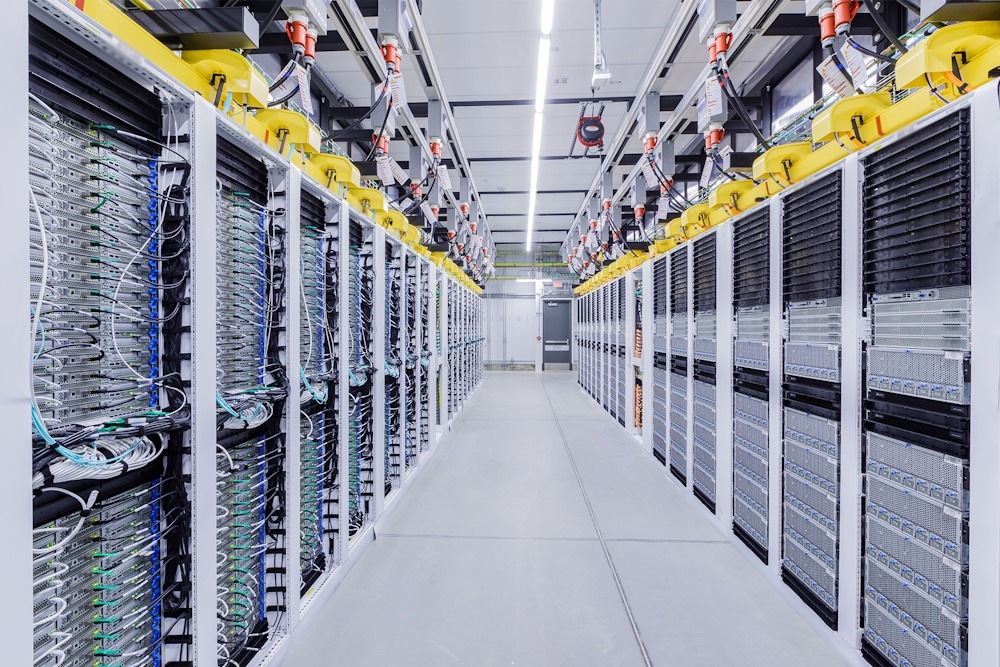
Researchers and experts in technology and science have explored the concept and determined that a variation of these initiatives could become feasible in the coming decades. However, skeptics argued that the proposals contradicted established principles of physics and would incur astronomical costs. Data centres in space would appear distinct from the expansive, football-stadium-sized facilities found on Earth. Many mockups from companies such as Starcloud resemble expansive satellites, featuring a central cluster of servers that contain AI chips, surrounded by extensive arrays of solar panels designed to provide power. According to Johnston, “The data centres would need to be rebuilt every five years, which is when the computer chips are typically replaced.” He stated that they would be visible at dawn and dusk from Earth, appearing in the sky as approximately a quarter the width of the moon.
However, establishing space data centres at present is prohibitively costly. “A kilogram of material costs around $8,000 to launch into space,” said Pierre Lionnet. The lowest price — approximately $2,000 per kilogram — is provided by the rocket manufacturer SpaceX, he noted. Tom Mueller, a former SpaceX executive, expressed his belief that humans will reach the limits of terrestrial energy sources by 2040. He noted that one reason Musk and other AI leaders are discussing space data centers is due to the financial opportunity they present. “The hottest thing to invest in right now is AI, and the second-hottest thing is space,” Mueller stated. “Now they’re converging.”