War and Oil Risks Complicate Fed Rate Cuts
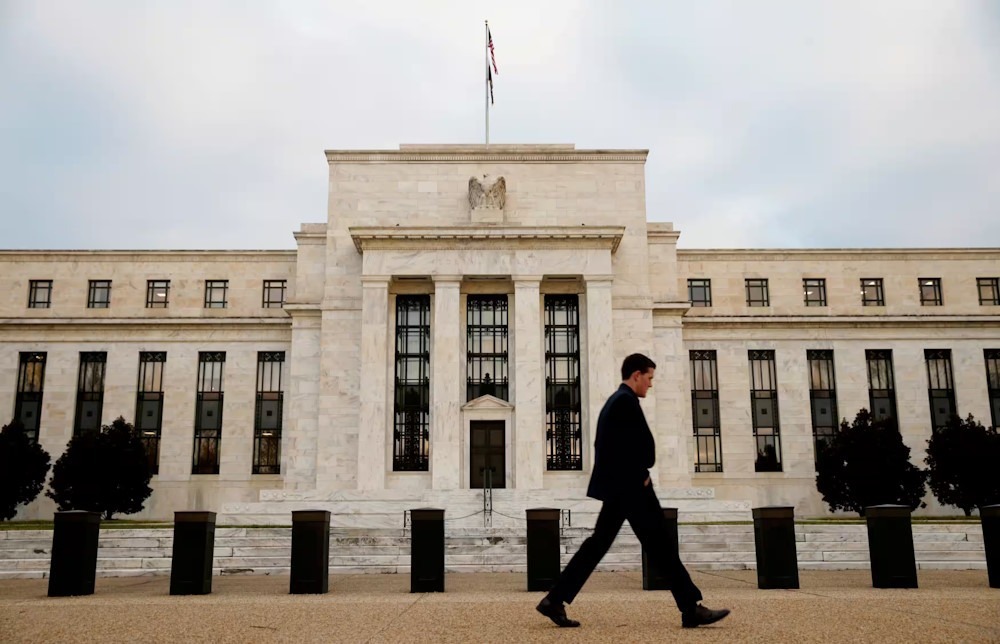
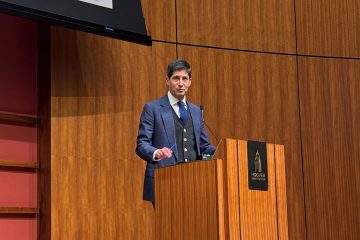
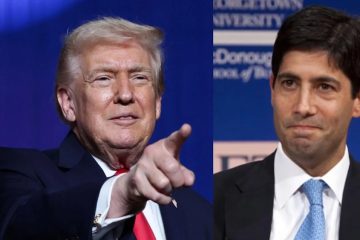
As President Donald Trump appears poised to appoint a Federal Reserve chair who shares his inclination for lower interest rates, the president’s conflict with Iran may complicate the implementation of those rate cuts. Fed policymakers were already anticipated to maintain their benchmark lending rate at its current level until at least the summer. However, economists now assert that the central bank must assess the impact of the conflict on the US economy. Moreover, there exists another significant source of uncertainty: the trajectory of US trade policy following the Supreme Court’s ruling that a substantial portion of Trump’s tariffs are unlawful. The ongoing US-Israel conflict with Iran is poised to complicate Kevin Warsh’s efforts, as Trump’s nominee to lead the Fed, in presenting a persuasive argument for rate cuts this year. “If headline inflation is going to be extended for some period of time, coming off of five years of elevated inflation, boy, that’s a scenario we need to pay close attention to,” said Neel Kashkari, as reported. “Now we need to consider this potentially new shock impacting the global economy.” Fed officials in their latest economic projections from December estimated just one rate cut for 2026.
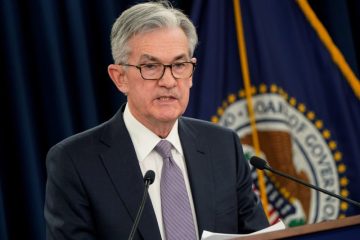
However, investors widely expect Warsh to advocate for additional cuts if he is confirmed by the Senate to succeed Chair Jerome Powell in May, when Powell’s term at the helm of the central bank concludes. In December, Warsh stated that AI-driven productivity could lead to lower interest rates. However, numerous Fed officials have expressed skepticism regarding that argument, including Fed Governor Michael Barr and Cleveland Fed President Beth Hammack. The significance lies in the fact that each member of the Fed’s 12-person rate-setting committee possesses a single vote, meaning Warsh would require the support of a majority of his peers to implement a rate reduction. Currently, the potential economic ramifications of conflict in the Middle East take precedence over the longer-term implications of AI. “The Fed’s got to deal with the facts on the ground, and this oil shock has clearer consequences for the economy and inflation,” Ed Yardeni told. “The AI productivity story has been showing some signs of life, but I don’t think it will help Warsh be successful in pushing for a rate cut.” The war’s impact on inflation is contingent upon its severity and duration, along with the extent of the disruption at the Strait of Hormuz, a narrow corridor through which one in five barrels of oil globally flow.
Analysts informed clients on Monday that they anticipate the disruptions will be temporary and that oil prices will decline. However, the bank stated that if oil price gains persist, annual inflation, as indicated by the Consumer Price Index, could rise from 2.4% in January to 3% by the year’s end. Such a development would undermine Goldman’s projection for inflation to conclude 2026 at 2%, precisely aligning with the Fed’s target. The assaults on Iran have already caused an increase in US gasoline prices, and they are expected to rise further as the conflict persists. “Central banks will not welcome another inflation impulse,” stated James McCann. “Indeed, the Fed has not hit its inflation target since early 2021 and against this backdrop there could be greater sensitivity to a pick-up in inflation.” Federal officials typically opt to observe how events that may influence the US economy unfold over a period of several months, including the Supreme Court’s ruling to invalidate a significant portion of Trump’s tariffs implemented via emergency powers.
“There’s no question that the Supreme Court ruling, and now the uncertainty about what is the new tariff regime — which authorities are they (the administration) going to use, how close can they go back to replicating what they originally imposed,” Kashkari stated. “That’s introduced uncertainty, and uncertainty is a drag on the economy broadly.” Following the court’s ruling, the president declared a 10% global tariff rate, which he subsequently increased to 15% shortly thereafter. Kashkari stated, “I don’t expect inflation to move much higher if the Trump administration manages to restore tariffs that were struck down through other legal means.” Nonetheless, it serves as yet another rationale for Fed officials to remain on the sidelines and observe the administration’s final decisions. Kashkari is not alone in perceiving uncertainty in the current economic landscape. On February 24, Chicago Fed President Austan Goolsbee addressed reporters regarding the issue, as reported. “The more unpredictability you have, the more question marks that the businesses have about policy,” Goolsbee stated.