Trump’s Fed chair nominee cites one reason to decrease rates
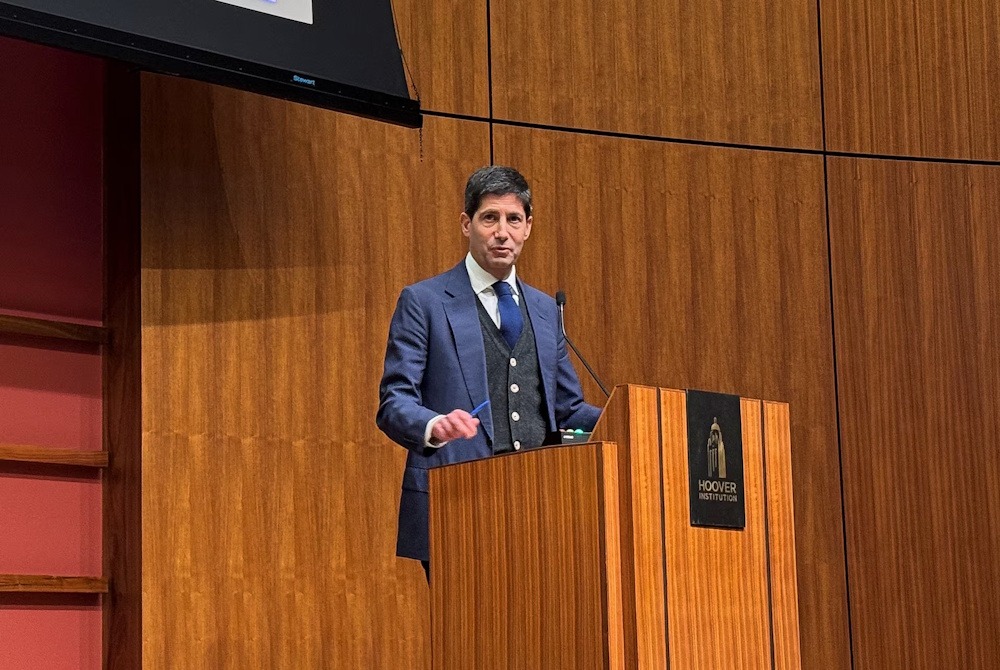
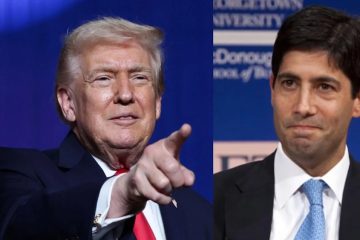
In December, Kevin Warsh suggested how he might advocate for lower interest rates. AI is ushering in “the most productivity-enhancing wave of our lifetimes — past, present and future,” Warsh, who was nominated by President Donald Trump as Fed chair on January 30, stated in an interview. According to Warsh, the technology might be “structurally disinflationary” similar to the internet, indicating that the Fed could have a straightforward route to persist in reducing rates. In recent years, US productivity has experienced significant growth, as indicated by data. In economics, strong productivity allows growth to flourish without igniting inflation — this indicates that the Fed can refrain from intervening with interest rate increases. The applicability of that same reasoning to rate cuts remains uncertain. If confirmed by the Senate to lead the central bank following Chair Jerome Powell’s term expiration in May, Warsh will oversee a 12-member rate-setting committee that has recently shown significant divisions. Fed chairs are responsible for fostering agreement on rate decisions, with each individual holding a single vote, the chair included. Warsh must persuade his colleagues — several of whom remain apprehensive about inflation — that productivity driven by AI justifies further cuts to interest rates. However, it is premature to determine that AI will enhance productivity in a sustainable manner, as indicated by the majority of economists, and certain influential monetary policymakers have already proposed that it may not even justify reduced rates.
During his tenure as a Fed governor from 2006 to 2011, Warsh was recognized for his “hawkish” views, favoring policies that aimed to restrain the economy and control inflation. He has since changed his tune and is now more in line with the Trump administration, which, in addition to wanting lower rates, also believes the US economy is in the throes of a historic productivity boom, similar to the one during the dot-com era. “It’s clear that we are at the nascent stages of a productivity boom, not unlike the 1990s,” Treasury Secretary Scott Bessent told recently. Kevin Hassett, Director of the National Economic Council and a finalist for the Fed chair position, has similarly expressed that perspective. Some current central bankers — including Fed governors Christopher Waller and Lisa Cook, along with Powell himself — have determined that AI has the potential to significantly enhance productivity. Warsh contends that Fed policymakers ought to embrace the new technology with the same boldness they exhibited during the internet era under Fed Chair Alan Greenspan, advocating for a shift towards a more accommodating monetary policy. In his December interview, Warsh highlighted that Greenspan “believed based on anecdotes and rather esoteric data that we weren’t in a position where we needed to raise rates,” even though there were indications that the economy was heating up at that time. “As a result we had a stronger economy, we had more stable prices,” Warsh stated.
Economists assert that productivity is often more comprehensible in hindsight; however, Greenspan determined that policymakers ought to allow the economy to thrive, as numerous anecdotes indicated robust productivity bolstered by the internet. “Recognizing that the economy was in the early stages of a productivity boom helped the Greenspan-led Fed hold off on interest rate hikes in the 1990s,” Michael Pearce wrote. “But it wasn’t an argument for cutting rates into accommodative territory,” he stated. Strong productivity leading to reduced borrowing costs may prove challenging to advocate for among certain Fed policymakers. Cleveland Fed President Beth Hammack, who votes on policy moves this year, stated in a December interview with the Wall Street Journal that stronger productivity could lead to a higher so-called “neutral rate of interest,” a theoretical level of borrowing costs that neither stimulates nor weakens economic activity. “That could be more upward biased, if is having more material productivity impact,” Hammack said, expressing her concerns about 2026 marking the fifth consecutive year of elevated inflation. A higher neutral rate suggests that the economy is capable of enduring elevated interest rates, presenting a direct counterargument to the significant rate cuts sought by the Trump administration.
In a 2024 speech, Dallas Fed President Lorie Logan, a voting member of the Fed this year, shared a collection of anecdotes illustrating how AI is boosting productivity for businesses across various industries. However, similar to Hammack, Logan is characterized by economists as a hawk, remaining vigilant about inflation, and has indicated that she would have opposed the Fed’s decision to lower rates in December. “Productivity is an important and powerful force, but it’s one of the great unknowns of economics,” stated Josh Jamner. “Many individuals draw parallels to the late 90s; however, a closer examination reveals that there was also significant labor-force growth during that period.” He added “Now we have an aging population and shifts in immigration policy that have made labor-force growth harder, so there are similarities with the 90s, but there are also some important differences.”