Powell: War’s Impact Still Unclear, Inflation Keeps Fed Paused
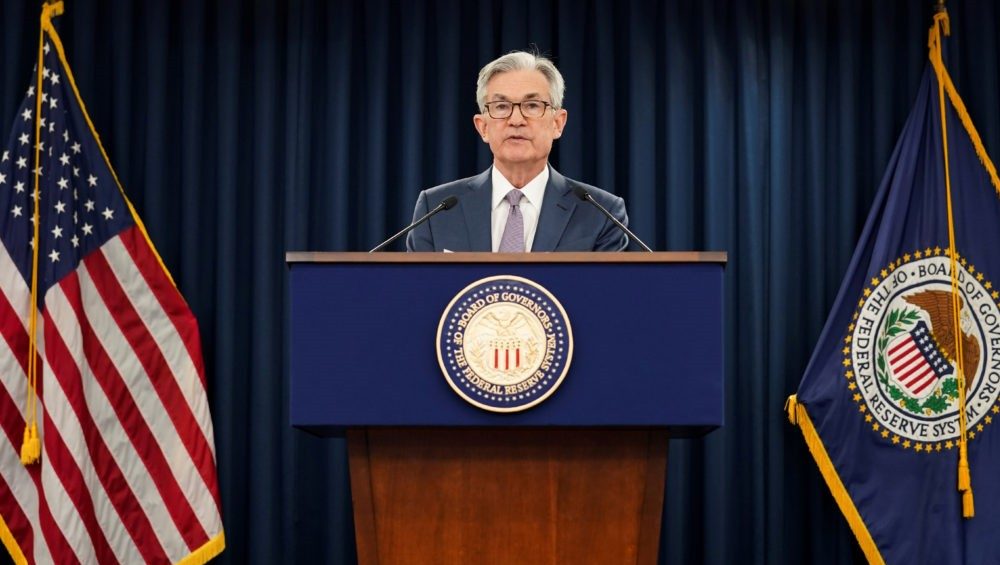
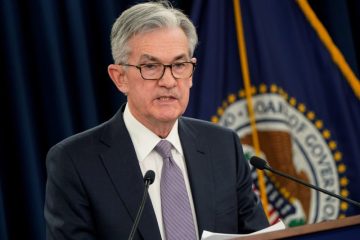
Federal Reserve Chair Jerome Powell emphasized that the US central bank will not lower interest rates again until inflation begins to cool down. And that’s before it even begins to contemplate the potential ramifications of the conflict in West Asia. Powell, in a press conference Wednesday, emphasized that it remains premature to assess the impact of rising oil prices on the US economy, despite financial markets quickly adjusting to anticipate higher inflation in the coming year. Instead, he focused on indications, even before the onset of war, that price pressures were persisting longer than policymakers had anticipated. “The thing that’s really important that we see this year is progress on inflation,” Powell stated. “If we don’t see that progress, then you won’t see the rate cut.” The Fed chair’s remarks, made following a decision to maintain rates for a second consecutive meeting, underscored the belief that the central bank remains far from reinstating a series of rate cuts initiated at the end of 2025, as consumer price data continues to be uncooperative. The trend also brings to light the possibility that the Fed’s next action could indeed be a hike, a scenario Powell recognized was revisited in discussions this week — although he noted that this is not the prevailing expectation among most policymakers.
Interest-rate markets indicate that the likelihood of a single rate reduction is akin to a coin-flip, in contrast to just three weeks ago when expectations were skewed towards three cuts. Yields on two-year US notes — the most sensitive to the Fed’s policy changes — rose as much as 10 basis points to nearly 3.78 percent on Wednesday, marking the highest level in seven months. In new projections released Wednesday, officials upheld their prediction for one rate cut this year, based on the median estimate. However, they also unexpectedly adjusted their projections for economic growth upwards, indicating that they are not currently worried about the potential negative impact of rising energy costs. Meanwhile, their inflation estimates increased, which Powell primarily attributed to the ongoing effects of tariffs. He observed that price pressures have been especially persistent in the goods categories most affected by the levies. “The question of whether we look through the energy inflation doesn’t really arise until we have checked that box,” Powell stated. The Fed chief conveyed a sense of optimism regarding the labor market’s outlook, despite low hiring levels sparking worries that it may be nearing more substantial challenges. He highlighted the unemployment rate, which has remained relatively stable since September.
Concerns regarding employment prompted the Federal Reserve to reduce rates by three-quarters of a percentage point at the conclusion of 2025. Most policymakers currently perceive rates to be at a level that neither hinders nor encourages growth, which Powell remarked was “the right place to be” now. “The market has been concerned about the growth risk as well as the inflation risk from the oil price shock,” stated Priya Misra. “It appears that the Fed may have heightened concerns regarding the inflation risk, which could be attributed to the inflation figures being further from their target compared to the unemployment rate.” The Fed’s stance is expected to incite further frustration from President Donald Trump, who, as recently as Wednesday morning, once again urged it to lower rates. Powell, currently engaged in a legal dispute with the Department of Justice, stated on Wednesday that he intends to remain at the Fed while the government’s investigation is ongoing. Recent court filings disclosed that Powell is determined to remain at the central bank to uphold its independence. Although his tenure as chair concludes in May, he has the option to remain on the Fed’s Board of Governors for a term that lasts until 2028. In recent weeks, speculation has intensified regarding whether he will take such action amid the ongoing DOJ probe.
“Not leaving the board until the Department of Justice investigation is over, I think, makes logical sense,” stated Kathy Bostjancic. “Even if it does wrap up by May, he still hasn’t decided whether he’ll stay on or not, and I think that maybe is the most critical part that you don’t quite know yet.” In January, the DOJ issued subpoenas to the Fed as part of an investigation into cost overruns in a building renovation project. In a statement at the time, Powell referred to the stated reasons for the investigation as pretexts, asserting that the probe was fundamentally initiated by the Fed’s refusal to adjust interest rates according to Trump’s demands.