Fed Maintains Rates Despite US Economic Growth Concerns
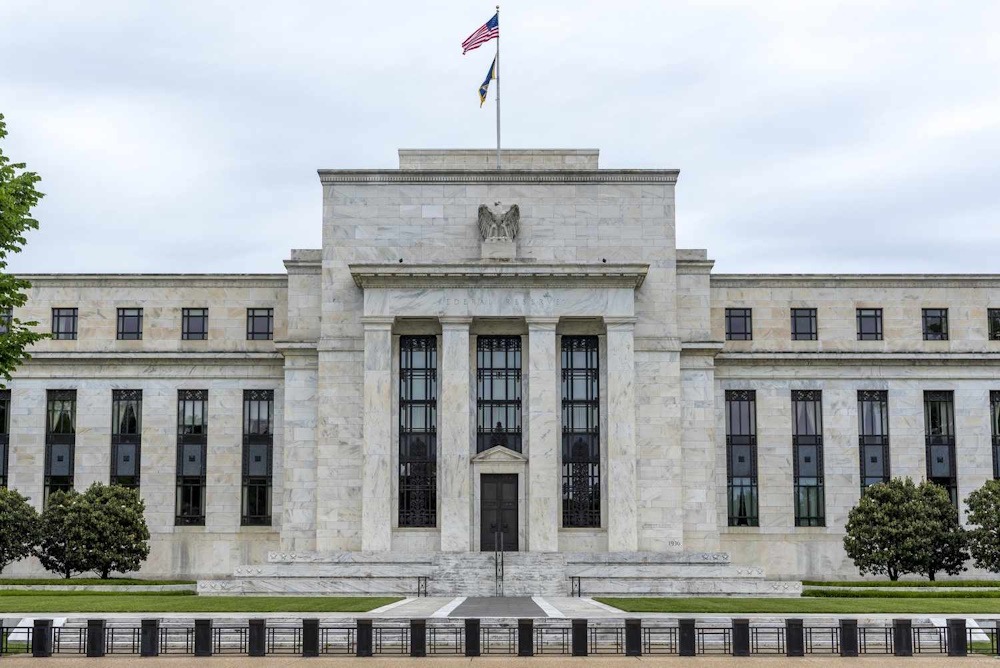
Federal Reserve officials maintained interest rates at their current level and highlighted advancements in the US economy while indicating a more measured stance regarding possible future changes. The Federal Open Market Committee cast a vote of 10-2 on Wednesday to maintain the benchmark federal funds rate within a range of 3.5%-3.75%. Governors Christopher Waller and Stephen Miran expressed their dissent, advocating for a quarter-point reduction. In a statement following the meeting, policymakers remarked, “job gains have remained low, and the unemployment rate has shown some signs of stabilization.” Officials also removed language indicating heightened downside risks to employment that had been present in the three prior statements. The revised evaluation of the labor market is expected to keep near-term rate cut expectations in check, even amid increasing pressure from the Trump administration. As the meeting approached, investors regarded another cut as improbable until at least June. Bond yields remained relatively stable, with 10-year yields holding steady at approximately 4.25%. The dollar slipped from the day’s peak, following Treasury Secretary Scott Bessent’s endorsement of a strong-dollar policy earlier. The S&P 500 remained largely unchanged throughout the day.
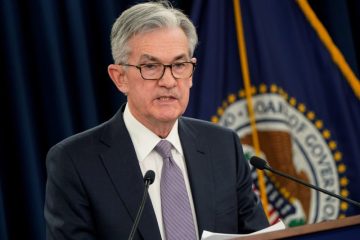
In comments to reporters following the meeting, Fed Chair Jerome Powell elaborated on a “clear improvement” anticipated for the US economy in the upcoming year. “The outlook for economic activity has improved, clearly improved since the last meeting, and that should matter for labor demand and for employment over time,” he stated. The Fed chief emphasized that the labor market has demonstrated signs of stabilizing, yet remarked, “I wouldn’t go too far with that,” pointing out that there were also indications of ongoing cooling. He hesitated when questioned about what it might require for the committee to make further cuts. “We’re not trying to articulate a test when to next cut or whether to cut at the next meeting,” he stated. “What we’re saying is we’re well positioned as we make decisions meeting-by-meeting, looking at the incoming data, evolving outlook and all that.” Wednesday’s decision came as no surprise, following the policymakers’ move to lower interest rates at three consecutive meetings in the final months of 2025. According to rate projections released in December, a majority of officials anticipate that the Fed will implement another cut later this year. However, in light of ongoing concerns regarding persistently high inflation and indications of stability within the labor market, several policymakers have recently expressed that they do not perceive an urgent necessity for further reductions at this time.
Policymakers, in their statement, expressed an optimistic outlook on the economy, characterizing the pace of growth as “solid.” Since October, they have indicated that the economy is expanding at a “moderate pace.” They also omitted a reference to inflation having increased. Regarding inflation, Powell remarked that the overall narrative was “modestly positive,” even though he projected that the Fed’s preferred measure of core price increases will probably conclude 2025 at 3%, which is a full percentage point above the target. However, he noted, “most of the overshoot was in goods prices, which we think is related to tariffs, and ultimately, we think those will not result in inflation, as opposed to a one-time price increase.” During the initial segment of his press conference, Powell sidestepped numerous inquiries regarding the remarkable political context looming over the central bank, including queries related to the Department of Justice’s criminal investigation into the Fed chief. The DOJ earlier this month issued subpoenas to the Fed, leading Powell to deliver an unusually strong response, accusing the administration of employing the investigation as a means of intimidation. While not addressing the pressure from the Trump administration regarding rates, Powell reiterated his commitment to the independence of the central bank. “The point of independence is not to protect policymakers,” he stated. “It’s just an institutional arrangement that has served the people well.”
When asked if he had made a decision regarding his future on the Fed’s Board of Governors after his term as chair concludes in May, Powell responded with a no and refrained from indicating when he might reach a decision. Powell commented on his decision to attend a Supreme Court hearing last week regarding President Donald Trump’s attempt to dismiss Fed Governor Lisa Cook. “That case is perhaps the most important legal case in the Fed’s 113-year history,” Powell said. “I believed it could be challenging to articulate the reasons for my absence.” Officials have largely united in their assessment that Fed policy is currently well-positioned, providing them with the opportunity to evaluate incoming data on inflation and the labor market. This indicates a change from previous months, during which differing views on the economic outlook sparked a vigorous discussion regarding the suitable direction for interest rates. Some advocated decisively for reductions in support for a labor market they perceived as vulnerable. Some expressed the need for caution, pointing to inflation as the more urgent issue at hand.
Recent economic data have provided a measure of reassurance for both sides. Despite the sluggish pace of hiring, layoffs have remained minimal, and in December, the unemployment rate decreased slightly, indicating a potential stabilization in the labor market. Data on consumer prices for December revealed that underlying inflation was milder than expected. However, the distortions in price measurements resulting from last year’s government shutdown are not expected to fully resolve until this spring, which may lead Fed officials to approach the data with a degree of caution. Numerous policymakers contend that the 175 basis points of Fed rate cuts implemented over the past 16 months have moved policy significantly nearer to the so-called neutral level, which neither stimulates nor restrains the economy, thereby diminishing the urgency for additional cuts. An exception is Miran, who is currently on unpaid leave from his position as a top economic adviser at the White House. He estimates that the central bank’s benchmark rate is significantly higher than a neutral setting and asserts that the Fed should reduce it by 150 basis points this year. Waller, a leading candidate to succeed Powell as chair when his term ends in May, has consistently expressed worries regarding the fragility of the labor market. However, he has more recently indicated that the Fed does not need to hasten the process of lowering rates once more.