Fed Faces Sharp Divide Ahead of Key Rate Decision
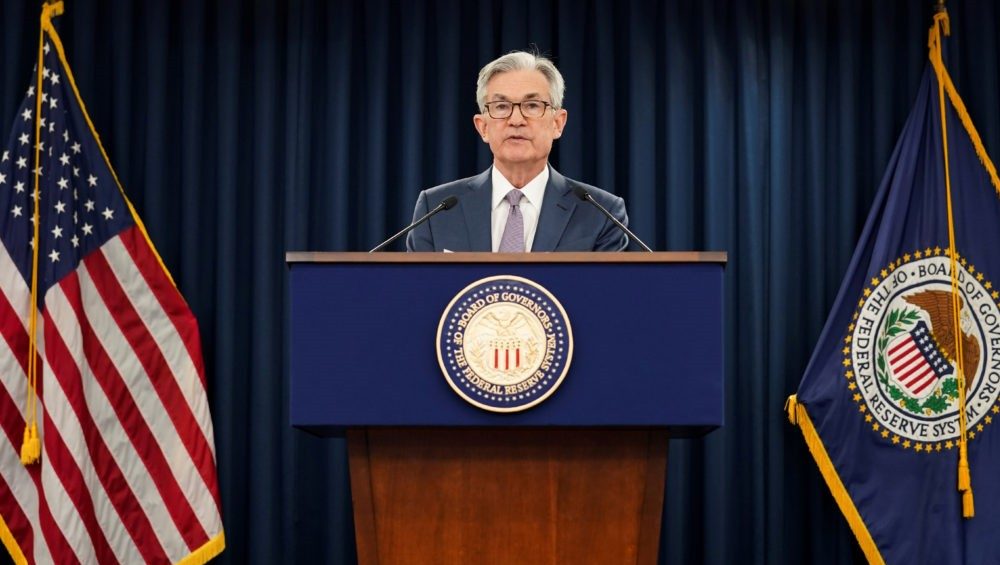
The Federal Reserve is poised to reduce borrowing costs once more on Wednesday, despite ongoing significant divisions within the influential rate-setting committee of the central bank. Wednesday’s decision is poised to be the Fed’s most challenging judgment since at least September 2024, when officials deliberated on the magnitude of that month’s rate reduction. Federal Reserve officials are divided regarding the prioritization of their dual mandate, weighing the importance of achieving full employment against the necessity of maintaining stable prices. Job growth this year has exhibited notable weakness, and numerous officials have indicated that the circumstances may deteriorate further if there is no continuation of rate reductions. Contrarily, some officials argue that the more significant threat lies in inflation remaining persistently above the Fed’s 2% target, exacerbated by the substantial impact of President Donald Trump’s extensive tariffs. This month’s meeting marks Chair Jerome Powell’s final gathering prior to the appointment of his successor. Trump indicated last week that he has identified his nominee for the next Fed chair and intends to make an announcement “early next year.” Powell’s tenure leading the world’s largest economy concludes in May, with the appointment of a new chair generally occurring in the spring. At the behest of Trump, Treasury Secretary Scott Bessent has initiated an extensive search for a successor to Powell.
The absence of critical data regarding employment and inflation for October and November looms over this month’s meeting, with these figures set to be disclosed in the upcoming weeks. Last month, the federal government initiated the release of economic reports that were postponed due to the shutdown; however, the data released thus far has had minimal impact on the ongoing discussions regarding the Federal Reserve. “No doubt there are differences in opinions at the Fed,” stated Angelo Kourkafas. “Thus, their compromise will involve implementing another reduction as anticipated by the market, while also offering a rather cautious perspective on the future trajectory.” Federal Reserve officials are set to unveil their “dot plot,” reflecting updated economic projections, which are expected to indicate only two rate cuts in the upcoming year. New York Fed President John Williams, in a position traditionally aligned with the Fed chair, remarked in a speech on November 21 that “downside risks to employment have increased… while the upside risks to inflation have lessened somewhat. I still see room for a further adjustment in the near term,” Williams stated during a central banking event in Chile. Following Williams’ remarks, the probability of a December rate cut surged to approximately 70%, up from 40%.
Federal Reserve governors Christopher Waller, Michelle Bowman, and Stephen Miran have consistently advocated for additional rate cuts. However, Miran goes further, asserting that the Fed should implement more aggressive rate reductions. “On the labor market, I don’t feel as confident we can get ahead of it,” San Francisco Fed President Mary Daly stated in an interview. “It is currently susceptible to the possibility of a nonlinear shift.” The September jobs report, published seven weeks later than planned, indicated a significant increase in job growth for that month; however, the unemployment rate, which is typically more influential for central bank decision-makers, rose. Indicators of a softening labor market are evident, with Americans experiencing extended durations in job searches and job growth concentrated in a limited number of industries over the past year. In the last two years, Federal Reserve officials have reduced the key interest rate by 1.5 percentage points. The reductions were primarily a reaction to the deterioration of the labor market. If Fed officials this month implement a third consecutive rate cut as anticipated, it would reduce their benchmark lending rate to its lowest point since October 2022.
However, reductions in interest rates can exacerbate inflationary pressures, which continue to exceed the Federal Reserve’s 2% objective. According to Bill Adams, elevated price increases may continue into 2026 as tariff inflation approaches its zenith. In the weeks subsequent to the Fed’s October decision, inflation concerns took precedence in the public addresses of Fed officials, with multiple central bankers contending that an early reduction in rates jeopardizes the advancements achieved in controlling inflation. Among those officials are Dallas Fed President Lorie Logan and Cleveland Fed President Beth Hammack, both of whom will assume voting roles at the Fed next year. Among the 12 regional bank presidents of the Federal Reserve, only four possess voting power each year on a rotating basis, alongside the president of the New York Fed, who holds a permanent vote. “With two rate cuts now in place, I’d find it difficult to cut rates again in December unless there is clear evidence that inflation will fall faster than expected or that the labor market will cool more rapidly,” Logan stated at a November 21 event in Zurich. Thus far, the tariffs implemented by Trump have contributed to a modest increase in inflation; however, this outcome has not approached the dire predictions made by economists. Federal Reserve officials have increasingly accepted the notion that tariff-induced inflation may represent a singular adjustment in price levels. The Federal Reserve is poised to reveal its interest rate decision at 2 PM, followed by a press conference featuring Chair Powell at 2:30 PM.